What does Matthew 10:29-31 mean?
“Are not two sparrows sold for a farthing? and one of them shall not fall on the ground without your Father. But the very hairs of your head are all numbered. Fear ye not therefore, ye are of more value than many sparrows.” — Matthew 10:29-31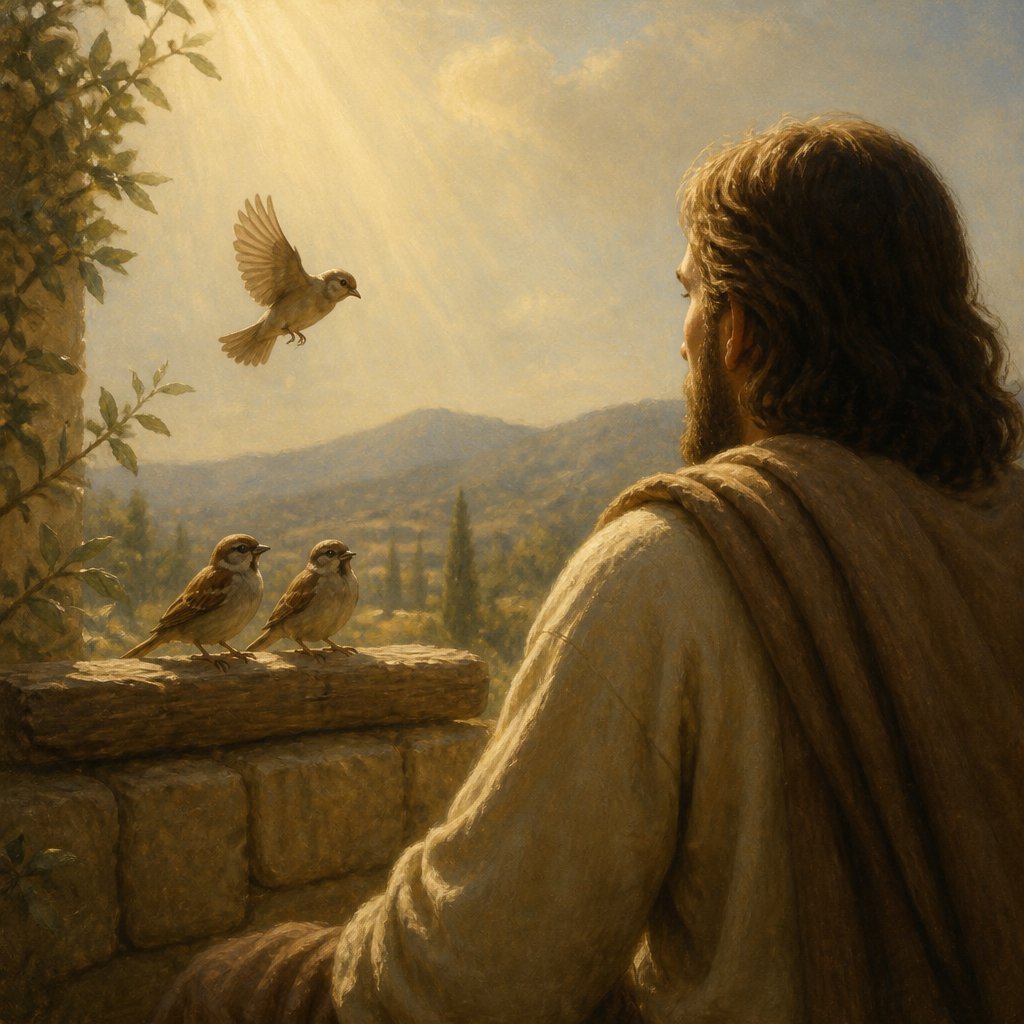
Matthew 10 sits in the middle of Jesus Christ sending out the twelve apostles to preach, heal, and cast out devils. In that mission He does not hide the reality of danger. He speaks of persecution, hatred, prisons, family division, and even death. Yet He also insists that their fear must be governed by a greater truth: the God who sees them is the God who rules over all things. Matthew 10:29–31, in the KJV, is part of that argument, placed immediately after Christ has said, “Fear ye not therefore: ye are of more value than many sparrows.” The passage reads: “Are not two sparrows sold for a farthing? and one of them shall not fall on the ground without your Father. But the very hairs of your head are all numbered. Fear ye not therefore, ye are of more value than many sparrows.”
The immediate meaning is Christ’s comfort to His servants: the threats they face are real, but they are never outside the knowledge, permission, and fatherly care of God. The wording is not abstract. It is deliberately earthy and ordinary. Sparrows were common birds and, in the language of the verse, cheap enough that “two sparrows” could be bought “for a farthing.” Christ chooses the smallest kind of creature in the marketplace, the kind of life people tend to regard as disposable. The symbolism of the sparrow is not that it is noble, but that it is small and easily overlooked. If even such a creature does not “fall on the ground without your Father,” then nothing in the life of Christ’s disciple happens unseen or unmanaged by God. The fall of the sparrow suggests what looks like accident, loss, or sudden death—events that feel random to human beings. Christ denies that they are random in relation to God’s rule. He does not say the sparrow is spared from falling; He says it does not fall “without your Father.” The comfort is not a promise that disciples will avoid hardship; it is a promise that hardship is not godless, not meaningless, and not outside the Father’s hand.
The phrase “your Father” is central. Christ could have said “God,” but He speaks of “your Father,” stressing relationship rather than mere power. In the surrounding context Jesus has been telling them not to fear men who can kill the body but cannot kill the soul. In other words, the deepest realities of a disciple’s life are held by God, not by persecutors. Calling God “your Father” adds the idea of care, love, and personal attention. God is not simply a sovereign observer of suffering; He is a Father who owns, knows, and regards His people. That does not remove the cross from the disciple’s path, but it changes the meaning of the cross. It becomes something carried under Fatherly oversight rather than chaos.
Christ deepens the point with a striking image of intimacy and exactness: “But the very hairs of your head are all numbered.” The symbolism here is not merely that God knows general facts about you, but that His knowledge is exhaustive and particular. Hair is the kind of detail people do not normally count, and it changes constantly. Yet Christ says the hairs are “all numbered,” implying a knowledge so precise that nothing in the disciple’s life is too small to matter. This also carries a sense of providence that reaches beyond major events into the minute movements of daily life. For disciples about to be scattered into hostile towns, that is meant to quiet the anxious imagination. If God’s care extends to what feels too trivial to mention, then it certainly extends to their public witness, their dangers, their needs, and their deaths.
The passage’s logic is then drawn out plainly: “Fear ye not therefore.” “Therefore” ties the command not to fear directly to the doctrine of providence and Fatherhood. The biblical “fear” in this setting is not the reverent fear of God, but the enslaving fear of man and circumstances—the fear that makes confession of Christ waver. Christ’s counsel is not naïve optimism; it is a reordering of fear. Since the Father governs even the smallest fall, fear of men is put in its place. The believer is not asked to pretend threats are unreal, but to see that threats are limited.
Finally Christ grounds the comfort in value: “ye are of more value than many sparrows.” The comparison teaches that human beings—and in particular Christ’s disciples who are being addressed—are not equal to sparrows in worth before God. The sparrow example established God’s attention to the least; this statement adds God’s regard for the greater. It is an argument from the lesser to the greater: if God is present in the fate of what is bought cheaply and overlooked easily, how much more will He be present in the fate of those who bear His name and are sent by His Son. “Many sparrows” emphasizes abundance: even if you multiplied the cheap and common, the disciple remains “of more value.” In the context of persecution, this directly confronts the lie that suffering proves abandonment. Christ is saying that being hunted does not mean being worthless; their value is not decided by the world’s market or by their enemies’ violence, but by the Father’s estimation.
Taken together, Matthew 10:29–31 teaches the significance of divine providence, the nearness of God’s Fatherly care, and the proper cure for fearful discipleship. It does not promise that the sparrow never falls or that the servant never suffers. It promises that no fall is outside the Father, no detail is beneath His knowledge, and no disciple is forgotten. The significance is that Christian courage is not built on self-confidence, but on the conviction that the Father who numbers hairs also governs outcomes, and that the disciple who is “of more value” can obey Christ in dangerous places without being ruled by fear.
Get our apps


Artwork for Matthew 10:29-31

Matthew 10:29-31 - "Are not two sparrows sold for a penny? Yet not one of them will fall to the ground apart from the will of your Father. And even the very hairs of your head are all numbered. So don’t be afraid; you are worth more than many sparrows."
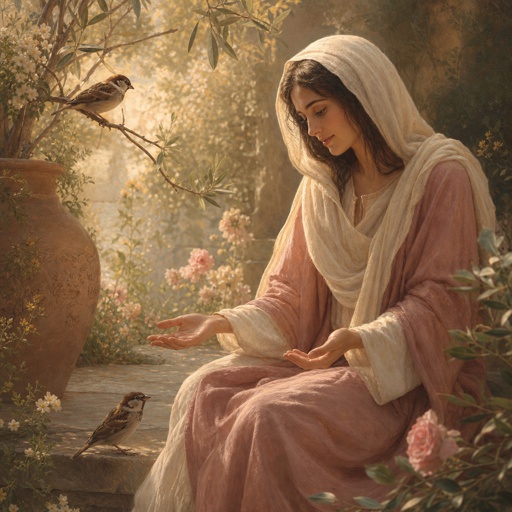
"Are not two sparrows sold for a farthing? and one of them shall not fall on the ground without your Father. But the very hairs of your head are all numbered. Fear ye not therefore, ye are of more value than many sparrows." - Matthew 10:29-31
"Are not two sparrows sold for a penny? Yet not one of them will fall to the ground apart from the will of your Father. And even the very hairs of your head are all numbered. So don’t be afraid; you are worth more than many sparrows." - Matthew 10:29-31

Matthew 15:29-31 - "Matthew 15:29-31: Jesus left there and went along the Sea of Galilee. Then he went up on a mountainside and sat down. Great crowds came to him, bringing the lame, the blind, the crippled, the mute and many others, and laid them at his feet; and he healed them. The people were amazed when they saw the mute speaking, the crippled made well, the lame walking and the blind seeing. And they praised the God of Israel."

Matthew 10:31 - "Fear ye not therefore, ye are of more value than many sparrows."

Matthew 10:29 - "Are not two sparrows sold for a farthing? and one of them shall not fall on the ground without your Father."
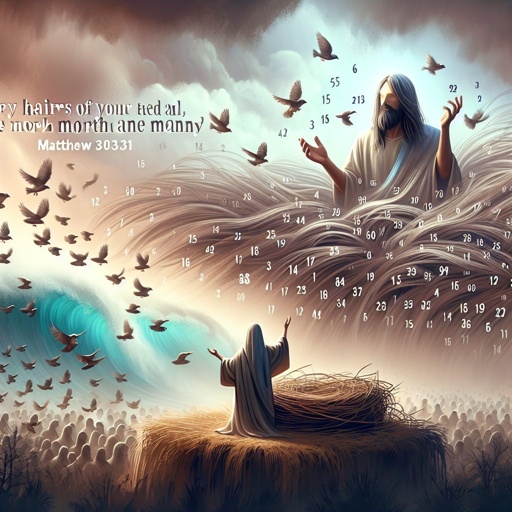
Matthew 10:30-31 - "But the very hairs of your head are all numbered. So don’t be afraid; you are worth more than many sparrows."
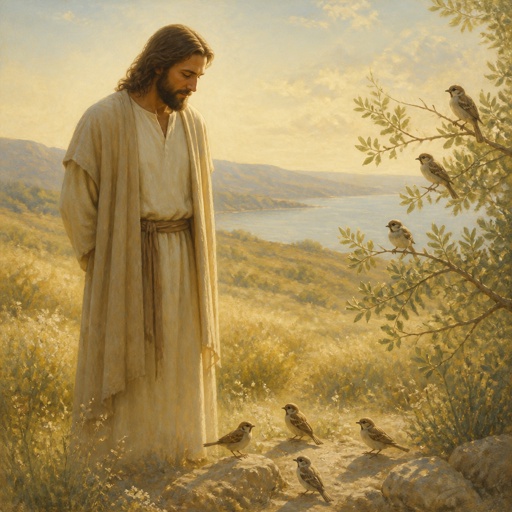
"Fear ye not therefore, ye are of more value than many sparrows." - Matthew 10:31

Matthew 10:29-30 - "Are not two sparrows sold for a penny? Yet not one of them will fall to the ground outside your Father’s care. And even the very hairs of your head are all numbered."
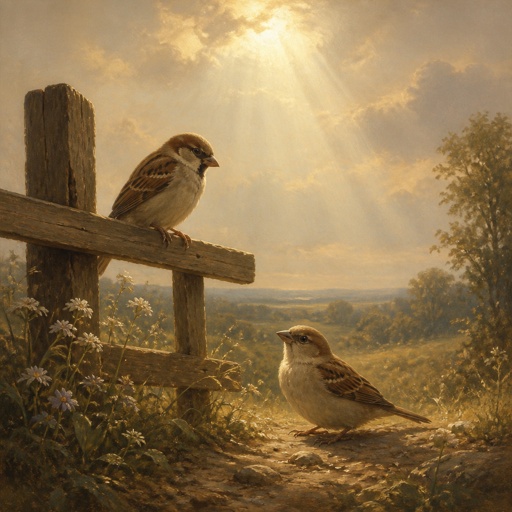
"Are not two sparrows sold for a farthing? and one of them shall not fall on the ground without your Father." - Matthew 10:29

matthew 25:31

Matthew 21:31

Matthew 24:30-31

Matthew 24:30-31

Matthew 24:30-31

Matthew 24:30-31

Matthew 24:30-31

Matthew 24:30-31

Matthew 24:30-31

Matthew 24:30-31

Matthew 24:30-31

Matthew 24:30-31

Proverbs 31:29 - "Many daughters have done virtuously, but thou excellest them all."

Numbers 31:29 - "Take it of their half, and give it unto Eleazar the priest, for an heave offering of the LORD."

Matthew 20:29-34

Matthew 7:24-29

Matthew 7:24-29

Exodus 29:31 - "¶ And thou shalt take the ram of the consecration, and seethe his flesh in the holy place."

Genesis 29:31 - "¶ And when the LORD saw that Leah was hated, he opened her womb: but Rachel was barren."

Mark 10:31