What does Matthew 10:34 mean?
“Think not that I am come to send peace on earth: I came not to send peace, but a sword.” — Matthew 10:34
Matthew 10:34 in the King James Version reads, “Think not that I am come to send peace on earth: I came not to send peace, but a sword.”
Taken by itself, the line can sound like a denial of everything people associate with Christ. Yet in its own setting it is not a celebration of violence, nor a contradiction of Christ’s call to love, but a sober unveiling of what his coming necessarily does in a world already divided by sin, loyalty, and truth. The verse stands inside Jesus’ charge to the twelve apostles as he sends them out to preach “the kingdom of heaven is at hand.” In that commission he prepares them for opposition, rejection, and persecution. He speaks of being “as sheep in the midst of wolves,” of being brought before councils, of being hated “for my name’s sake,” and of enduring to the end. Matthew 10:34 is part of that preparation. It is meant to correct a natural expectation that the appearance of the Messiah would immediately produce outward social calm and universal acceptance. Jesus says, in effect, do not misread my mission as the kind of peace that avoids conflict by avoiding truth. The gospel will not be received as a neutral improvement to everyone’s life; it will expose hearts, provoke decisions, and therefore provoke division.
The key to the verse is the meaning of “peace” and “sword” in this context. “Peace on earth” here is not the inward peace with God that the gospel gives to those who believe, nor is it the final, worldwide peace of the kingdom at the end. Rather, it is the expectation of immediate public tranquility, a seamless harmony in families and communities simply because the Messiah has arrived. Jesus denies that this is what his first coming produces in the present age. His presence and message bring peace with God to the reconciled, but that very reconciliation separates the reconciled from those who refuse him. The “sword” is the emblem of that separation. It functions as a symbol of division and conflict that arises when Christ is preached and confessed in a resistant world. The sword does not need to be imagined as Christ commanding his disciples to wage war, because the surrounding words move in the opposite direction: he tells them to endure persecution, to be wise and harmless, and to take up the cross. The sword in this verse is not the weapon of the church’s aggression; it is the result of the world’s reaction and the inevitable cleavage that truth makes when it is embraced by some and rejected by others.
The immediate context confirms this meaning as Jesus continues, in the very next lines, to speak of family members set against one another. He describes a man at variance with his father, a daughter with her mother, and “a man’s foes shall be they of his own household.” That is the “sword” at its most painful: not merely public hostility, but intimate relational fracture. The gospel demands a primary allegiance. When one member of a household follows Christ and another refuses, the new allegiance can become a point of sharp conflict. This is not because Christ delights in domestic misery, but because he insists that loyalty to him is ultimate. He goes on to say that anyone who loves father or mother more than him “is not worthy of me,” and likewise with son or daughter. The sword is therefore tied to worthiness and discipleship: the true disciple must accept that following Christ may cost cherished relationships, social standing, and even safety.
In a broader biblical frame, Matthew 10:34 also reflects the prophetic pattern in which God’s word is never merely soothing. The word of God judges and separates; it comforts and it confronts. Jesus’ coming is the arrival of a king, and a king’s arrival necessarily divides those who submit from those who rebel. In that sense, the verse carries royal and judicial significance. The “sword” evokes the reality that Christ’s kingdom advances by the proclamation of truth that unmasks the world’s false peace. There is a kind of peace that is only the quiet of compromise, where nothing ultimate is named and nothing eternal is at stake. Christ does not “send” that kind of peace. His gospel forces the question of repentance, faith, and allegiance, and wherever that question is pressed, conflict with unbelief follows.
At the same time, the verse must be held together with the rest of Jesus’ teaching so it is not distorted. In Matthew 10 itself, the sword is paired with the cross: “he that taketh not his cross, and followeth after me, is not worthy of me.” The disciple’s posture in the face of the sword is not conquest but endurance, not retaliation but faithfulness. The conflict described is the cost of discipleship, not the strategy of discipleship. Jesus is predicting division, not prescribing cruelty. He is telling the apostles that if they imagine their mission will be welcomed as a simple program of social harmony, they will be unprepared for the reality of rejection. He is also telling them that the presence of conflict does not mean the mission has failed; it may mean the mission is doing exactly what truth does in a fallen world.
The significance of Matthew 10:34, then, is that it strips away a sentimental reading of Christ’s first coming and replaces it with a realistic one. Christ does bring peace, but not by ignoring the deepest rupture in human life, which is the rupture between God and man. He brings peace by confronting sin, calling for repentance, and establishing a people whose first loyalty is to him. That work creates a line of division, sometimes running even through households, because not everyone will receive him. The “sword” is the sharp consequence of a kingdom that cannot be absorbed into the world’s terms. It reminds the reader that the gospel is both comfort and crisis: comfort to those who believe, crisis to those who refuse, and a searching test of priorities for everyone who hears.
Get our apps


Artwork for Matthew 10:34

Matthew 10:34 - "Think not that I am come to send peace on earth: I came not to send peace, but a sword."
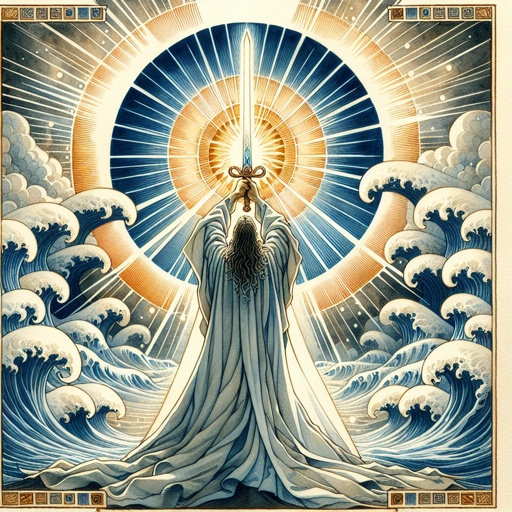
Matthew 10: 34 “Do not think that I came to bring peace on earth. I did not come to bring peace but a sword.

Matthew 10: 34 “Do not think that I came to bring peace on earth. I did not come to bring peace but a sword.

"Think not that I am come to send peace on earth: I came not to send peace, but a sword." - Matthew 10:34

Matthew 6:34

Matthew 6:34

Matthew 6:34

Matthew 6:34

Matthew 6:34

Matthew 18:23-34

Matthew 18:23-34

Matthew 18:23-34

Matthew 20:29-34

Matthew 6:25 – 34

Matthew 18:23-34

Matthew 14:34 - "¶ And when they were gone over, they came into the land of Gennesaret."

Matthew 9:34 - "But the Pharisees said, He casteth out devils through the prince of the devils."

Ezra 10:34 - "Of the sons of Bani; Maadai, Amram, and Uel,"

Images that depicts the verse Matthew 27:11-34

Matthew 5:34 - "But I say unto you, Swear not at all; neither by heaven; for it is God's throne:"

Matthew 24:34 - "Verily I say unto you, This generation shall not pass, till all these things be fulfilled."

Matthew 22:34 - "¶ But when the Pharisees had heard that he had put the Sadducees to silence, they were gathered together."

matthew 15 matthew 15:10

Matthew 21:34 - "And when the time of the fruit drew near, he sent his servants to the husbandmen, that they might receive the fruits of it."

Matthew 20:34 - "So Jesus had compassion on them, and touched their eyes: and immediately their eyes received sight, and they followed him."

Matthew 13:34 - "All these things spake Jesus unto the multitude in parables; and without a parable spake he not unto them:"

Matthew 18:34 - "And his lord was wroth, and delivered him to the tormentors, till he should pay all that was due unto him."

Matthew 15:34 - "And Jesus saith unto them, How many loaves have ye? And they said, Seven, and a few little fishes."

Matthew 27:34 - "¶ They gave him vinegar to drink mingled with gall: and when he had tasted thereof, he would not drink."

Numbers 10:34 - "And the cloud of the LORD was upon them by day, when they went out of the camp."