What does Matthew 12:1 mean?
“At that time Jesus went on the sabbath day through the corn; and his disciples were an hungred, and began to pluck the ears of corn, and to eat.” — Matthew 12:1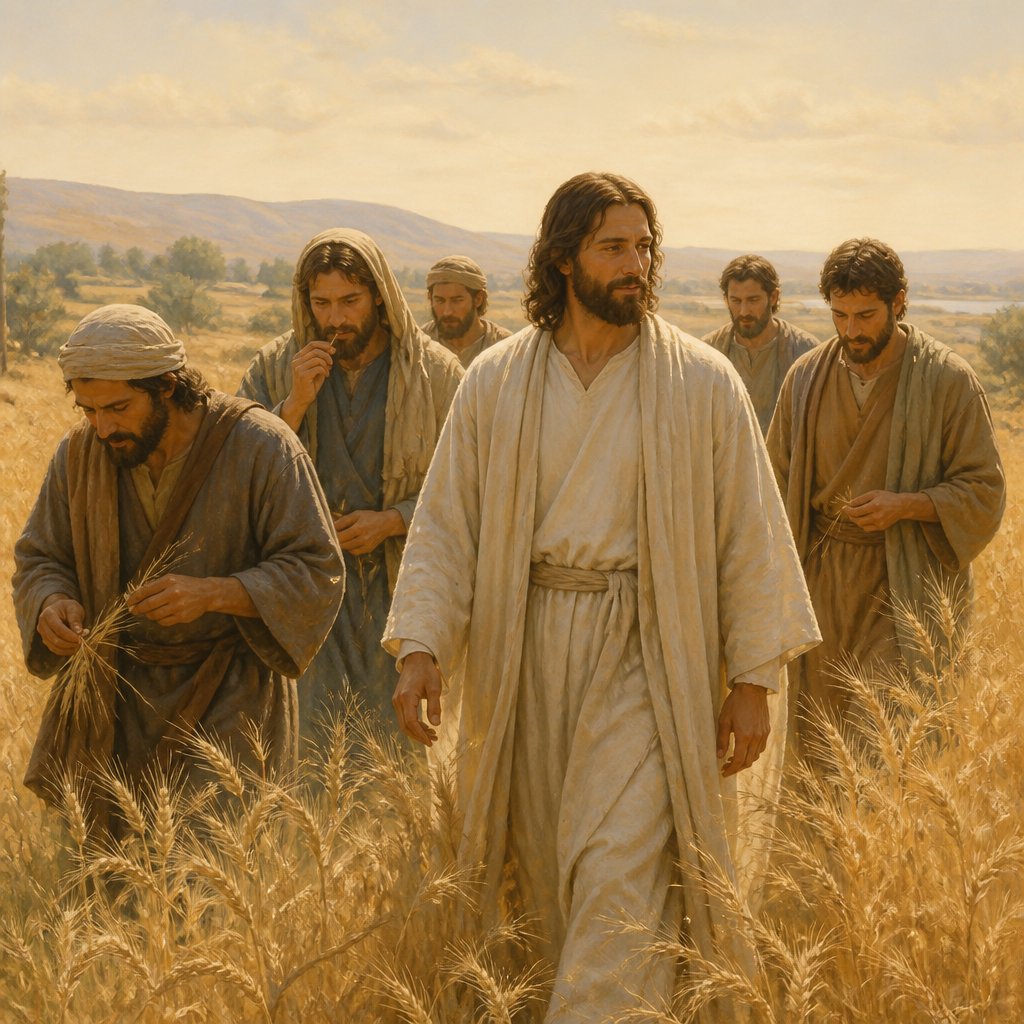
In Matthew 12:1, the King James Version of the Bible reads, "At that time Jesus went on the sabbath day through the corn; and his disciples were an hungred, and began to pluck the ears of corn, and to eat." This verse is part of a larger passage in which the Pharisees question Jesus and his disciples about their actions on the Sabbath day. The passage as a whole explores the nature of the Sabbath and Jesus' authority as the Son of God.
The context of this verse is important to understanding its full meaning. In Jewish tradition, the Sabbath is a holy day of rest and worship, set apart by God as a day of cessation from work. The Pharisees were strict followers of the Mosaic Law and were quick to criticize anyone they believed was breaking the Sabbath commandments. In this passage, they confront Jesus and his disciples for plucking and eating corn on the Sabbath, which they viewed as a violation of the law.
The significance of this passage lies in Jesus' response to the Pharisees' accusations. He defends his disciples by referencing the actions of King David and the priests in the Old Testament, illustrating that there are exceptions to the Sabbath laws. Jesus asserts his authority as the Son of Man, who is also Lord of the Sabbath. This declaration challenges the Pharisees' legalistic interpretation of the Sabbath and affirms Jesus' divine authority to reinterpret and fulfill the law.
One of the key themes in this passage is the conflict between legalism and grace. The Pharisees represent a legalistic approach to religious observance, emphasizing strict adherence to the letter of the law. In contrast, Jesus embodies grace and mercy, emphasizing the spirit of the law over its rigid enforcement. By allowing his disciples to eat on the Sabbath and asserting his authority over the Sabbath, Jesus demonstrates that compassion and human need can supersede legalistic rules.
The act of plucking and eating the ears of corn also holds symbolic significance in this passage. The disciples' hunger and their action of gathering food on the Sabbath reflect the basic human need for sustenance. The physical act of nourishment becomes a metaphor for spiritual nourishment and the fulfillment of God's provision. Jesus' teachings often centered around the concept of spiritual hunger and the satisfaction that comes from partaking in the bread of life, a theme that is subtly conveyed in this passage.
Furthermore, this passage reveals Jesus' role as the ultimate interpreter of the law and his authority to establish new paradigms of worship and observance. By invoking David and the priests as examples to justify his disciples' actions, Jesus reveals his understanding of scripture and his authority to apply it in new ways. This challenges traditional interpretations of the law and sets the stage for Jesus' broader teachings on the Kingdom of God and the new covenant.
In conclusion, Matthew 12:1 serves as a pivotal moment in Jesus' ministry, highlighting his authority as the Son of God and his embodiment of grace and mercy. The passage challenges legalistic interpretations of the Sabbath and underscores Jesus' role as the ultimate interpreter of the law. It also symbolically conveys the themes of human need, spiritual nourishment, and the fulfillment of God's provision. This verse and its surrounding context offer profound insights into Jesus' teachings and his transformative impact on religious observance.
Get our apps


Artwork for Matthew 12:1

Matthew 12:1 - "At that time Jesus went on the sabbath day through the corn; and his disciples were an hungred, and began to pluck the ears of corn, and to eat."
"At that time Jesus went on the sabbath day through the corn; and his disciples were an hungred, and began to pluck the ears of corn, and to eat." - Matthew 12:1

Matthew 12:1-8 - "At that time Jesus went through the grainfields on the Sabbath. His disciples were hungry and began to pick some heads of grain and eat them. When the Pharisees saw this, they said to him, “Look! Your disciples are doing what is unlawful on the Sabbath.” He answered, “Haven’t you read what David did when he and his companions were hungry? He entered the house of God, and he and his companions ate the consecrated bread—which was not lawful for them to do, but only for the priests. Or haven’t you read in the Law that the priests on Sabbath duty in the temple desecrate the Sabbath and yet are innocent? I tell you that something greater than the temple is here. If you had known what these words mean, ‘I desire mercy, not sacrifice,’ you would not have condemned the innocent. For the Son of Man is Lord of the Sabbath.”"
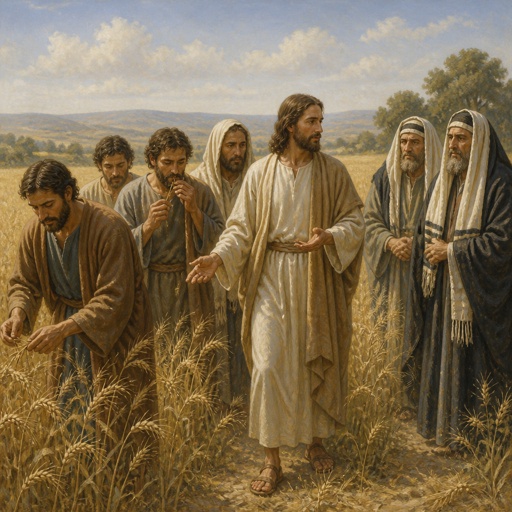
"At that time Jesus went through the grainfields on the Sabbath. His disciples were hungry and began to pick some heads of grain and eat them. When the Pharisees saw this, they said to him, “Look! Your disciples are doing what is unlawful on the Sabbath.” He answered, “Haven’t you read what David did when he and his companions were hungry? He entered the house of God, and he and his companions ate the consecrated bread—which was not lawful for them to do, but only for the priests. Or haven’t you read in the Law that the priests on Sabbath duty in the temple desecrate the Sabbath and yet are innocent? I tell you that something greater than the temple is here. If you had known what these words mean, ‘I desire mercy, not sacrifice,’ you would not have condemned the innocent. For the Son of Man is Lord of the Sabbath.”" - Matthew 12:1-8

Matthew 2:1-12

Matthew 5:1 a 12

Matthew 2:1-12

Matthew 2:1-12

Matthew 5:1 a 12

Matthew 2:1-12

Matthew 1:12 - "And after they were brought to Babylon, Jechonias begat Salathiel; and Salathiel begat Zorobabel;"

Matthew 3:11-12

Matthew 3:11-12

Matthew 3:12

Matthew 3:12

Matthew 23:12

Matthew 7:12

Matthew 23:12

Matthew 7:12

Matthew 3:12
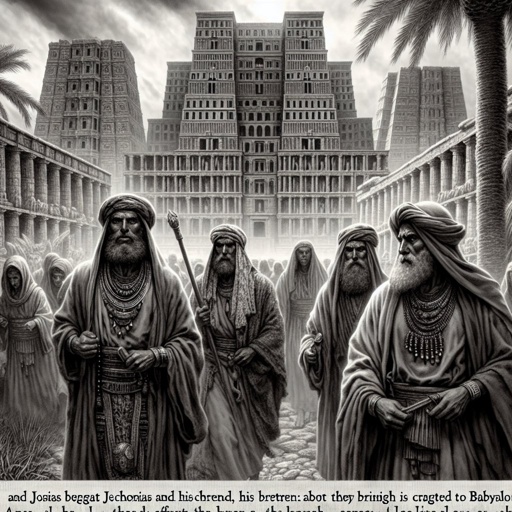
Matthew 1:11-12 - "And Josias begat Jechonias and his brethren, about the time they were carried away to Babylon: And after they were brought to Babylon, Jechonias begat Salathiel; and Salathiel begat Zorobabel."
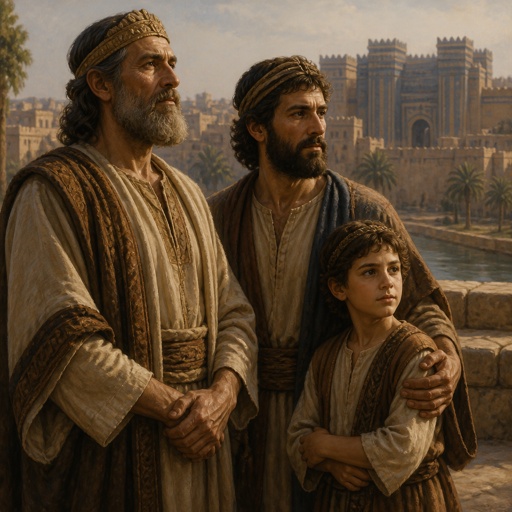
"And after they were brought to Babylon, Jechonias begat Salathiel; and Salathiel begat Zorobabel;" - Matthew 1:12

Matthew 12:36-37

matthew 12:36-37

Matthew 5:8-12

Matthew 12:36-37

Matthew 12:12 - "How much then is a man better than a sheep? Wherefore it is lawful to do well on the sabbath days."

Matthew 10:12 - "And when ye come into an house, salute it."

Matthew 12:21 - "And in his name shall the Gentiles trust."

Matthew 12:16 - "And charged them that they should not make him known:"