What does Matthew 12:20 mean?
“A bruised reed shall he not break, and smoking flax shall he not quench, till he send forth judgment unto victory.” — Matthew 12:20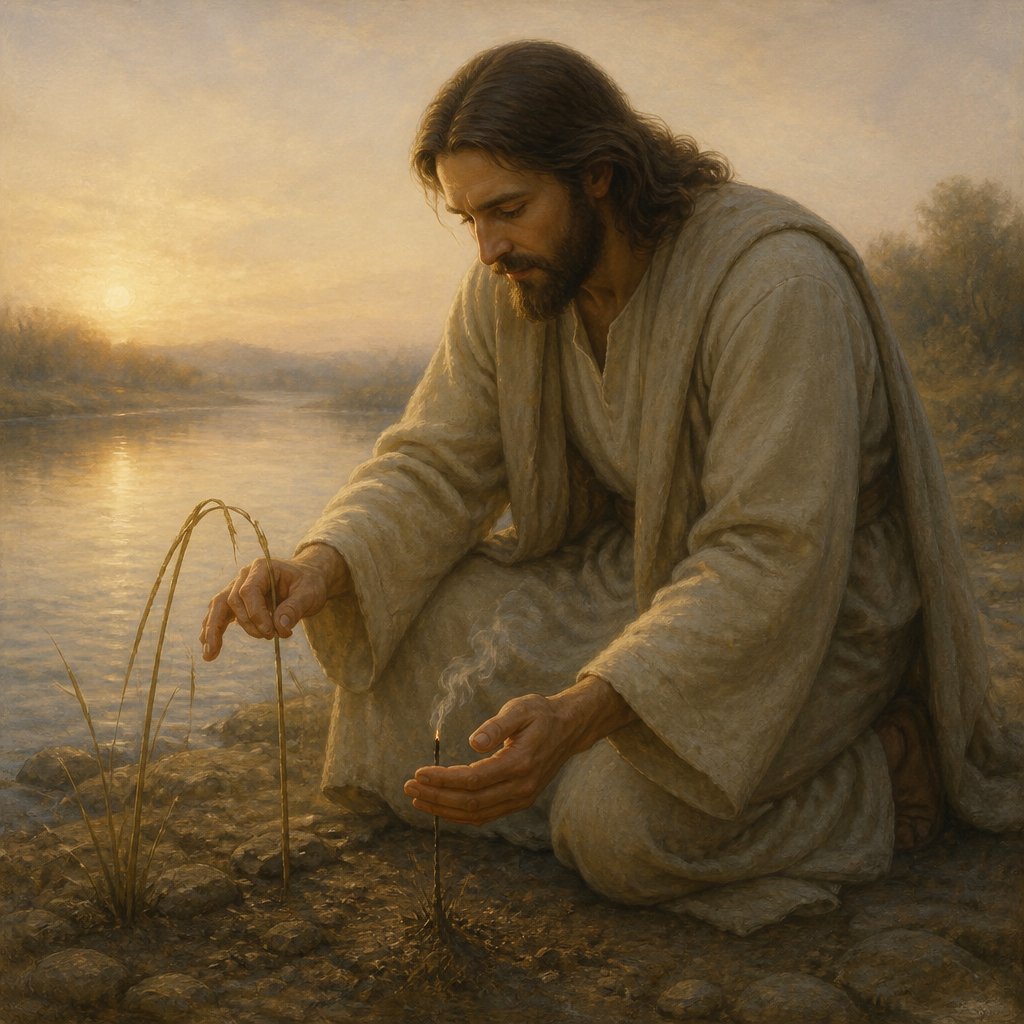
Matthew 12:20 (KJV) states, "A bruised reed shall he not break, and smoking flax shall he not quench, till he send forth judgment unto victory." This verse is part of a larger passage in which Jesus heals a man with a withered hand on the Sabbath, sparking conflict with the Pharisees. In response to their criticism, Jesus quotes a prophecy from the book of Isaiah to demonstrate the compassion and mercy of God and to emphasize the importance of prioritizing human need over rigid adherence to religious laws.
The imagery used in this verse is rich with symbolic meaning. The "bruised reed" and "smoking flax" represent individuals in a state of brokenness and weakness. A bruised reed is a fragile plant that has been bent or damaged, while smoking flax refers to a wick that is almost extinguished. These images evoke a sense of vulnerability and precariousness, highlighting the delicate and often overlooked aspects of human suffering. Jesus's response to these conditions, as described in the verse, is one of tender care and patience. He does not further damage the bruised reed or snuff out the smoking flax, but rather nurtures and protects them until they are restored and strengthened.
The significance of this verse can be understood within the broader context of Jesus's ministry and his teachings on compassion, humility, and the kingdom of God. Throughout the gospels, Jesus consistently demonstrates a deep concern for the marginalized, the oppressed, and the wounded, offering them hope and restoration. This verse reflects the character of God as compassionate and merciful, particularly towards those who are struggling and in need. It reminds us that God's love extends to the most vulnerable and fragile members of society, and that He is committed to lifting them up and bringing them to fullness of life.
The contrast between the gentleness and patience of God in this verse and the harsh legalism of the Pharisees in the surrounding passage is striking. The Pharisees, who were religious leaders known for their adherence to the letter of the law, are portrayed as insensitive and legalistic in their response to Jesus's healing on the Sabbath. In contrast, Jesus's actions and words affirm the primacy of mercy and compassion, challenging the Pharisees' narrow interpretation of religious observance. This serves as a powerful reminder that true faith is not characterized by empty rituals or outward displays of piety, but by a genuine concern for the well-being of others and a commitment to justice and mercy.
The themes of restoration, compassion, and justice that are woven throughout this verse resonate deeply with the broader message of the gospel. They point to the transformative power of God's love and the coming of His kingdom, in which all brokenness will be healed, and all injustice will be made right. The imagery of the bruised reed and smoking flax conveys the idea that even the most damaged and fragile among us are not beyond the reach of God's grace, and that He is actively at work in bringing about a renewal and a victory that transcends human understanding.
In conclusion, Matthew 12:20 (KJV) presents a profound and evocative depiction of God's compassionate and merciful nature, as well as the transformative power of His love. It serves as a reminder of the importance of prioritizing human need and vulnerability over rigid adherence to religious laws, and challenges us to embody the same spirit of compassion and mercy in our own lives. As we contemplate the imagery and message of this verse, may we be inspired to seek out and care for the bruised reeds and smoking flaxes in our midst, trusting in the power of God to bring forth healing and victory.
Get our apps


Artwork for Matthew 12:20

Matthew 12:20 - "A bruised reed shall he not break, and smoking flax shall he not quench, till he send forth judgment unto victory."

「壓傷的蘆葦,祂不折斷; 將殘的燈火,祂不吹滅; 祂終必使正義得勝。」 馬太福音 12:20 CCB https://bible.com/bible/1392/mat.12.20.CCB

「壓傷的蘆葦,祂不折斷; 將殘的燈火,祂不吹滅; 祂終必使正義得勝。」 馬太福音 12:20 CCB https://bible.com/bible/1392/mat.12.20.CCB
"A bruised reed shall he not break, and smoking flax shall he not quench, till he send forth judgment unto victory." - Matthew 12:20

Matthew 20:12 - "Saying, These last have wrought but one hour, and thou hast made them equal unto us, which have borne the burden and heat of the day."

Matthew 17:20

Matthew 18:20

matthew 20:3

Matthew 18:20

Matthew 18:20

Matthew 17:20

Matthew 28:19-20

matthew 5 13-20

Matthew 20:29-34

Matthew 3:11-12

Matthew 28: 19-20

Matthew 28:19-20

Matthew 28:19-20

Matthew 15 : 1-20

Matthew 3:11-12

Matthew 20:20 - "¶ Then came to him the mother of Zebedee's children with her sons, worshipping him, and desiring a certain thing of him."

Matthew 3:12

Matthew 3:12

Matthew 23:12

Matthew 7:12

Matthew 23:12

Matthew 4:20 - "And they straightway left their nets, and followed him."

Matthew 7:12

Matthew 3:12

Matthew 7:20 - "Wherefore by their fruits ye shall know them."