What does Matthew 13:30 mean?
“Let both grow together until the harvest: and in the time of harvest I will say to the reapers, Gather ye together first the tares, and bind them in bundles to burn them: but gather the wheat into my barn.” — Matthew 13:30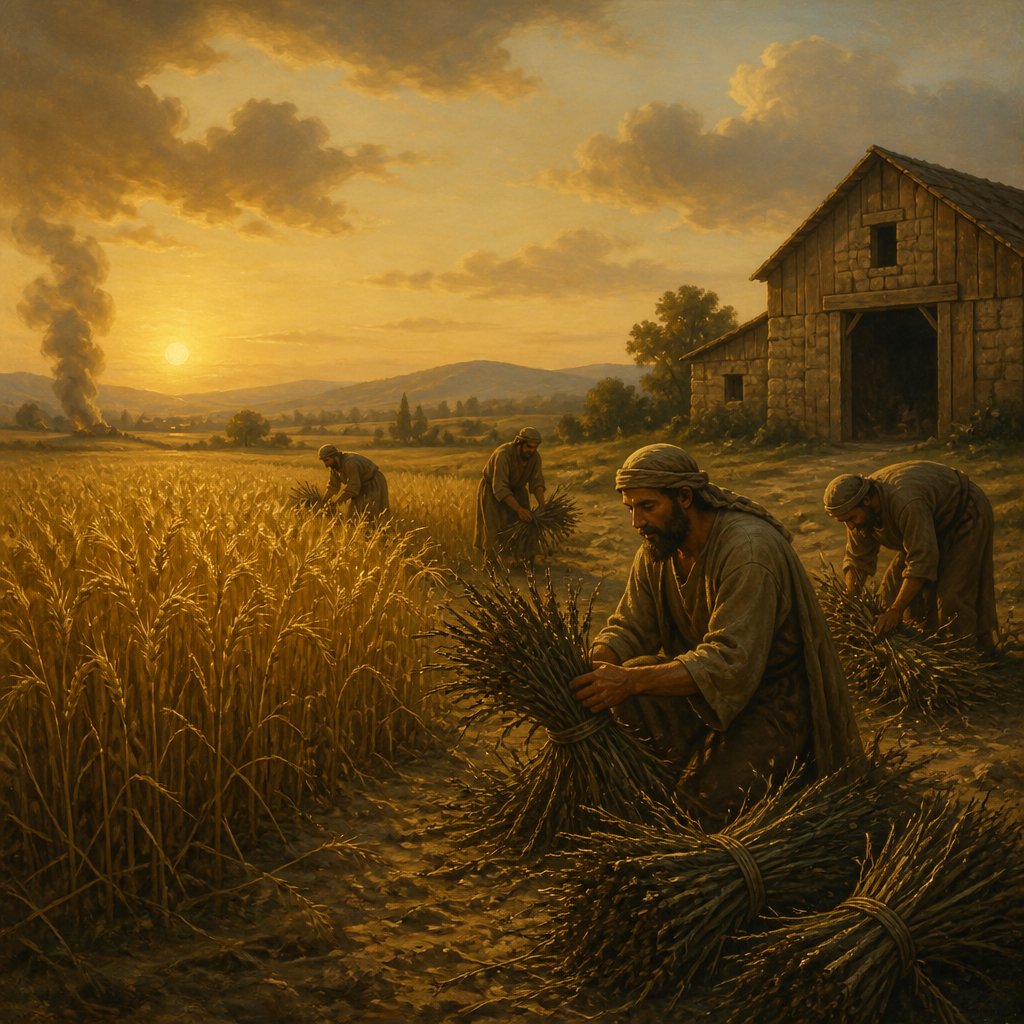
The verse Matthew 13:30 in the King James Version of the Bible reads, "Let both grow together until the harvest: and in the time of harvest I will say to the reapers, Gather ye together first the tares, and bind them in bundles to burn them: but gather the wheat into my barn."
This verse is part of a larger passage known as the Parable of the Wheat and the Tares, which is found in Matthew 13:24-30. The parable is one of several parables that Jesus told to illustrate spiritual truths and principles to his disciples and the crowds that followed him. In this parable, Jesus uses the analogy of a farmer sowing good seed in his field, only to have an enemy secretly sow weeds among the wheat. As both the wheat and the weeds grow, the servants ask the farmer if they should pull up the weeds. The farmer responds with the instruction to let both grow together until the harvest, at which time the weeds will be separated from the wheat and burned.
The overarching theme of this parable is the concept of judgment and the separation of good from evil. This theme is a common thread throughout the Bible, as it reflects God's divine justice and the eventual retribution for the wicked. In the context of this parable, Jesus is using the imagery of the wheat and tares to teach about the coexistence of good and evil in the world, and the ultimate judgment that will separate the righteous from the unrighteous.
The parable also carries a message about patience and God's timing. Throughout the New Testament, there are numerous references to the idea that God's judgment will come at the appointed time. In this parable, the farmer instructs his servants to wait until the harvest before separating the wheat from the weeds. This serves as a reminder to trust in God's timing and to have patience in the face of evil and injustice.
Another important theme in this verse is the concept of redemption. In the parable, the wheat represents the righteous, while the tares represent the wicked. The act of gathering the wheat into the barn symbolizes the salvation and redemption of the righteous, while the burning of the tares represents the fate of the unrepentant sinner. This imagery speaks to the idea of God's grace and mercy, as well as the consequences of rejecting God.
The parable of the Wheat and the Tares also carries a practical message about the nature of the church and the world. Throughout history, there have been debates and conflicts over the issue of church discipline and the presence of evil within the community of believers. This parable serves as a reminder that the church is not immune to the influence of sin and evil, and that there will always be a mixture of good and bad within the community of faith. However, it also emphasizes the promise of ultimate separation and judgment, which brings hope to those who are faithful to God.
In terms of symbolism, the wheat can be seen as representing the faithful followers of Christ, who are nourished by the Word of God and produce fruit in their lives. On the other hand, the tares symbolize those who are influenced by the evil one and whose lives are characterized by sin and ungodliness. The harvest represents the end of the age, when God will separate the righteous from the wicked and usher in a new era of righteousness and justice.
In conclusion, the verse Matthew 13:30 and the Parable of the Wheat and the Tares carry important messages about judgment, redemption, patience, and the coexistence of good and evil in the world. As with many of Jesus' parables, this story uses simple agricultural imagery to convey profound spiritual truths. It serves as a reminder to remain faithful to God in the face of trials and tribulations, and to trust in his ultimate judgment and justice.
Get our apps


Artwork for Matthew 13:30

Matthew 13:30 - "Let both grow together until the harvest: and in the time of harvest I will say to the reapers, Gather ye together first the tares, and bind them in bundles to burn them: but gather the wheat into my barn."
"Let both grow together until the harvest: and in the time of harvest I will say to the reapers, Gather ye together first the tares, and bind them in bundles to burn them: but gather the wheat into my barn." - Matthew 13:30

Matthew 6:30

Matthew 5:30

Matthew 5:30

Matthew 24:30-31

Matthew 24:30-31

Matthew 24:30-31

Matthew 24:30-31

Matthew 24:30-31

Matthew 24:30-31

Matthew 24:30-31

Matthew 24:30-31

Matthew 24:30-31

Matthew 24:30-31

Matthew 11:30 - "For my yoke is easy, and my burden is light."

Matthew 10:30 - "But the very hairs of your head are all numbered."

Matthew 19:30 - "But many that are first shall be last; and the last shall be first."

Matthew 26:30 - "And when they had sung an hymn, they went out into the mount of Olives."

Matthew 13

Matthew 27:30 - "And they spit upon him, and took the reed, and smote him on the head."

Matthew 8:13

Matthew 8:13

Matthew 8:13

Matthew 13

Matthew 12:30 - "He that is not with me is against me; and he that gathereth not with me scattereth abroad."

Matthew 8:30 - "And there was a good way off from them an herd of many swine feeding."

Matthew 22:30 - "For in the resurrection they neither marry, nor are given in marriage, but are as the angels of God in heaven."

Acts 13:30 - "But God raised him from the dead:"

Matthew 7:13-14