What does Matthew 14:29 mean?
“And he said, Come. And when Peter was come down out of the ship, he walked on the water, to go to Jesus.” — Matthew 14:29
Matthew 14:29 in the KJV reads, “And he said, Come. And when Peter was come down out of the ship, he walked on the water, to go to Jesus.” Its meaning is best felt inside the movement of the whole scene: the disciples are alone upon the sea, “tossed with waves: for the wind was contrary,” and in the darkness of “the fourth watch of the night” Jesus comes to them “walking on the sea.” When they fear, he answers, “Be of good cheer; it is I; be not afraid.” Peter then speaks the bold sentence that frames verse 29: “Lord, if it be thou, bid me come unto thee on the water.” The verse is Jesus’ reply and Peter’s response. It is a moment where Christ’s word creates a path where no path exists, and where Peter’s obedience steps into that word.
The first weight of the verse rests on the simplicity of Christ’s command: “Come.” Jesus does not explain the physics of the sea or bargain with the wind; he gives a word that is both invitation and authority. In the KJV narrative, Christ’s speech repeatedly carries creative force. Here, the single word is enough to summon Peter out of the ship and onto the water. The significance is that Peter does not step out because the storm has ceased—nothing in verse 29 suggests the wind has calmed—he steps out because Christ has spoken. The verse therefore treats faith not as a vague optimism but as obedience to a particular word from Jesus. Peter is “to go to Jesus.” The direction of the act matters: the miracle is not presented as a stunt upon the waves, but as motion toward Christ.
Peter’s action also carries the theme of costly trust. “When Peter was come down out of the ship” describes more than changing locations; the ship is the only ordinary refuge available. In the context of a sea “tossed with waves,” the ship represents what is familiar, managed, and comparatively secure—human means, the presence of companions, the structure that keeps one above the deep. To come down out of it is to relinquish the most reasonable protection. Yet the verse shows that faith, in its living form, does not remain merely within safe boundaries. It responds when Christ calls, even when the response looks unreasonable in the presence of wind and water.
The symbolism of the water deepens the meaning. In Scripture, the sea often signifies peril, disorder, and the threatening unknown. In the immediate story, it is the place of fear, where the disciples are strained by contrary wind. Jesus walking on the sea declares his mastery over what threatens them; he is not swallowed by the chaos but stands upon it. When Peter “walked on the water,” the text presents a share in Christ’s victory over the threatening element, not by Peter’s own power, but by nearness to Jesus and obedience to Jesus’ word. The sea remains the sea, but under Christ it becomes, for a moment, a roadway. The verse therefore points to the idea that what is naturally untamable becomes passable when Christ commands, and that a believer may tread where he could never tread when he is moving “to go to Jesus.”
The verse also reveals something about the nature of discipleship. Peter does not ask to be removed from the storm; he asks to come to Christ in it. That matters because the narrative is not primarily about escaping trouble but about approaching the Lord. In the wider chapter, Jesus has withdrawn to pray, has fed the multitude with five loaves and two fishes, and then has sent the disciples away upon the sea while he remains alone in prayer. Their trial happens while they are in obedience to his earlier command to depart. Matthew 14:29 shows that Christ does not abandon obedient disciples to their waves; he comes to them. And when he comes, he may call them beyond their usual limits so that they learn what his presence means. The verse thus fits a pattern: obedience may lead into difficulty, but difficulty becomes a stage for revelation of Christ, and revelation calls forth a deeper obedience.
There is also a quiet theme of personal encounter. Peter’s movement is individual—he alone “was come down out of the ship.” The others remain aboard. The verse does not condemn them, but it highlights that there are moments when faith becomes personal, when one disciple responds to Christ in a way that is not carried by the crowd. Yet even this individuality is not self-directed; Peter is not walking toward his own idea or toward an experience for its own sake. He walks “to go to Jesus.” The true center is communion with Christ, not the extraordinariness of the circumstances.
Finally, Matthew 14:29 gains additional significance because it stands at the hinge between success and failure in the story. The next verse says, “But when he saw the wind boisterous, he was afraid; and beginning to sink, he cried, saying, Lord, save me.” Verse 29 is therefore the picture of faith’s beginning—responsive, bold, fixed in direction—before fear shifts attention from Christ to the storm. In that way, the verse teaches that faith is sustained not merely by a dramatic start but by continued regard for Jesus. It is not that the water becomes permanently safe; it is that Christ is sufficient so long as Peter’s movement remains “to go to Jesus.”
So Matthew 14:29, in KJV language, is a compact portrait of Christ’s commanding invitation and a disciple’s obedient trust. It places Jesus as Lord over the threatening deep, depicts the call of Christ as the ground of faithful action, and shows that the aim of faith is not the miracle itself but the person of Jesus. In one sentence the verse gathers the storm, the command, the surrender of safety, and the forward motion of discipleship into a single act: Peter stepping out, upheld for a moment by the word and presence of Christ, walking where he cannot walk by nature, in order to come to the Lord.
Get our apps


Artwork for Matthew 14:29

Matthew 14:29 - "And he said, Come. And when Peter was come down out of the ship, he walked on the water, to go to Jesus."

"And he said, Come. And when Peter was come down out of the ship, he walked on the water, to go to Jesus." - Matthew 14:29

"And he said, Come. And when Peter was come down out of the ship, he walked on the water, to go to Jesus." - Matthew 14:29

Matthew 14:29-31 - "He said, "Come." So Peter got out of the boat and walked on the water and came to Jesus. But when he saw the wind, he was afraid, and beginning to sink he cried out, "Lord, save me." Jesus immediately reached out his hand and took hold of him, saying to him, "O you of little faith, why did you doubt?""

"He said, "Come." So Peter got out of the boat and walked on the water and came to Jesus. But when he saw the wind, he was afraid, and beginning to sink he cried out, "Lord, save me." Jesus immediately reached out his hand and took hold of him, saying to him, "O you of little faith, why did you doubt?"" - Matthew 14:29-31

Matthew 20:29-34

Matthew 7:24-29

Matthew 7:24-29

John 14:23-29

Matthew 20:29 - "And as they departed from Jericho, a great multitude followed him."
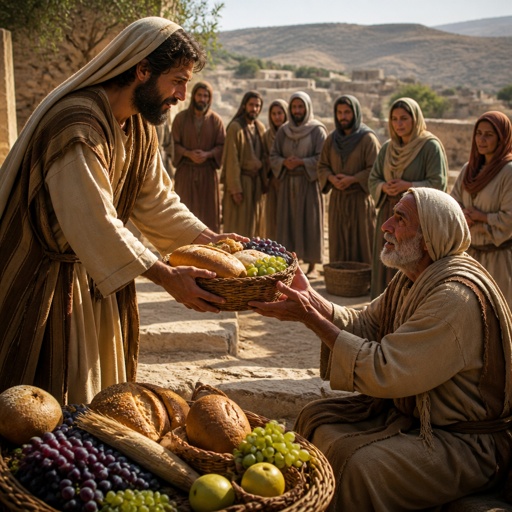
Deut 14:28-29

John 14:23-29

Jeremiah 29: 4-14

Jeremiah 29: 4-14

Jeremiah 29: 4-14

John 14:23-29

Jeremiah 29: 4-14

Jeremiah 29: 4-14

Matthew 7:29 - "For he taught them as one having authority, and not as the scribes."

Matthew 21:29 - "He answered and said, I will not: but afterward he repented, and went."

Matthew 6:29 expressed as a rose garden

Matthew 9:29 - "Then touched he their eyes, saying, According to your faith be it unto you."

Matthew 7:13-14

Matthew 7:13-14

Matthew 7:13-14

Matthew 7:13-14

Matthew 7:13-14

Matthew 7:13-14

Matthew 7:13-14

Matthew 7:13-14