What does Matthew 14:32 mean?
“And when they were come into the ship, the wind ceased.” — Matthew 14:32
Matthew 14:32 (KJV) - "And when they were come into the ship, the wind ceased."
In order to fully understand the meaning and significance of Matthew 14:32, it is important to place it within its broader context. This verse comes at the tail end of the story of Jesus walking on water, a well-known miracle found in the New Testament. This miraculous event is also recorded in the gospels of Mark and John, but each account has its own unique details.
In the Matthew version of the story, Jesus sends his disciples ahead of him in a boat while he goes up to a mountain to pray. While they are out on the sea, a strong storm arises, and the disciples are distressed. In the midst of the chaotic sea, Jesus comes to them, walking on the water. Understandably, the disciples are initially terrified, thinking they are seeing a ghost. But Jesus reassures them, saying "Be of good cheer; it is I; be not afraid" (Matthew 14:27, KJV).
Peter, in an act of bold faith, asks Jesus to allow him to come out on the water, and Jesus grants his request. As long as Peter keeps his eyes on Jesus, he is able to walk on the water. However, when he notices the strength of the wind, he becomes afraid and begins to sink. This prompts him to cry out, "Lord, save me" (Matthew 14:30, KJV). Jesus immediately reaches out his hand and catches him, admonishing him for his lack of faith.
The disciples, astounded by what they have witnessed, acknowledge Jesus as the Son of God. As they enter the boat, the wind suddenly ceases, and they are filled with awe and wonder at the power of Jesus.
Now, let's delve into the deeper meanings and themes present in Matthew 14:32. Firstly, the central theme of the passage is the concept of faith. Throughout the story, we see Peter's moment of faith as he steps out onto the water. However, we also see his doubt, which ultimately leads to his sinking. Jesus uses this moment to teach Peter and the other disciples about the importance of keeping their faith in him, even in the midst of life's storms.
Additionally, the passage also exemplifies the power and authority of Jesus over nature. By walking on water and calming the storm, Jesus displays his divinity and control over the elements. This serves as a reminder to the disciples (and to us) that no matter how tumultuous our circumstances may be, Jesus has the power to bring peace and deliverance.
Symbolically, the storm and the sea can represent the trials and tribulations of life. The disciples' struggle against the wind and waves mirrors our own struggles against the challenges we face. However, just as Jesus is able to calm the physical storm, he is also able to calm the storms of our hearts and minds. The sudden calm after they enter the boat serves as a powerful reminder that with Jesus, there is always a sense of peace and tranquility, even in the midst of chaos.
Overall, Matthew 14:32 is a testament to the limitless power and authority of Jesus, as well as a call to unwavering faith in the face of adversity. It is a message of hope, reassurance, and encouragement to all who find themselves battling the storms of life.
Get our apps


Artwork for Matthew 14:32

Matthew 14:32 - "And when they were come into the ship, the wind ceased."

"And when they were come into the ship, the wind ceased." - Matthew 14:32

Matthew 8:32

Matthew 8:32

Matthew 8:32
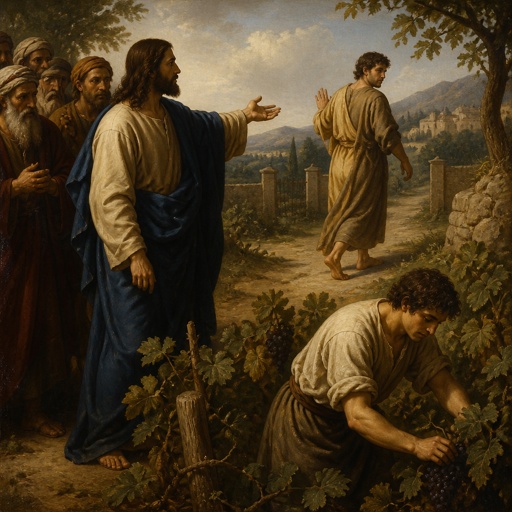
Matthew 21:28-32

Matthew 23:32 - "Fill ye up then the measure of your fathers."

1 Corinthians 14:32 - "And the spirits of the prophets are subject to the prophets."

Matthew 9:32 - "¶ As they went out, behold, they brought to him a dumb man possessed with a devil."

Numbers 14:32 - "But as for you, your carcases, they shall fall in this wilderness."

Matthew 26:32 - "But after I am risen again, I will go before you into Galilee."

Matthew 22:32 - "I am the God of Abraham, and the God of Isaac, and the God of Jacob? God is not the God of the dead, but of the living."

Matthew 7:13-14

Matthew 7:13-14

Matthew 7:13-14

Matthew 7:13-14

Matthew 7:13-14

Matthew 7:13-14

Matthew 7:13-14

Matthew 27:32 - "And as they came out, they found a man of Cyrene, Simon by name: him they compelled to bear his cross."

Matthew 7:13-14

Matthew 7:13-14

Matthew 7:13-14

Matthew 7:13-14

Matthew 20:32 - "And Jesus stood still, and called them, and said, What will ye that I shall do unto you?"

Matthew 5:14

Matthew 6:14

Matthew 5:14

Exodus 32:14 - "And the LORD repented of the evil which he thought to do unto his people."

Proverbs 14:32 - "The wicked is driven away in his wickedness: but the righteous hath hope in his death."