What does Matthew 15:28 mean?
“Then Jesus answered and said unto her, O woman, great is thy faith: be it unto thee even as thou wilt. And her daughter was made whole from that very hour.” — Matthew 15:28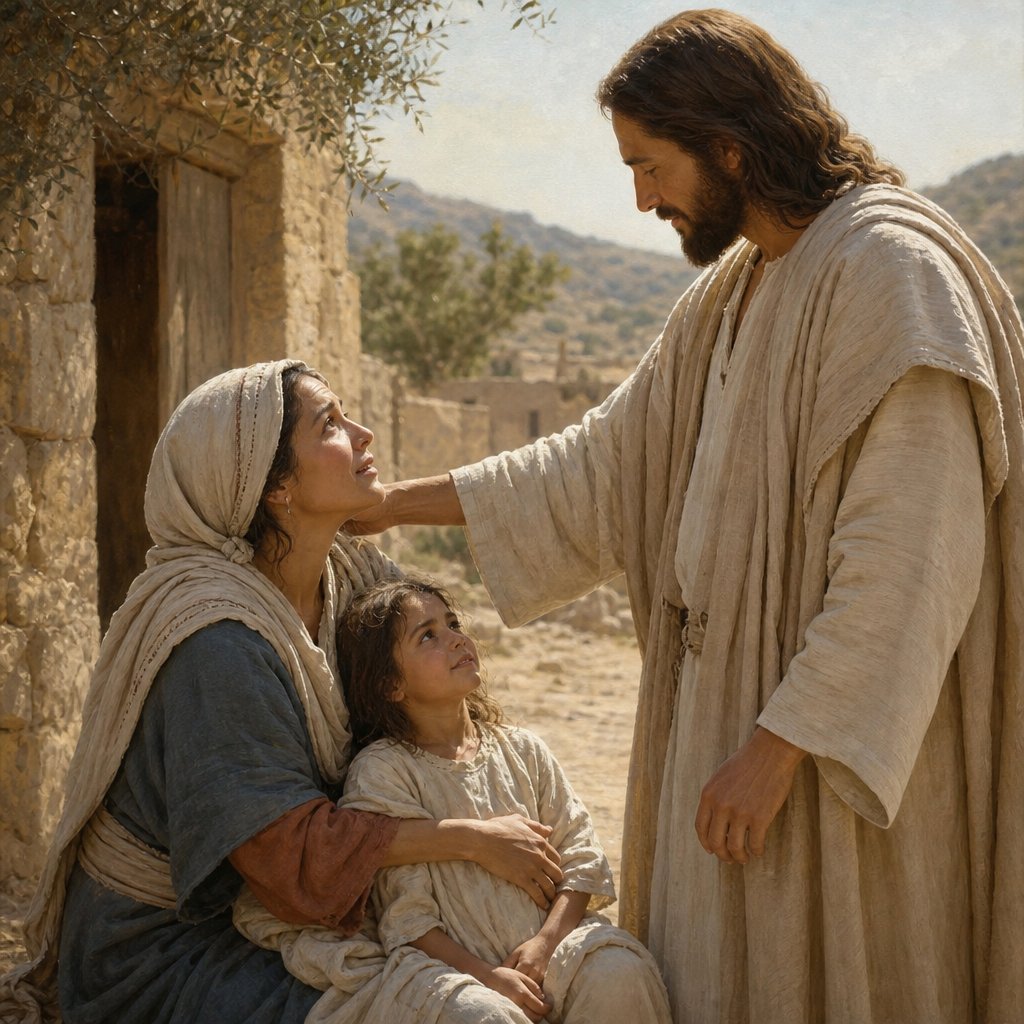
Matthew 15:28 in the King James Bible reads, “Then Jesus answered and said unto her, O woman, great is thy faith: be it unto thee even as thou wilt. And her daughter was made whole from that very hour.”
Its meaning is best understood as the climax of a carefully built encounter in Matthew 15:21–28, where Jesus “departed into the coasts of Tyre and Sidon,” and a woman of Canaan cries after him, “Have mercy on me, O Lord, thou Son of David; my daughter is grievously vexed with a devil.” She is a Gentile outsider, and Matthew’s setting outside Israel’s usual boundaries matters. The scene is not simply about a single healing; it is about the nature of faith, the order of God’s redemptive work, and the breaking open of mercy beyond expected borders.
When Jesus says, “O woman, great is thy faith,” he is not offering a polite compliment; he is issuing a divine verdict. In this Gospel, faith is not mere belief that God exists, but a persistent, humble, clinging reliance on Christ’s mercy and authority. The woman’s faith is “great” because it survives silence, apparent refusal, and the disciples’ desire to send her away. Earlier, she calls him “Son of David,” a distinctly messianic title tied to Israel’s hope, showing that she recognizes in Jesus more than a wonder-worker. Later she falls at his feet and says simply, “Lord, help me,” pressing past titles into dependence. Her greatness of faith is seen in the way she keeps coming, keeps asking, and keeps trusting that even if she is not first in line, mercy in Christ is real and sufficient.
The phrase, “be it unto thee even as thou wilt,” shows the personal and relational character of Jesus’ power. He grants her request not as a reluctant concession but as a willing act of royal authority: what she desires—her child’s deliverance—will be done. Yet the wording also reveals something about prayer. Her will, in this moment, is not stubborn self-assertion; it is a will shaped into agreement with the goodness of Christ. She wills what is merciful, what is deliverance, what magnifies his compassion. Jesus’ answer therefore displays a mystery that runs through Scripture: God remains sovereign, yet he invites earnest petition, and he delights to answer faith that comes to him rightly.
The immediate result, “And her daughter was made whole from that very hour,” emphasizes both completeness and authority at a distance. The healing is not partial and not delayed. “Made whole” signifies restoration, a return to soundness, not only relief of symptoms. The daughter is described earlier as “grievously vexed with a devil,” so the wholeness is deliverance from spiritual oppression, not merely physical recovery. That it happens “from that very hour” underscores that Jesus does not need proximity, touch, or ritual. His word is effective. In Matthew’s Gospel, this is a sign of the kingdom’s authority: Christ commands and it is done.
The verse also gathers up the symbolism and tension of the preceding exchange where Jesus says, “I am not sent but unto the lost sheep of the house of Israel,” and speaks of “the children’s bread” not being cast “to dogs.” Taken alone, those words can sound like rejection, but in the flow of the narrative they function as a test and a revelation. The woman’s reply—“Truth, Lord: yet the dogs eat of the crumbs which fall from their masters’ table”—is not self-pity, resentment, or bargaining; it is humble persistence that accepts the stated order (“Truth, Lord”) while still pleading for mercy within it (“yet”). She does not demand a seat at the table as a right; she asks for what falls from it as grace. The “bread” is a powerful symbol of covenant blessing and life-giving mercy. The “crumbs” are not small in power, because the power belongs to Christ, not to the portion. By granting her request, Jesus shows that mercy is not exhausted by being extended, and that the blessings promised through Israel’s Messiah will reach the nations.
In the larger context of Matthew, the verse points forward. Jesus’ earthly ministry is portrayed as beginning with Israel in focus, yet Matthew steadily hints that Gentiles will be gathered in. The Magi from the east come at his birth; a Roman centurion displays remarkable faith; and at the end, Jesus commands, “Go ye therefore, and teach all nations.” Matthew 15:28 is one of the bright moments along that path. It does not erase Israel’s role; it confirms that the Messiah’s goodness is so abundant that even those outside Israel’s covenant boundaries, when they come in faith, are not turned away. The woman of Canaan becomes a living sign that the kingdom is marked not by ancestry but by faith that bows to Christ and will not let him go.
The significance, then, is layered. It reveals Jesus as the compassionate Lord whose authority reaches beyond geography and ethnicity. It presents faith as persevering trust that submits to Christ’s order while pleading for his mercy. It demonstrates that what looks like a closed door can become, in God’s wisdom, the place where true faith is exposed and honored. And it shows that Christ’s word brings immediate, complete deliverance: “her daughter was made whole from that very hour.”
Get our apps


Artwork for Matthew 15:28
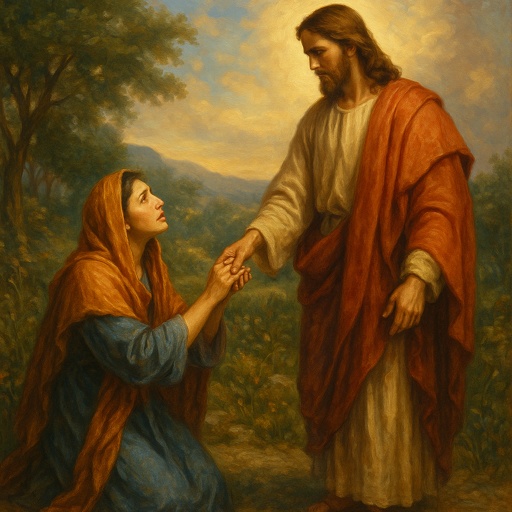
"Then Jesus answered and said unto her, O woman, great is thy faith: be it unto thee even as thou wilt. And her daughter was made whole from that very hour." - Matthew 15:28

Matthew 15:28 - "Then Jesus answered and said unto her, O woman, great is thy faith: be it unto thee even as thou wilt. And her daughter was made whole from that very hour."
"Then Jesus answered and said unto her, O woman, great is thy faith: be it unto thee even as thou wilt. And her daughter was made whole from that very hour." - Matthew 15:28

Matthew 28:15 - "So they took the money, and did as they were taught: and this saying is commonly reported among the Jews until this day."

matthew 15 matthew 15:10

"So they took the money, and did as they were taught: and this saying is commonly reported among the Jews until this day." - Matthew 28:15

matthew 28:19

matthew 28:19

MATTHEW 28: 23

Matthew 23:28

matthew 8:28

Matthew 28:11

Matthew 23:28
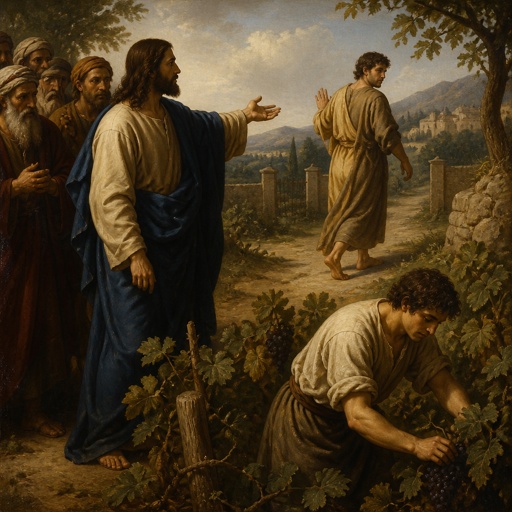
Matthew 21:28-32

Matthew 28:19-20

Matthew 28:19-20

Matthew 28: 19-20

Matthew 28:19-20

Genesis 28-15

Matthew 24:28 - "For wheresoever the carcase is, there will the eagles be gathered together."

Matthew 27:28 - "And they stripped him, and put on him a scarlet robe."

Matthew 28:17 - "And when they saw him, they worshipped him: but some doubted."

1 Samuel 28:15

Exodus 28:15-30

Matthew 28:3 - "His countenance was like lightning, and his raiment white as snow:"

Matthew 28:4 - "And for fear of him the keepers did shake, and became as dead men."

Joshua 15:28 - "And Hazar-shual, and Beer-sheba, and Bizjothjah,"

Matthew 28:14 - "And if this come to the governor's ears, we will persuade him, and secure you."

Matthew 26:15

Matthew 26:15