What does Matthew 17:4 mean?
“Then answered Peter, and said unto Jesus, Lord, it is good for us to be here: if thou wilt, let us make here three tabernacles; one for thee, and one for Moses, and one for Elias.” — Matthew 17:4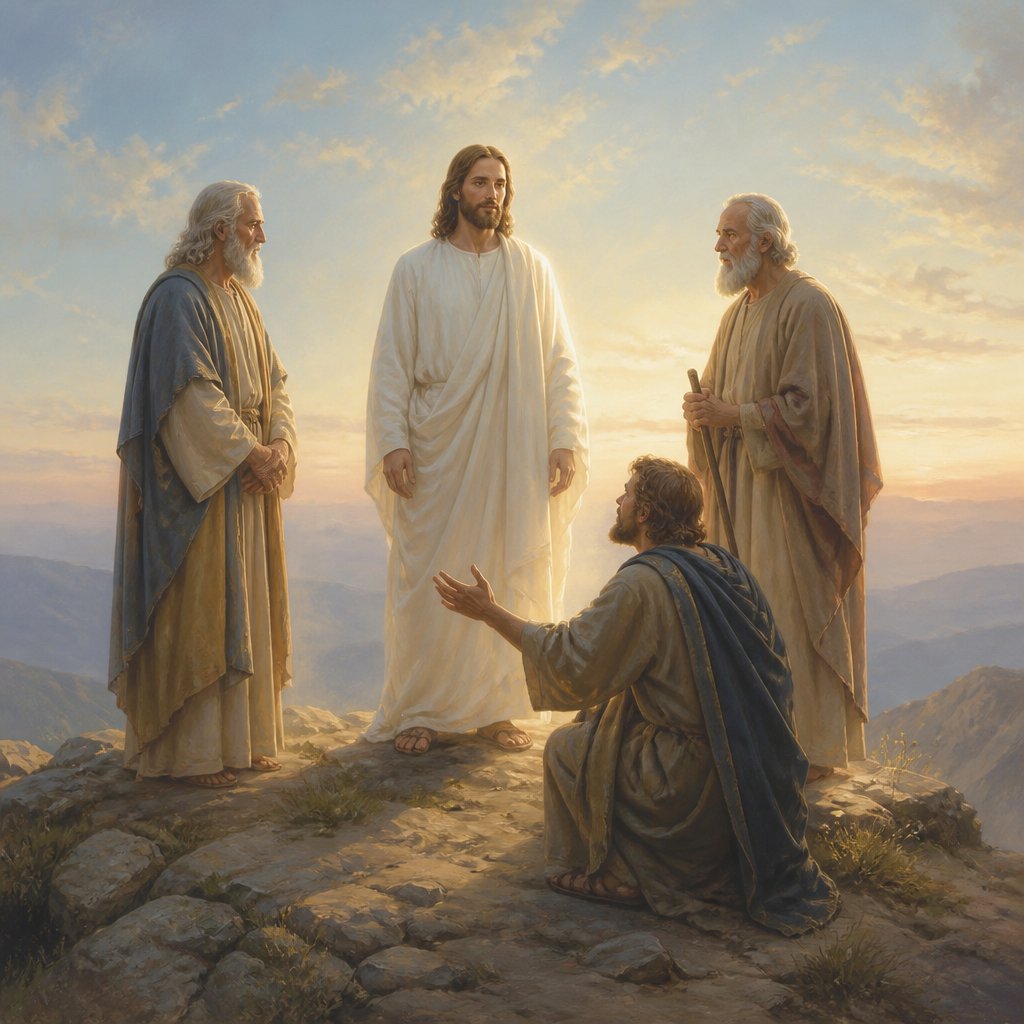
Matthew 17:4 (KJV) reads, "Then answered Peter, and said unto Jesus, Lord, it is good for us to be here: if thou wilt, let us make here three tabernacles; one for thee, and one for Moses, and one for Elias."
This verse is part of the account of the Transfiguration of Jesus, which is found in Matthew 17:1-13. The Transfiguration is a pivotal moment in the Gospels, as it is a glimpse of Jesus' true divine nature and also a foreshadowing of his glory after his resurrection.
In the verses leading up to Matthew 17:4, Jesus took Peter, James, and John up on a high mountain, where he was transfigured before them. His face shone like the sun, and his clothes became as white as light. Then, Moses and Elijah appeared and talked with Jesus. It is in this context that Peter, overwhelmed by the divine presence, makes the statement recorded in Matthew 17:4.
Peter's response, "Lord, it is good for us to be here," reflects his recognition of the sacredness and significance of the moment. His proposal to build three tabernacles—one for Jesus, one for Moses, and one for Elijah—may have been influenced by the Jewish Feast of Tabernacles (Sukkot), during which temporary shelters were built to commemorate the Israelites' time in the wilderness and to celebrate the harvest. Peter's suggestion may have been a well-intentioned attempt to honor Jesus and the two great figures from Israel's history.
However, the significance of this verse goes beyond Peter's understandable desire to preserve the moment. His proposal reflects a common human tendency to try to institutionalize or contain divine encounters. It is an impulse to grasp at tangible forms and structures in the face of the transcendent and ineffable. But the voice from the cloud in the next verse, which identifies Jesus as the beloved Son of God, makes it clear that no structure or tabernacle could contain the divine presence of Jesus.
This episode also underscores the theme of the fulfillment of the Law and the Prophets in Jesus. The appearance of Moses and Elijah, representing the Law and the Prophets respectively, alongside Jesus signifies that he is the fulfillment and culmination of the Old Testament scriptures. This pivotal moment serves to connect the ministry of Jesus with the entire history of God's redemptive work among his people.
In terms of symbolism, the presence of Moses and Elijah is deeply significant. Moses represents the Law, as he was the one who received the Law from God on Mount Sinai. Elijah represents the prophets, as he was one of the greatest prophets in Israel's history. The appearance of Moses and Elijah with Jesus points to his continuity with the Old Testament tradition and his role as the fulfillment of the Law and the Prophets.
Furthermore, the cloud that overshadowed them and the voice from the cloud recall the presence of God in the Old Testament, particularly in the Exodus and the giving of the Law. The voice from the cloud affirming Jesus as the beloved Son echoes the voice from heaven at Jesus' baptism, affirming his identity and mission.
In conclusion, Matthew 17:4 captures a moment of profound significance in the ministry of Jesus. It reveals his divine nature, his relationship to the Law and the Prophets, and his unique role in God's redemptive plan. Peter's response and the events of the Transfiguration serve as a powerful reminder of the awe-inspiring nature of encountering the divine and the need to approach such encounters with humility and reverence.
Get our apps


Artwork for Matthew 17:4

Matthew 17:4 - "Then answered Peter, and said unto Jesus, Lord, it is good for us to be here: if thou wilt, let us make here three tabernacles; one for thee, and one for Moses, and one for Elias."
"Then answered Peter, and said unto Jesus, Lord, it is good for us to be here: if thou wilt, let us make here three tabernacles; one for thee, and one for Moses, and one for Elias." - Matthew 17:4

Matthew 4:17 - "¶ From that time Jesus began to preach, and to say, Repent: for the kingdom of heaven is at hand."

Matthew 17:17-18
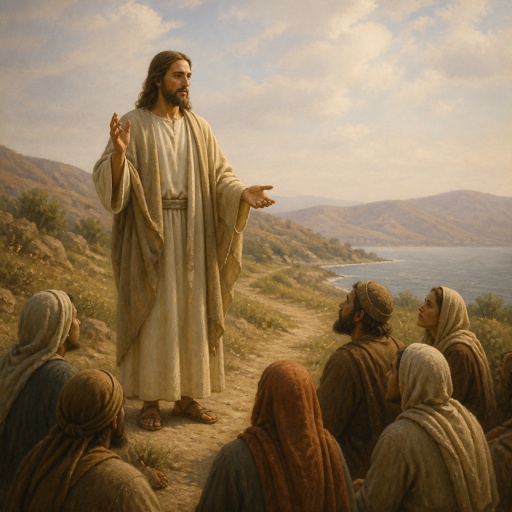
"¶ From that time Jesus began to preach, and to say, Repent: for the kingdom of heaven is at hand." - Matthew 4:17

Matthew 17:17-18

Matthew 6:17

Matthew 17:20

Matthew 17:20

Matthew 19:16-17

Matthew 6:17-18

Matthew 17:14-21

Matthew 17:14-15

Matthew 3:13-17

Matthew 2:17 - "Then was fulfilled that which was spoken by Jeremy the prophet, saying,"

Matthew 17:21 - "Howbeit this kind goeth not out but by prayer and fasting."

Matthew 12:17 - "That it might be fulfilled which was spoken by Esaias the prophet, saying,"

Matthew 17:7 - "And Jesus came and touched them, and said, Arise, and be not afraid."

Matthew 28:17 - "And when they saw him, they worshipped him: but some doubted."

Matthew 17:6 - "And when the disciples heard it, they fell on their face, and were sore afraid."

Matthew 17:3 - "And, behold, there appeared unto them Moses and Elias talking with him."

Matthew 17:16 - "And I brought him to thy disciples, and they could not cure him."

Matthew 17:13 - "Then the disciples understood that he spake unto them of John the Baptist."

Matthew 4:10

Matthew 4:1

Matthew 6:4
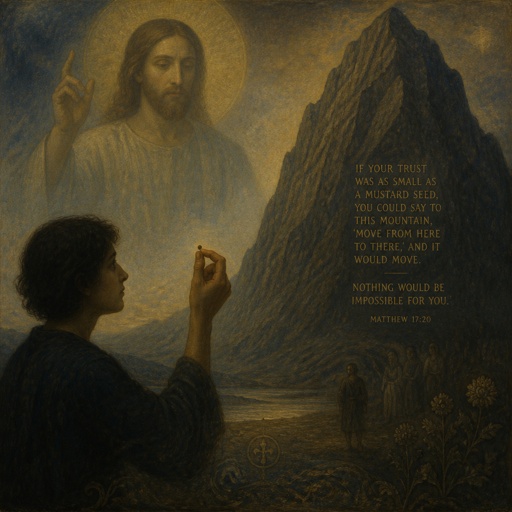
“Because you don't trust enough,” Jesus told them. “I tell you, even if your trust was as small as a mustard seed, you could say to this mountain, ‘Move from here to there,’ and it would move. Nothing would be impossible for you.” Matthew 17:20 https://bible.art/verse/matthew-17:20

Matthew 21:17 - "¶ And he left them, and went out of the city into Bethany; and he lodged there."

Matthew 10:17 - "But beware of men: for they will deliver you up to the councils, and they will scourge you in their synagogues;"

Matthew 23:17 - "Ye fools and blind: for whether is greater, the gold, or the temple that sanctifieth the gold?"