What does Matthew 17:18 mean?
"And Jesus rebuked the devil; and he departed out of him: and the child was cured from that very hour." - Matthew 17:18
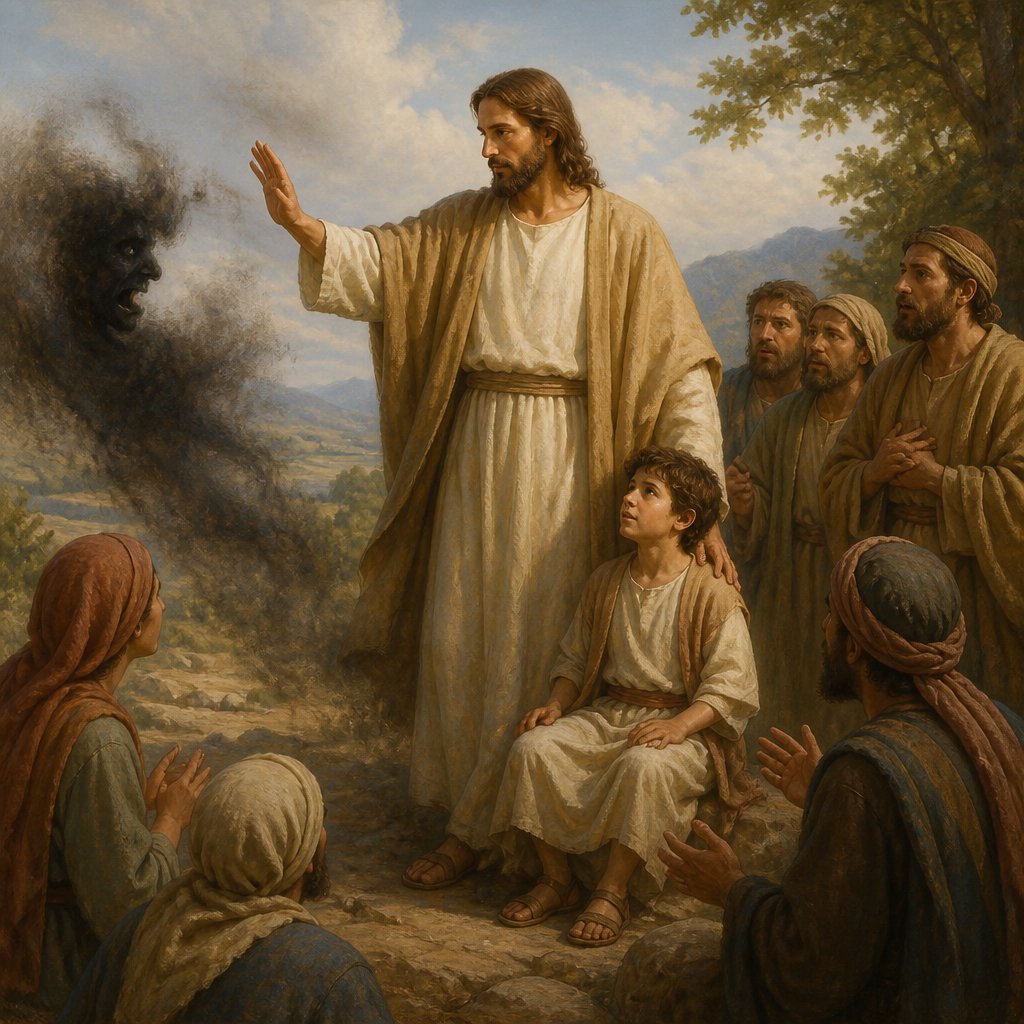
Matthew 17:18 (KJV) - "And Jesus rebuked the devil; and he departed out of him: and the child was cured from that very hour."
This verse comes from the Gospel of Matthew in the New Testament and is part of the larger narrative of Jesus' ministry on earth. In this particular passage, Jesus and three of his disciples, Peter, James, and John, come down from the mountain after the Transfiguration. When they arrive, they find a man who approaches Jesus, pleading with him to heal his son who is suffering from seizures and is often thrown into the fire and water. The man describes how the disciples were unable to cure him, and Jesus expresses his frustration with the lack of faith and perverse generation before healing the boy.
This verse is significant as it showcases Jesus' authority over evil and his ability to heal those who are afflicted. It also serves as a demonstration of the power of faith and the importance of belief in the miracles of Jesus.
The theme of spiritual warfare is central to this verse. Throughout the Gospels, Jesus encounters and confronts evil in its various forms, whether it be through demonic possession, illness, or moral corruption. In this instance, the child's affliction is attributed to demonic influence, and Jesus rebukes the devil before casting it out of the child. This demonstrates the ongoing battle between good and evil and emphasizes that Jesus is the ultimate victor over the forces of darkness.
The context of this verse is crucial for understanding its full meaning. The disciples were unable to heal the boy, leading to the frustration of both the father and Jesus. This prompts Jesus to rebuke the evil spirit and command it to leave the child, instantly curing him. The lack of faith and the ineffectiveness of the disciples serve as a reminder of the importance of unwavering belief in Jesus' ability to perform miracles, as well as the necessity of relying on Him for spiritual guidance and power.
Symbolism plays a significant role in this verse as well. The presence of the devil in the child and Jesus' ability to cast it out symbolize the ongoing struggle between good and evil. The fire and water into which the boy is often thrown represent the danger and chaos that the devil brings into the lives of those it possesses. Jesus' act of healing and deliverance symbolizes his role as the ultimate savior and the source of redemption and liberation from all forms of oppression and suffering.
Furthermore, the verse emphasizes the importance of faith in Jesus' ability to perform miracles. The father's plea for help and Jesus' subsequent healing of the boy serve as a reminder of the power of faith in overcoming adversity. This theme is consistent throughout the Gospels, as Jesus frequently emphasizes the significance of faith and belief in Him as the key to receiving blessings and miracles.
In conclusion, Matthew 17:18 is a powerful demonstration of Jesus' authority over evil and his ability to heal those in need. It serves as a reminder of the ongoing spiritual warfare and the importance of unwavering faith in Jesus' ability to perform miracles. The verse also highlights the symbolism of the struggle between good and evil and the necessity of relying on Jesus for spiritual liberation and deliverance.
Have questions about Matthew 17:18?
Dive deeper into this scripture with Bible Chat — an AI-powered tool for exploring God's Word through conversation. Ask questions, get context, and grow in your understanding of the Bible.
Get Our Apps


Matthew 17:18 Artwork

Matthew 17:18 - "And Jesus rebuked the devil; and he departed out of him: and the child was cured from that very hour."
"And Jesus rebuked the devil; and he departed out of him: and the child was cured from that very hour." - Matthew 17:18

Matthew 17:17-18

Matthew 17:17-18

Matthew 6:17-18

Matthew 18:17 - "And if he shall neglect to hear them, tell it unto the church: but if he neglect to hear the church, let him be unto thee as an heathen man and a publican."

Matthew 18:6

Matthew 18:10

Matthew 18:6

Matthew 6:18

Matthew 18:20

Matthew 6:17

Matthew 17:20

Matthew 17:20

John 7:17-18

John 7:17-18

Matthew 6:18

Matthew 18:20

Matthew 18:6

Matthew 18:20

John 7:17-18

John 7:17-18

Matthew 18:23-34

Matthew 18:23-34

Matthew 18:23-34

Genesis 18-17

Matthew 19:16-17

Matthew 17:14-21

Matthew 3:13-17

Matthew 17:14-15