What does Matthew 18:29 mean?
“And his fellowservant fell down at his feet, and besought him, saying, Have patience with me, and I will pay thee all.” — Matthew 18:29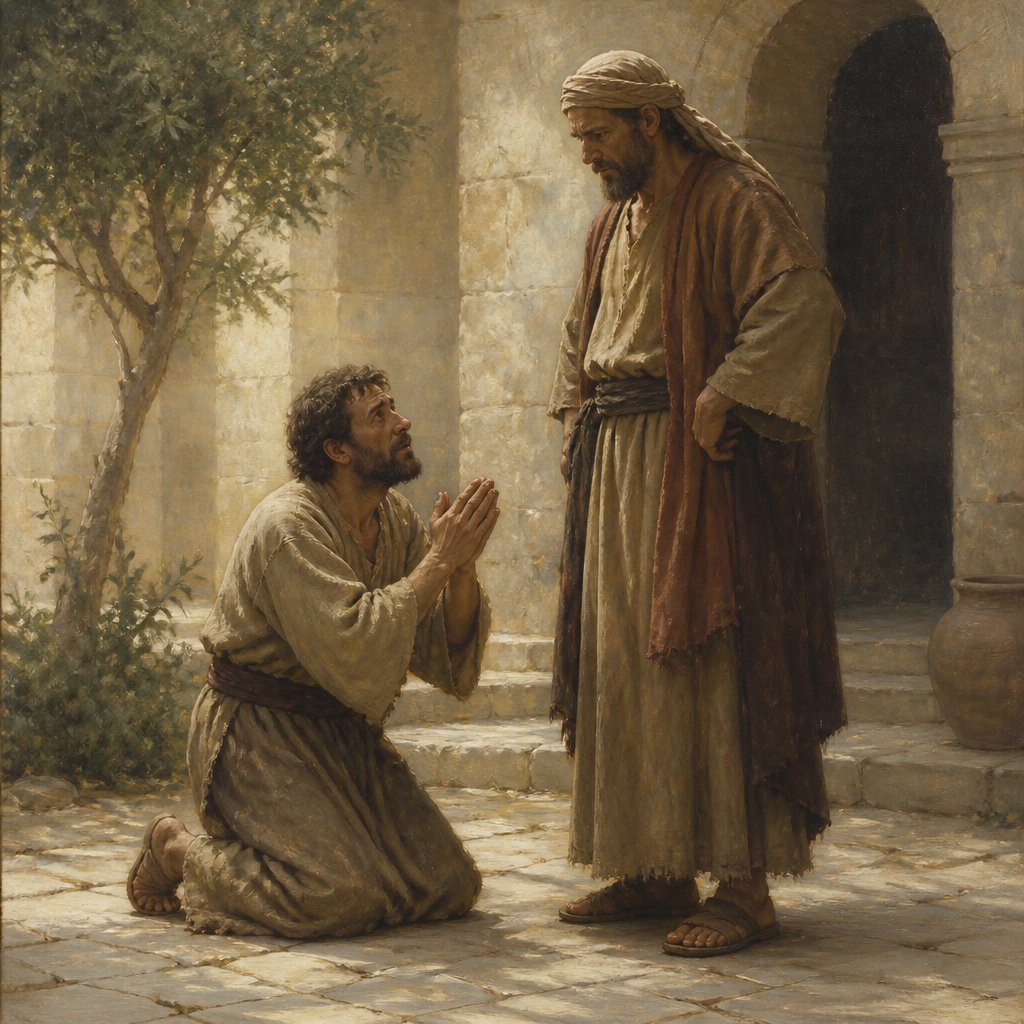
Matthew 18:29 (KJV) states, "And his fellowservant fell down at his feet, and besought him, saying, Have patience with me, and I will pay thee all."
This verse is part of a larger passage in the New Testament where Jesus addresses the issue of forgiveness and mercy. In this particular parable, Jesus tells the story of a servant who owes a large sum of money to his master. The servant begs for mercy and the master forgives his debt completely. However, the same servant then refuses to forgive a smaller debt owed to him by a fellow servant, despite the fellow servant begging for patience and promising to repay the debt.
The theme of forgiveness is central to this passage, as Jesus emphasizes the importance of extending mercy to others just as we have received it from God. The verse also highlights the human tendency to receive grace and forgiveness, but struggle to extend that same grace to others.
The context of this verse is important in understanding its meaning. Jesus uses this parable to emphasize the importance of forgiveness within the Christian community. In the broader passage of Matthew 18, Jesus instructs his disciples on how to handle conflict and reconciliation within the church. He emphasizes the need for humility, forgiveness, and love for one another. The verse serves as a reminder that God's forgiveness of our sins should move us to extend that same forgiveness to others, without keeping a record of wrongs or demanding immediate repayment.
The symbolism in this verse lies in the contrast between the two servants. The first servant represents humanity as a whole, who has been forgiven an insurmountable debt by God. This reflects the concept of salvation and the unmerited grace that Christians believe they have received through the sacrifice of Jesus Christ. The second servant, on the other hand, represents the unwillingness of some individuals to forgive others, despite receiving forgiveness themselves. This highlights the hypocrisy and lack of gratitude that can sometimes characterize human interactions.
Furthermore, the act of falling down at the feet of the master, as the fellow servant does in this verse, symbolizes humility and submission. It conveys a sense of desperation and vulnerability, as the servant pleads for mercy and patience. This imagery emphasizes the need for humility in seeking forgiveness and the importance of acknowledging our own shortcomings before expecting grace from others.
Overall, Matthew 18:29 serves as a powerful reminder of the transformative nature of God's forgiveness and the responsibility it places on believers to extend that same forgiveness to others. The verse challenges Christians to examine their own hearts and actions, and to consider the depth of God's mercy in their relationships with others. It calls for a spirit of humility, compassion, and a willingness to let go of past wrongs, in order to foster reconciliation and unity within the body of Christ.
Get our apps


Artwork for Matthew 18:29

Matthew 18:29 - "And his fellowservant fell down at his feet, and besought him, saying, Have patience with me, and I will pay thee all."
"And his fellowservant fell down at his feet, and besought him, saying, Have patience with me, and I will pay thee all." - Matthew 18:29

Matthew 20:29-34

Isaiah 29:18

Genesis 18-29

Matthew 7:24-29

Matthew 7:24-29

Matthew 20:29 - "And as they departed from Jericho, a great multitude followed him."

Matthew 7:29 - "For he taught them as one having authority, and not as the scribes."

Matthew 18:6

Matthew 21:29 - "He answered and said, I will not: but afterward he repented, and went."

Matthew 6:29 expressed as a rose garden

Matthew 18:10

Matthew 18:6

Matthew 18:20

Matthew 6:18

Matthew 9:29 - "Then touched he their eyes, saying, According to your faith be it unto you."

Matthew 6:18

Matthew 18:20

Matthew 18:6

Matthew 18:20

Matthew 18:23-34

Matthew 17:17-18

Matthew 18:23-34

Matthew 18:23-34

Proverbs 29:18 - "Where there is no vision, the people perish: but he that keepeth the law, happy is he."

Matthew 6:17-18

Matthew 18:23-34

Matthew 17:17-18

Matthew 13:18 - "¶ Hear ye therefore the parable of the sower."