What does Matthew 18:35 mean?
“So likewise shall my heavenly Father do also unto you, if ye from your hearts forgive not every one his brother their trespasses.” — Matthew 18:35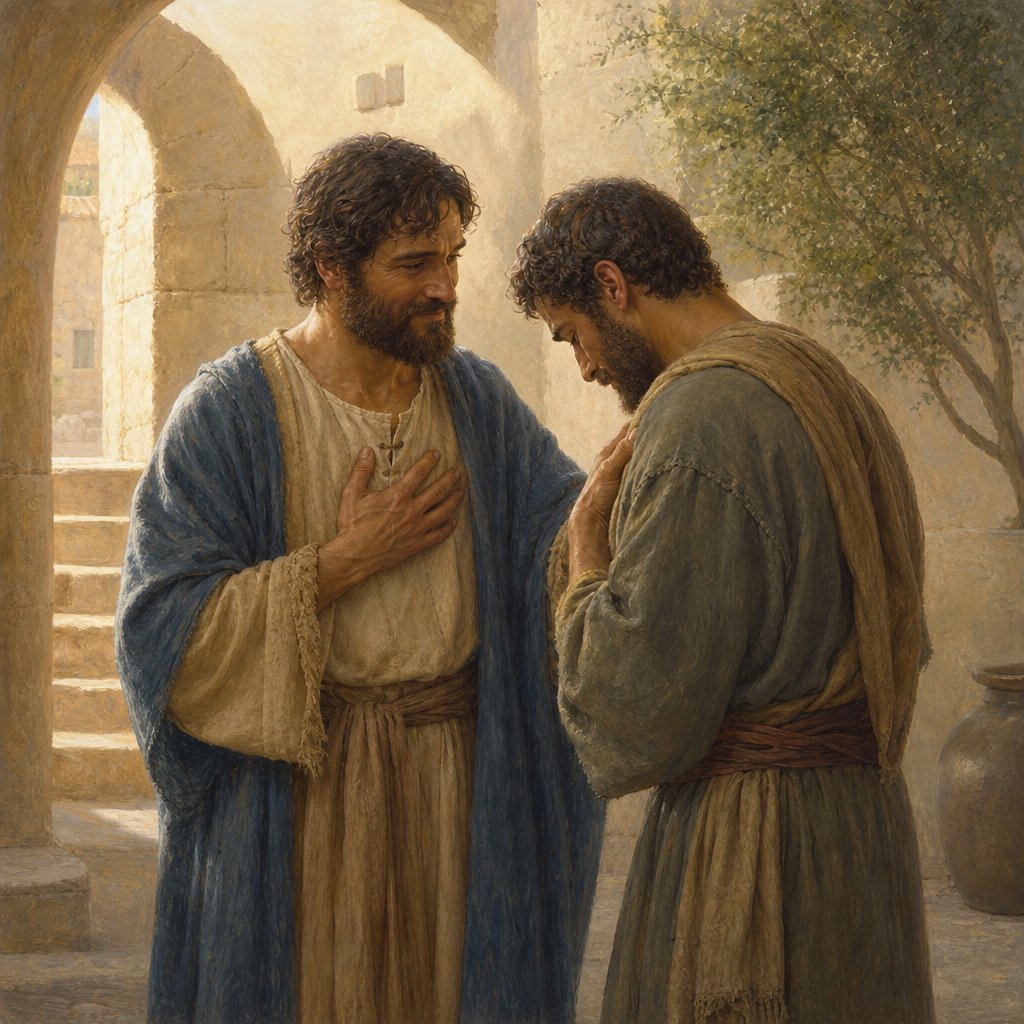
The verse Matthew 18:35 from the King James Version (KJV) of the Bible reads: "So likewise shall my heavenly Father do also unto you, if ye from your hearts forgive not every one his brother their trespasses." This verse is part of the larger context of Matthew 18, where Jesus is teaching about forgiveness and reconciliation within the Christian community.
The parable preceding this verse is the Parable of the Unforgiving Servant, where a servant who owed a great debt to his master is forgiven, but then refuses to forgive a fellow servant who owes him a much smaller debt. The master, upon learning of this, becomes angry and punishes the unforgiving servant. This parable is a powerful illustration of the importance of forgiveness and the consequences of refusing to forgive others.
The verse in question, Matthew 18:35, is the conclusion of this parable and serves as a warning to Christians about the necessity of forgiveness. Jesus uses strong language to emphasize the importance of forgiving others, stating that if we do not forgive others from our hearts, then our heavenly Father will not forgive us. This reflects the Lord's Prayer, where Jesus teaches his disciples to pray, "forgive us our debts, as we also have forgiven our debtors" (Matthew 6:12).
The overarching theme in this verse is forgiveness. Jesus is teaching his followers about the importance of forgiving others as a fundamental aspect of the Christian life. It is a commandment that is woven throughout the New Testament and is highlighted by Jesus as a crucial component of living in community with one another.
One can also interpret this verse as a reflection of the grace and mercy that God extends to us as sinners. The staggering difference between the debts owed by the two servants in the parable—representing the enormity of the debt of sin we owe to God compared to the relatively minor offenses committed against us—underscores the magnitude of God's forgiveness and the humility and compassion it should inspire in us as recipients of that grace.
Another important theme in this verse is the interconnectedness of forgiveness and reconciliation. By instructing his followers to forgive others from their hearts, Jesus is emphasizing the importance of genuine, heartfelt forgiveness that extends beyond mere words. He is calling for a deep and transformative forgiveness that seeks to restore and reconcile relationships within the Christian community.
The context of this verse is crucial for understanding its significance. In the larger passage of Matthew 18, Jesus is addressing the disciples' question about who is the greatest in the kingdom of heaven. In response, Jesus calls a child to stand among them and teaches them about humility, causing no one to stumble, and the importance of reconciliation. He then addresses the issue of sin within the community and the process of reconciliation, leading into the parable of the Unforgiving Servant and the consequent warning about forgiveness in verse 35.
Finally, the symbolism in this verse is profound. The heavenly Father's forgiveness and the imperative for Christians to forgive others are symbolized by the master's forgiveness of the enormous debt in the parable. The debts and trespasses represent sins and offenses, and the consequence of not forgiving is likened to the master's punishment of the unforgiving servant. This symbolism reinforces the overarching message of the parable and the verse: that forgiveness is integral to the Christian faith and is inseparable from God's own forgiveness and grace.
In conclusion, Matthew 18:35 from the King James Version of the Bible is a powerful and convicting verse that emphasizes the imperative of forgiveness in the Christian life. It serves as a warning to believers about the consequences of refusing to forgive others and calls for a deeper understanding of the grace and mercy of God's forgiveness. The themes, context, and symbolism of this verse all contribute to its profound and timeless message about the transformative power of forgiveness within the Christian community.
Get our apps


Artwork for Matthew 18:35
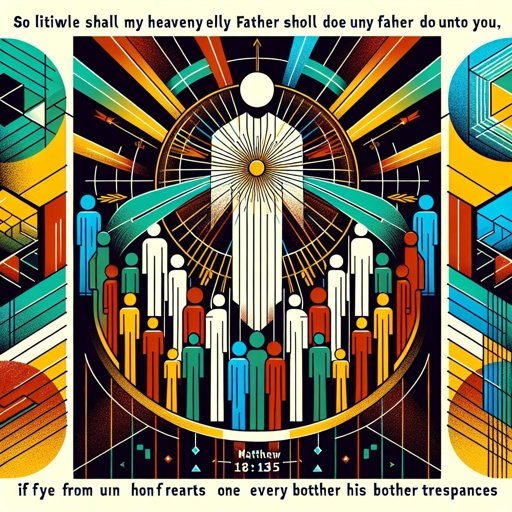
Matthew 18:35 - "So likewise shall my heavenly Father do also unto you, if ye from your hearts forgive not every one his brother their trespasses."
"So likewise shall my heavenly Father do also unto you, if ye from your hearts forgive not every one his brother their trespasses." - Matthew 18:35

Matthew 24:35

Matthew 24:35

Matthew 24:35

Matthew 24:35

Matthew 24:35

Matthew 24:35

Matthew 24:35

Matthew 24:35

Matthew 24:35

Matthew 24:35

Matthew 27:35

Matthew 15:35 - "And he commanded the multitude to sit down on the ground."

Exodus 35:18 - "The pins of the tabernacle, and the pins of the court, and their cords,"

Matthew 5:35 - "Nor by the earth; for it is his footstool: neither by Jerusalem; for it is the city of the great King."

Matthew 24:35 - "Heaven and earth shall pass away, but my words shall not pass away."

Matthew 22:35 - "Then one of them, which was a lawyer, asked him a question, tempting him, and saying,"

Matthew 21:35 - "And the husbandmen took his servants, and beat one, and killed another, and stoned another."

1 Kings 18:35 - "And the water ran round about the altar; and he filled the trench also with water."

"The pins of the tabernacle, and the pins of the court, and their cords," - Exodus 35:18

Psalms 35:18 - "I will give thee thanks in the great congregation: I will praise thee among much people."

Matthew 18:6

Matthew 18:10

Matthew 18:6

Matthew 18:20

Matthew 6:18

"And he commanded the multitude to sit down on the ground." - Matthew 15:35

Matthew 6:18

Matthew 18:20