What does Matthew 23:39 mean?
“For I say unto you, Ye shall not see me henceforth, till ye shall say, Blessed is he that cometh in the name of the Lord.” — Matthew 23:39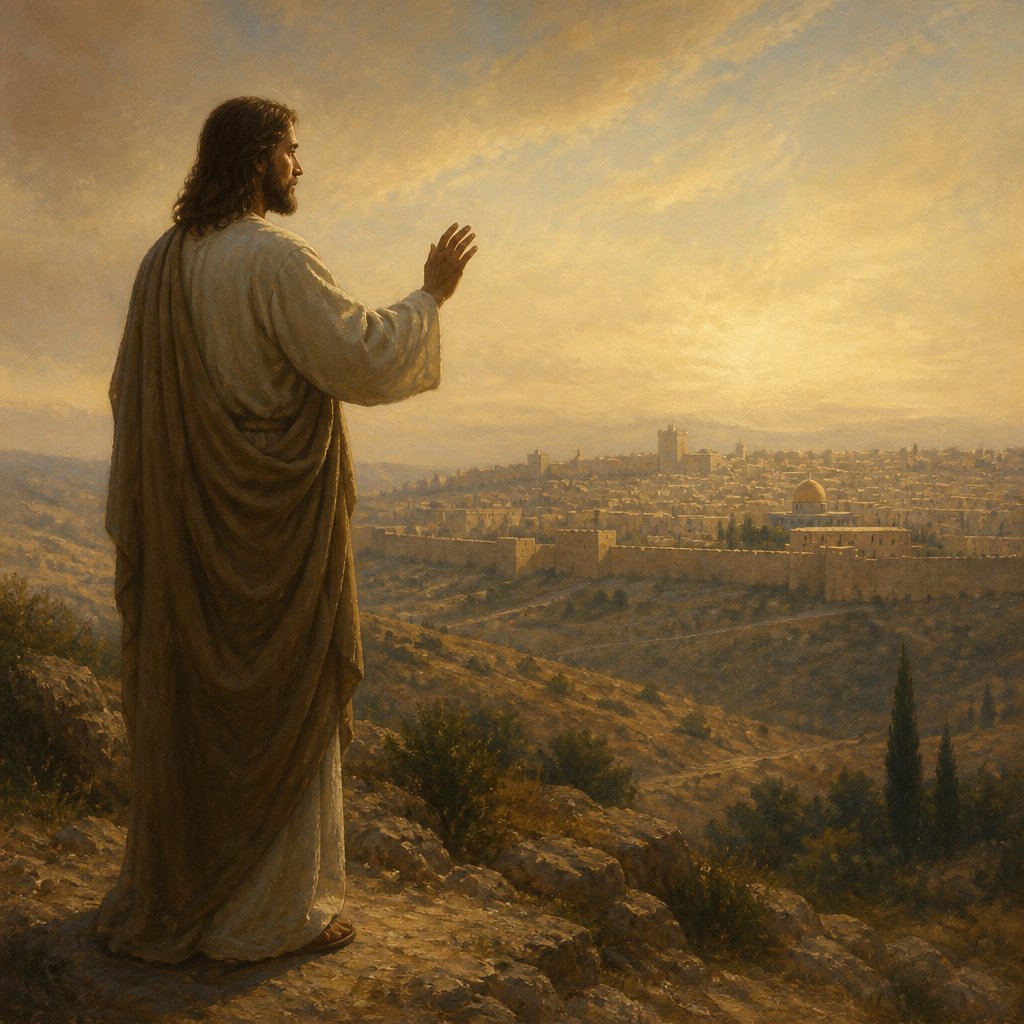
Matthew 23:39 in the King James Version of the Bible reads, "For I say unto you, Ye shall not see me henceforth, till ye shall say, Blessed is he that cometh in the name of the Lord." This verse is part of a larger passage in which Jesus condemns the hypocrisy and self-righteousness of the scribes and Pharisees.
To understand the full meaning and significance of this verse, it is important to consider its context within the larger narrative of Jesus' life and teachings. In the preceding verses, Jesus has been denouncing the religious leaders for their hypocrisy and lack of true righteousness. He warns them of the consequences of their actions, declaring that they will not see Him until they acknowledge and bless His coming in the name of the Lord.
One of the key themes in this verse is the concept of recognition and acknowledgment. Jesus is essentially saying that the religious leaders will not have the opportunity to see Him again until they recognize and accept Him as the Messiah, the one who comes in the name of the Lord. This emphasizes the importance of authentic faith and genuine recognition of Jesus as the Son of God.
The verse also touches on the theme of blessing and reverence for Jesus. The religious leaders are called to acknowledge and bless the coming of Jesus in the name of the Lord, indicating that genuine faith involves not only recognition but also honor and reverence for the Messiah.
Symbolically, this verse can be seen as a foreshadowing of Jesus' eventual return and the need for all people to acknowledge and honor Him as the Son of God. It carries a sense of warning and urgency, emphasizing the importance of genuine faith and recognition of Jesus as the Messiah.
In the broader context of the Gospel of Matthew, this verse also ties into the themes of judgment and the ultimate authority of Jesus. Throughout the Gospel, Jesus consistently challenges the religious authority of the scribes and Pharisees and asserts His own divine authority as the Son of God. This verse serves as a poignant reminder of the consequences of rejecting Jesus and the importance of acknowledging Him as the one who comes in the name of the Lord.
In a broader theological context, this verse also points to the fulfillment of Old Testament prophecies regarding the coming of the Messiah. The phrase "Blessed is he that cometh in the name of the Lord" echoes the words of Psalm 118:26, which was traditionally used as a greeting for the Messiah. By using this language, Jesus is affirming His identity as the long-awaited Savior foretold in the Hebrew Scriptures.
Overall, Matthew 23:39 is a powerful and significant verse that carries a message of warning, urgency, and ultimate recognition of Jesus as the Son of God. It speaks to the themes of faith, authority, and the fulfillment of Old Testament prophecies. It serves as a reminder of the importance of authentic recognition and honor for Jesus, and as a call to acknowledge His divine authority and role as the Messiah.
Get our apps


Artwork for Matthew 23:39

Matthew 23:39 - "For I say unto you, Ye shall not see me henceforth, till ye shall say, Blessed is he that cometh in the name of the Lord."
"For I say unto you, Ye shall not see me henceforth, till ye shall say, Blessed is he that cometh in the name of the Lord." - Matthew 23:39

Matthew 22:37-39

Matthew 27:39 - "¶ And they that passed by reviled him, wagging their heads,"

2 Samuel 23:39 - "Uriah the Hittite: thirty and seven in all."

Job 39:23 - "The quiver rattleth against him, the glittering spear and the shield."

Matthew 21:39 - "And they caught him, and cast him out of the vineyard, and slew him."

Matthew 22:39 - "And the second is like unto it, Thou shalt love thy neighbour as thyself."

Matthew 13:39 - "The enemy that sowed them is the devil; the harvest is the end of the world; and the reapers are the angels."

Matthew 15:39 - "And he sent away the multitude, and took ship, and came into the coasts of Magdala."

Matthew 25:39 - "Or when saw we thee sick, or in prison, and came unto thee?"

Exodus 39:23 - "And there was an hole in the midst of the robe, as the hole of an habergeon, with a band round about the hole, that it should not rend."

"¶ And they that passed by reviled him, wagging their heads," - Matthew 27:39

Matthew 6:23

Luke 23:39 - "¶ And one of the malefactors which were hanged railed on him, saying, If thou be Christ, save thyself and us."

"Uriah the Hittite: thirty and seven in all." - 2 Samuel 23:39

Matthew 10:39 - "He that findeth his life shall lose it: and he that loseth his life for my sake shall find it."

Matthew 24:39 - "And knew not until the flood came, and took them all away; so shall also the coming of the Son of man be."

Matthew 25:23

Matthew 2:23

Matthew 15:23

Matthew 2:23

Matthew 23:12

Matthew 23:12

"The quiver rattleth against him, the glittering spear and the shield." - Job 39:23

Matthew 2:23

Matthew 23:28

Matthew 25:23

MATTHEW 28: 23

Matthew 15:23