What does Matthew 25:3 mean?
“They that were foolish took their lamps, and took no oil with them:” — Matthew 25:3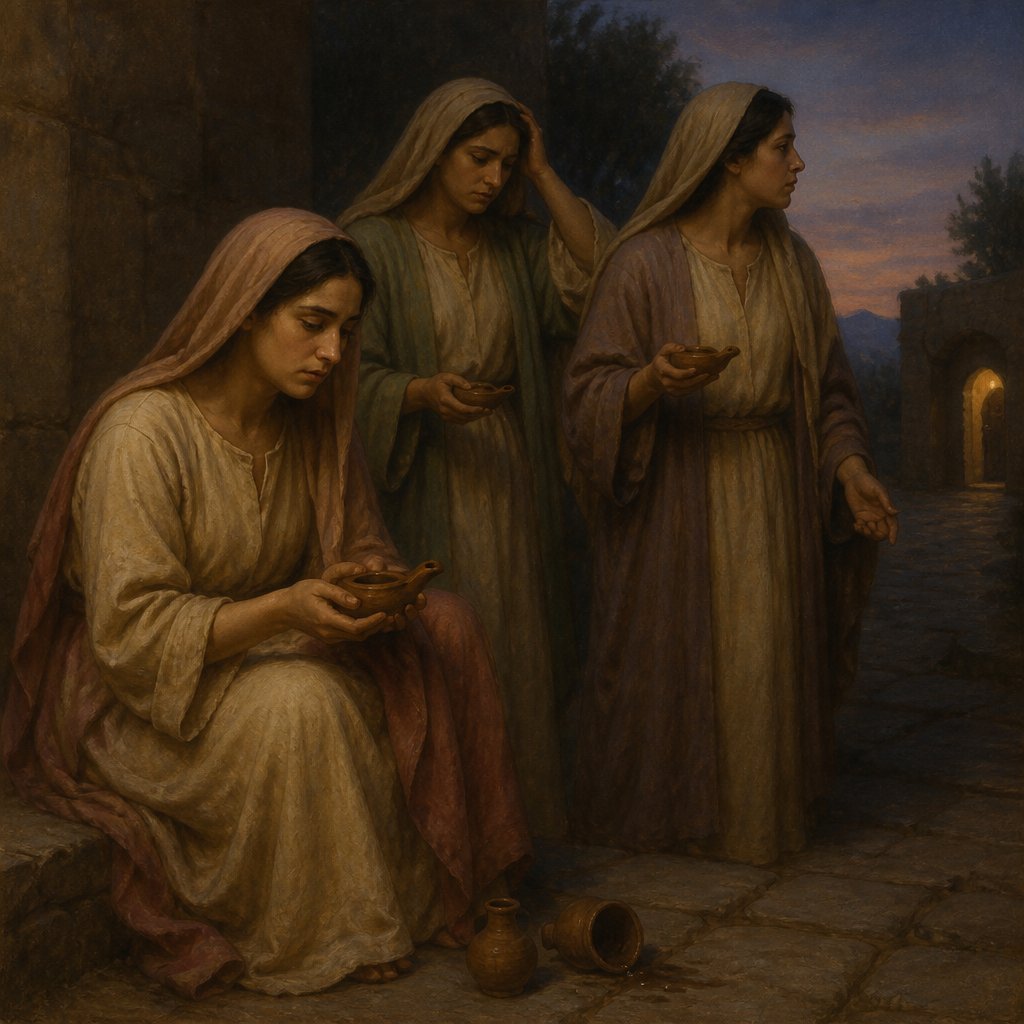
The Bible verse Matthew 25:3 in the King James Version (KJV) reads, "They that were foolish took their lamps, and took no oil with them." This verse is a part of a larger parable told by Jesus, known as the Parable of the Ten Virgins, which is found in Matthew 25:1-13. In this parable, Jesus uses the metaphor of ten virgins waiting for the bridegroom to arrive to teach his disciples about the importance of being spiritually prepared for his second coming.
The context of this verse is crucial to understanding its deeper meaning. In the preceding verses, Jesus tells the story of ten virgins who took their lamps and went out to meet the bridegroom. Five of the virgins were wise and took oil with them, while the other five were foolish and did not bring oil. The bridegroom was delayed in his coming, and the virgins fell asleep. At midnight, a cry was made that the bridegroom was coming, and all the virgins arose and trimmed their lamps. The foolish virgins then realized they had no oil and asked the wise virgins for some. The wise virgins refused and told them to go and buy oil for themselves. While the foolish virgins were out buying oil, the bridegroom arrived, and those who were ready went in with him to the wedding, and the door was shut. When the foolish virgins returned and knocked on the door, the bridegroom said, "I know you not."
The central theme of this parable is the importance of readiness and preparation for the coming of the Lord. The ten virgins represent people who profess to be waiting for the return of Christ. The lamps they carry symbolize the outward profession of faith, while the oil represents the inward grace of the Holy Spirit. The five wise virgins were prepared for the bridegroom's arrival, and they had oil in their lamps, signifying their spiritual readiness. On the other hand, the foolish virgins were unprepared, lacking the necessary oil, and as a result, they were left outside when the bridegroom arrived.
The parable highlights the consequences of spiritual unpreparedness and the importance of being diligent and watchful in anticipation of Christ's return. It serves as a warning to believers to be vigilant and ensure that they are spiritually prepared for the coming of the Lord. It also emphasizes the fact that no one can borrow or share another person's spiritual preparedness, as the foolish virgins found out when they asked the wise virgins for oil and were refused.
The Parable of the Ten Virgins also carries the theme of accountability and personal responsibility. Each of the virgins was responsible for their own oil, and when the time came, they each had to give an account of their preparedness. This aligns with Jesus' teachings throughout the gospels about the individual's responsibility to be ready for his return and to live a life of faithfulness and obedience.
Symbolically, the bridegroom represents Jesus Christ, and the wedding feast represents the culmination of his redemptive work when he will gather his faithful followers to be with him for eternity. The shutting of the door signifies the finality of judgment and the separation of the prepared and unprepared. The lamps and oil symbolize the outward profession and inward state of the believers' faith and readiness for Christ's return.
In conclusion, Matthew 25:3 and the Parable of the Ten Virgins serve as a powerful reminder to Christians to be spiritually prepared for the return of Christ. It emphasizes the importance of living a life of faithfulness and obedience, being vigilant and watchful, and ensuring that one's heart is filled with the grace and presence of the Holy Spirit. The parable also underscores the individual's accountability and responsibility in preparing for the coming of the Lord. It is a call to action for believers to live with a sense of urgency and readiness for the fulfillment of God's kingdom.
Get our apps


Artwork for Matthew 25:3

Matthew 25:3 - "They that were foolish took their lamps, and took no oil with them:"
"They that were foolish took their lamps, and took no oil with them:" - Matthew 25:3

Matthew 25:25

Matthew 25: 14-25

Matthew 26:25

Matthew 25:23

Matthew 25:21

Matthew 16:25

matthew 25:31

Matthew 25:21

Matthew 25:23

Matthew 21:25

Matthew 25:25 - "And I was afraid, and went and hid thy talent in the earth: lo, there thou hast that is thine."

Matthew 25:11-13

Matthew 6:25 – 34

Matthew 25:4 - "But the wise took oil in their vessels with their lamps."

Matthew 25:5 - "While the bridegroom tarried, they all slumbered and slept."

Matthew 24:25 - "Behold, I have told you before."

Matthew 25:7 - "Then all those virgins arose, and trimmed their lamps."

Matthew 25:2 - "And five of them were wise, and five were foolish."

Matthew 25:46 - "And these shall go away into everlasting punishment: but the righteous into life eternal."

Matthew 15:25 - "Then came she and worshipped him, saying, Lord, help me."

Matthew 14:25 - "And in the fourth watch of the night Jesus went unto them, walking on the sea."

Matthew 25:33 - "And he shall set the sheep on his right hand, but the goats on the left."

Matthew 25:19 - "After a long time the lord of those servants cometh, and reckoneth with them."

Matthew 27:25 - "Then answered all the people, and said, His blood be on us, and on our children."

Matthew 25:39 - "Or when saw we thee sick, or in prison, and came unto thee?"

Matthew 3:11

Matthew 3:16

Matthew 3:11