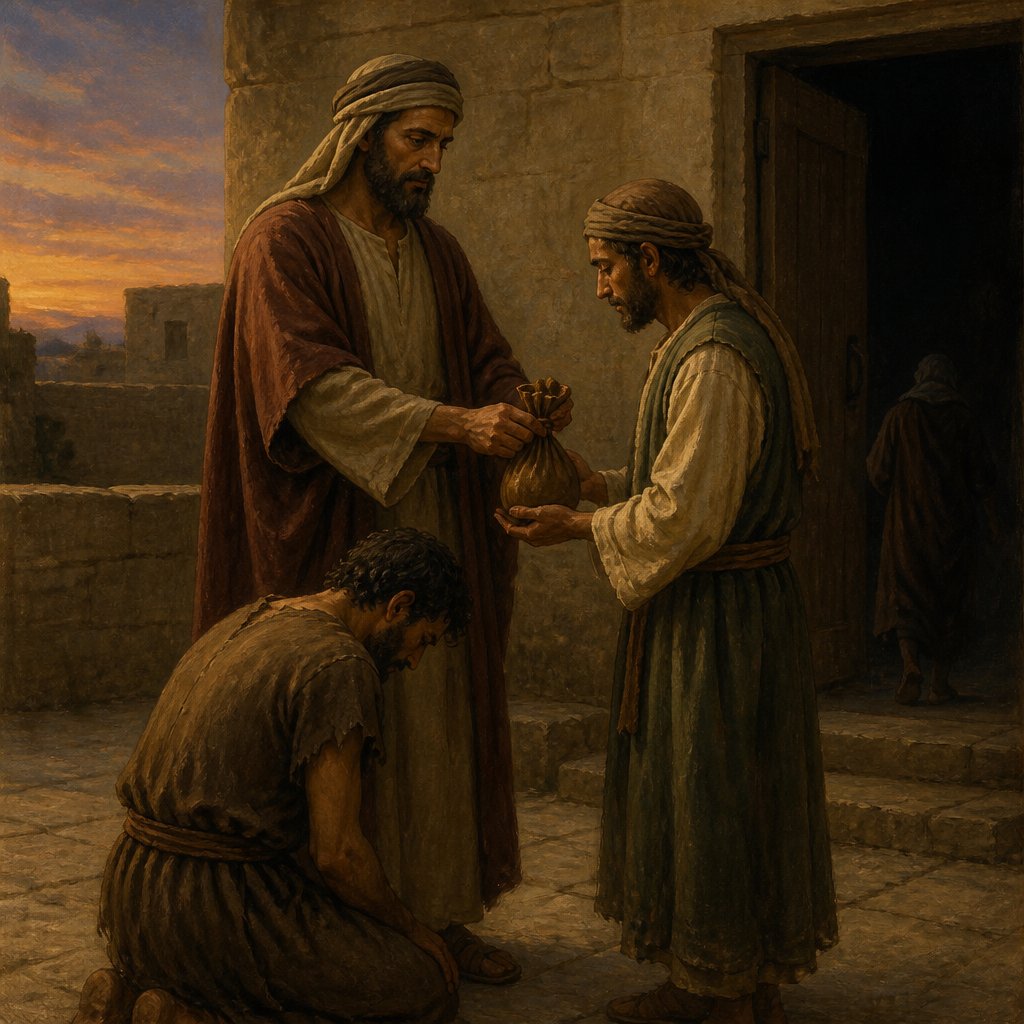
Matthew 25:26-30 from the King James Version (KJV) of the Bible reads: "His lord answered and said unto him, Thou wicked and slothful servant, thou knewest that I reap where I sowed not, and gather where I have not strawed: Thou oughtest therefore to have put my money to the exchangers, and then at my coming, I should have received mine own with usury. Take therefore the talent from him, and give it unto him which hath ten talents. For unto every one that hath shall be given, and he shall have abundance: but from him that hath not shall be taken away even that which he hath. And cast ye the unprofitable servant into outer darkness: there shall be weeping and gnashing of teeth."
This parable, known as the Parable of the Talents, is one of the most well-known and frequently cited stories from the New Testament. It is found in the Gospel of Matthew and is part of a series of discourses by Jesus on the theme of being prepared for the coming of the kingdom of heaven. The parable is often used as a teaching on the use of one's gifts and abilities, and the responsibility to use them wisely in service to God.
In this passage, the master is leaving on a journey and gives each of his servants talents (a unit of money) according to their abilities - one received five talents, another two, and the third one. The first two servants put their talents to work and double the amount they were given, while the third buries his talent in the ground, fearing his master's harshness. When the master returns, he praises the first two servants for their faithfulness and dedication, but scolds the third servant for his fear and lack of initiative.
One possible interpretation of this parable is that the talents represent the gifts, abilities, and resources that God has entrusted to each individual, and the master symbolizes God. The servants' actions reflect how they have used and cultivated the gifts given to them.
The first two servants, who wisely invested their talents and doubled them, represent those who faithfully use their gifts for the advancement of God's kingdom. They exhibit faith, diligence, and a desire to serve and honor their master. The master's praise of them signifies God's approval and reward for those who faithfully serve Him with the talents and resources He has given them.
On the other hand, the third servant's burying of his talent symbolizes a failure to utilize his gifts for the glory of God. His fear and lack of faith prevented him from taking risks and investing in the future. The master's harsh rebuke of him reflects the consequences of neglecting the gifts and opportunities given by God.
The phrase "For unto every one that hath shall be given, and he shall have abundance: but from him that hath not shall be taken away even that which he hath" emphasizes the principle of stewardship and accountability. Those who faithfully use their gifts for God's purposes will receive even more to work with, while those who neglect and squander their gifts will lose them.
The final pronouncement of "cast ye the unprofitable servant into outer darkness: there shall be weeping and gnashing of teeth" emphasizes the severe consequences of failing to be faithful stewards of God's gifts. This serves as a warning to believers that God expects them to invest their talents and resources in His kingdom and will hold them accountable for how they have used them.
Overall, the Parable of the Talents challenges readers to consider how they are using the gifts, abilities, and resources that God has given them, and encourages them to be faithful and diligent stewards of these blessings. It also provides assurance that God rewards those who faithfully use their talents for His purposes, while also warning of the consequences of neglecting and squandering them. This story is a powerful reminder of the importance of faith, initiative, and stewardship in the Christian life.
Get our apps


Artwork for Matthew 25:26-30

Matthew 25:26-30 - "His master replied, 'You wicked, lazy servant! So you knew that I harvest where I have not sown and gather where I have not scattered seed? Well then, you should have put my money on deposit with the bankers, so that when I returned I would have received it back with interest. 'So take the bag of gold from him and give it to the one who has ten bags. For whoever has will be given more, and they will have an abundance. Whoever does not have, even what they have will be taken from them. And throw that worthless servant outside, into the darkness, where there will be weeping and gnashing of teeth.'"
"His master replied, 'You wicked, lazy servant! So you knew that I harvest where I have not sown and gather where I have not scattered seed? Well then, you should have put my money on deposit with the bankers, so that when I returned I would have received it back with interest. 'So take the bag of gold from him and give it to the one who has ten bags. For whoever has will be given more, and they will have an abundance. Whoever does not have, even what they have will be taken from them. And throw that worthless servant outside, into the darkness, where there will be weeping and gnashing of teeth.'" - Matthew 25:26-30

Matthew 26:25

Matthew 26:30 - "And when they had sung an hymn, they went out into the mount of Olives."

Matthew 25:30 - "And cast ye the unprofitable servant into outer darkness: there shall be weeping and gnashing of teeth."

Matthew 26:25 - "Then Judas, which betrayed him, answered and said, Master, is it I? He said unto him, Thou hast said."
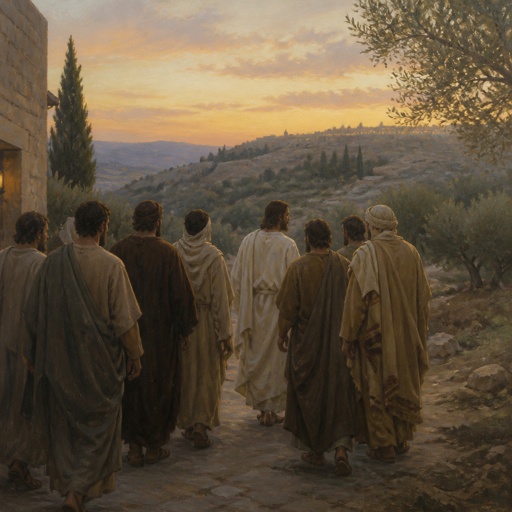
"And when they had sung an hymn, they went out into the mount of Olives." - Matthew 26:30
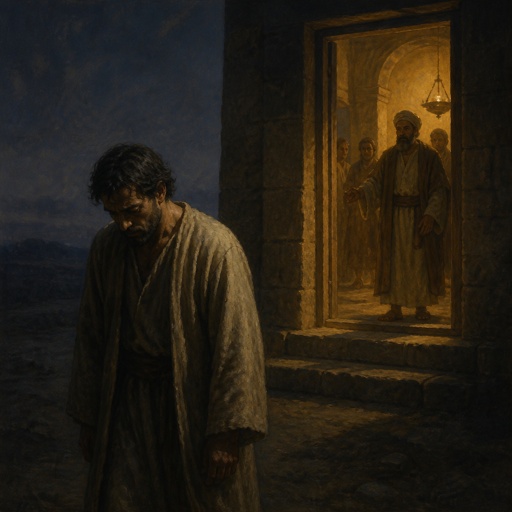
"And cast ye the unprofitable servant into outer darkness: there shall be weeping and gnashing of teeth." - Matthew 25:30

Matthew 25:26 - "His lord answered and said unto him, Thou wicked and slothful servant, thou knewest that I reap where I sowed not, and gather where I have not strawed:"

Matthew 25:25

Exodus 26:30

Matthew 25: 14-25

Matthew 6:30

Matthew 5:30

Matthew 5:30

Genesis 26:25

Genesis 25-26

"Then Judas, which betrayed him, answered and said, Master, is it I? He said unto him, Thou hast said." - Matthew 26:25

Matthew 24:30-31

Matthew 24:30-31

Matthew 24:30-31

Matthew 24:30-31

Matthew 24:30-31

Matthew 24:30-31

Matthew 24:30-31

Matthew 24:30-31

Matthew 24:30-31

Matthew 24:30-31

Matthew 26:15

Matthew 19:26