What does Matthew 26:55 mean?
“In that same hour said Jesus to the multitudes, Are ye come out as against a thief with swords and staves for to take me? I sat daily with you teaching in the temple, and ye laid no hold on me.” — Matthew 26:55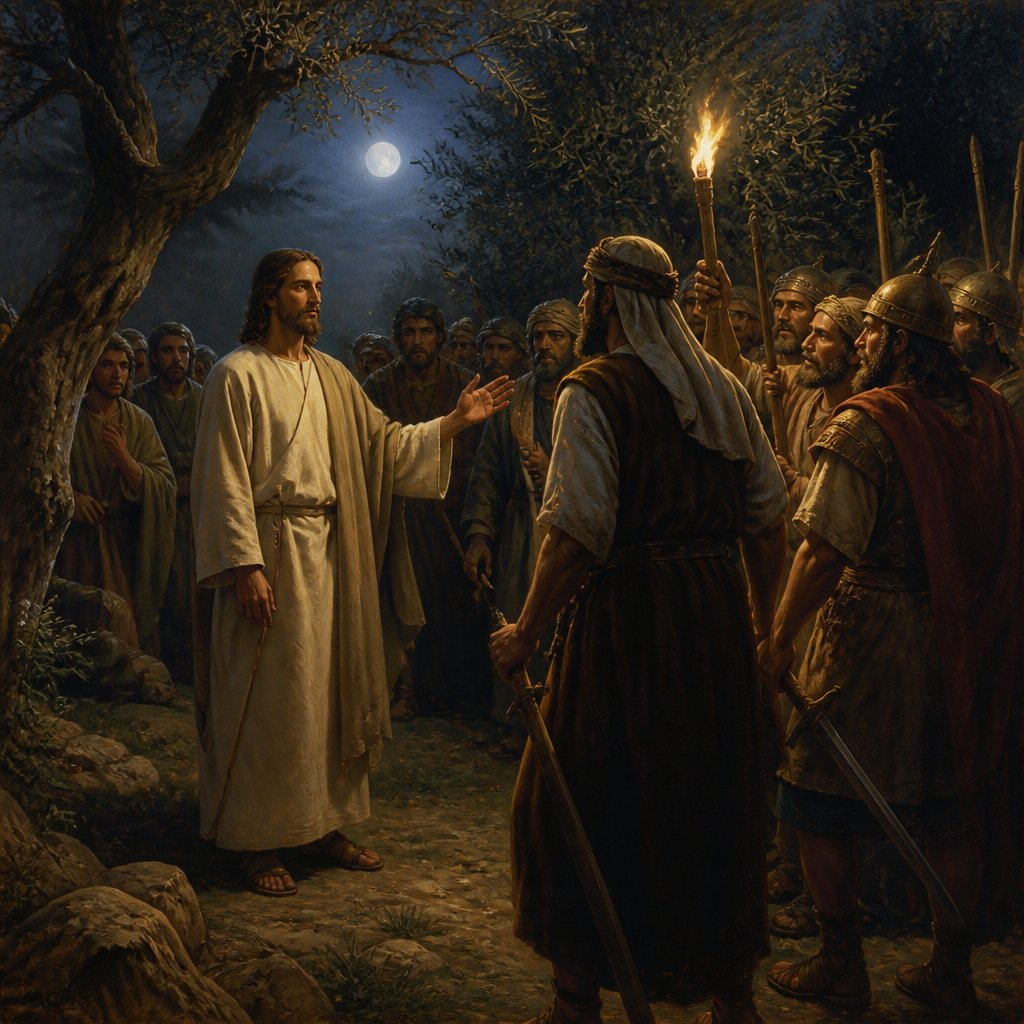
Matthew 26:55 (KJV) reads: "In that same hour said Jesus to the multitudes, Are ye come out as against a thief with swords and staves for to take me? I sat daily with you teaching in the temple, and ye laid no hold on me."
This verse comes from the Gospel of Matthew, which is the first book of the New Testament in the Christian Bible. It is part of the narrative of Jesus' betrayal, arrest, and trial before his crucifixion. In this specific verse, Jesus is addressing the multitudes who have come to arrest him. He questions the necessity of coming after him with swords and staves as if he were a thief, when he had been openly teaching in the temple every day without any attempt to arrest him.
This verse reflects the theme of Jesus' willingness to face his impending crucifixion and his acceptance of God's will. Despite the unjust and aggressive actions of the religious leaders and the multitudes who have come to arrest him, Jesus remains calm and composed, demonstrating his unwavering commitment to fulfilling his purpose on earth.
The context of this verse is significant in understanding the meaning and symbolism behind Jesus' words. In the preceding verses, Jesus has just been betrayed by one of his disciples, Judas Iscariot, who leads a crowd armed with swords and staves to arrest Jesus in the Garden of Gethsemane. The religious leaders, feeling threatened by Jesus' teachings and growing popularity among the people, conspired to have him arrested and put to death. The use of force and weapons in Jesus' arrest reflects the hostile intent of those who sought to silence him and prevent his message from spreading further.
In his questioning of the multitudes, Jesus highlights the irony of the situation. He had been openly teaching in the temple, yet they did not make any attempt to arrest him there. This emphasizes the unjust and cowardly manner in which he was being apprehended, as if he were a common criminal rather than a spiritual teacher. Jesus' statement also serves as a rebuke to the authorities and a reminder of their lack of justification for their actions.
Symbolically, Jesus' words convey a powerful message about the nature of his mission and the conflict between the forces of good and evil. The use of swords and staves represents the world's reliance on violence and coercion to suppress the truth, while Jesus' peaceful teachings and nonviolent resistance reflect the divine will and the power of love to overcome adversity. Jesus' question to the multitudes draws attention to the hypocrisy and injustice of their actions, exposing the contrast between their violent methods and his own moral integrity.
In a broader theological sense, this verse also points to the fulfillment of Old Testament prophecies regarding the suffering and persecution of the Messiah. Jesus' willingness to submit to his arrest and subsequent crucifixion was in accordance with the divine plan for the redemption of humanity. His words in this verse demonstrate his unwavering commitment to fulfilling the purpose for which he came into the world, despite the opposition and persecution he faced.
In conclusion, Matthew 26:55 (KJV) captures a pivotal moment in the narrative of Jesus' arrest, conveying themes of injustice, moral courage, and the divine purpose behind his suffering. It serves as a reminder of the contrast between the world's use of force and coercion, and Jesus' peaceful and redemptive mission. This verse bears significant theological and symbolic weight in the overarching narrative of Jesus' life and ministry, highlighting his unwavering dedication to fulfilling the will of God and the eventual triumph of love over hatred and violence.
Get our apps


Artwork for Matthew 26:55

Matthew 26:55 - "In that same hour said Jesus to the multitudes, Are ye come out as against a thief with swords and staves for to take me? I sat daily with you teaching in the temple, and ye laid no hold on me."

"In that same hour said Jesus to the multitudes, Are ye come out as against a thief with swords and staves for to take me? I sat daily with you teaching in the temple, and ye laid no hold on me." - Matthew 26:55

Numbers 26:55 - "Notwithstanding the land shall be divided by lot: according to the names of the tribes of their fathers they shall inherit."

Matthew 27:55 - "And many women were there beholding afar off, which followed Jesus from Galilee, ministering unto him:"

Matthew 13:55 - "Is not this the carpenter's son? is not his mother called Mary? and his brethren, James, and Joses, and Simon, and Judas?"

"Notwithstanding the land shall be divided by lot: according to the names of the tribes of their fathers they shall inherit." - Numbers 26:55

Matthew 27:55-56 - "And many women were there beholding afar off, which followed Jesus from Galilee, ministering unto him: Among which was Mary Magdalene, and Mary the mother of James and Joses, and the mother of Zebedee's children."

Matthew 26:25

Matthew 26:15

Matthew 19:26

Matthew 26:15

Matthew 27:26

Matthew 27:26

Matthew 26:53

Matthew 26:65

Matthew 26:41

Matthew 26:53
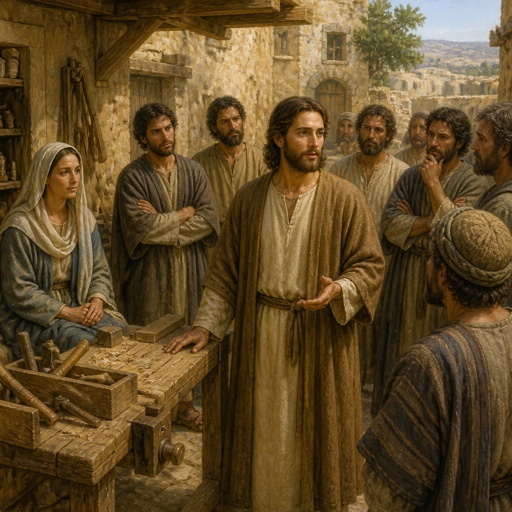
"Is not this the carpenter's son? is not his mother called Mary? and his brethren, James, and Joses, and Simon, and Judas?" - Matthew 13:55

Matthew 26:36-46

Matthew 10:26-33

Matthew 26:26 - "¶ And as they were eating, Jesus took bread, and blessed it, and brake it, and gave it to the disciples, and said, Take, eat; this is my body."

"And many women were there beholding afar off, which followed Jesus from Galilee, ministering unto him:" - Matthew 27:55

Matthew 22:26 - "Likewise the second also, and the third, unto the seventh."

Matthew 9:26 - "And the fame hereof went abroad into all that land."

Matthew 26:54 - "But how then shall the scriptures be fulfilled, that thus it must be?"

Matthew 26:6 - "¶ Now when Jesus was in Bethany, in the house of Simon the leper,"

Matthew 26:4 - "And consulted that they might take Jesus by subtilty, and kill him."

Matthew 26:5 - "But they said, Not on the feast day, lest there be an uproar among the people."

Matthew 26:16 - "And from that time he sought opportunity to betray him."

Matthew 26:72 - "And again he denied with an oath, I do not know the man."