What does Matthew 26:7 mean?
“There came unto him a woman having an alabaster box of very precious ointment, and poured it on his head, as he sat at meat.” — Matthew 26:7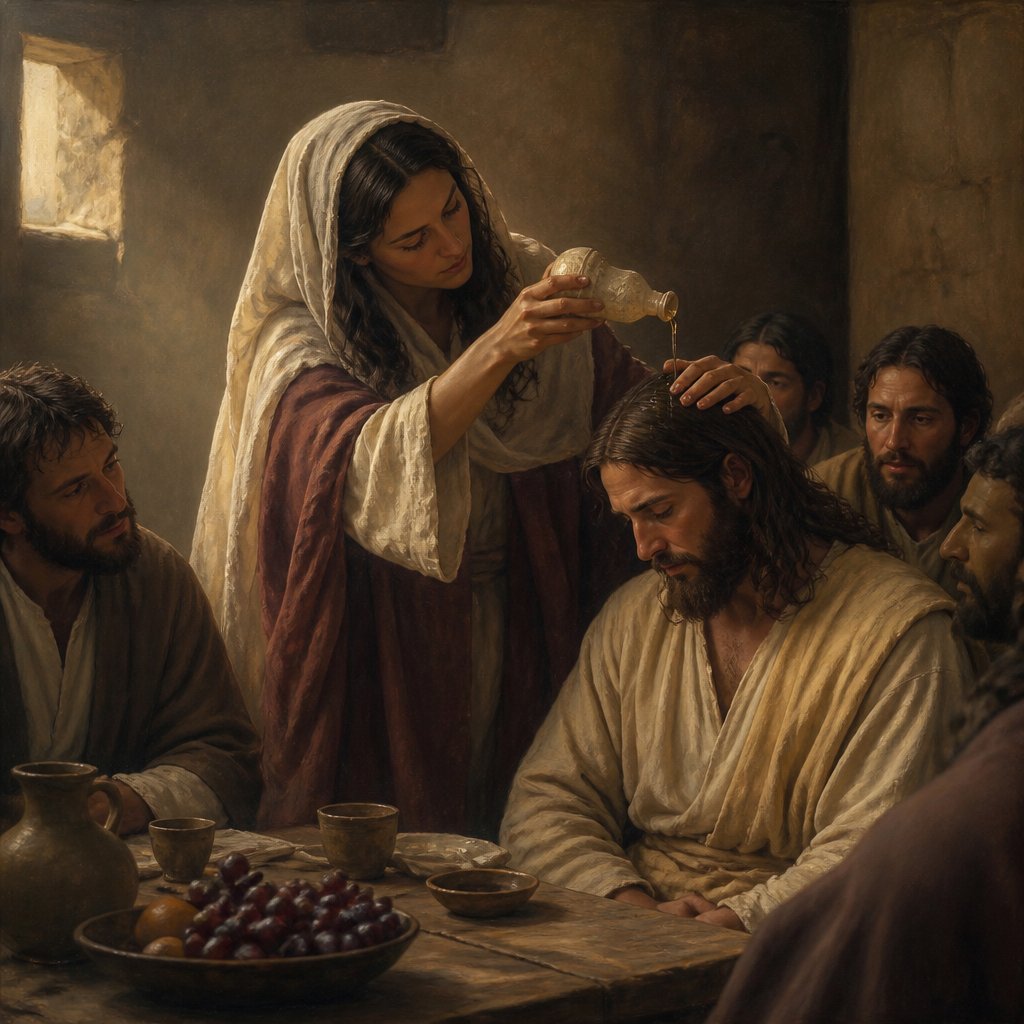
Matthew 26:7 (KJV) reads: "There came unto him a woman having an alabaster box of very precious ointment, and poured it on his head, as he sat at meat."
This verse is part of the larger narrative of the anointing of Jesus by a woman, which is recorded in all four of the Gospels. In this passage, the woman comes to Jesus with an alabaster box of very precious ointment and pours it on his head as he sits at a meal.
The context of this verse is important to understand its significance. This event takes place in Bethany, at the home of Simon the leper, just a few days before Jesus' crucifixion. Jesus is sharing a meal with his disciples when a woman enters the room and anoints his head with the expensive ointment. This action is met with criticism from the disciples, who question the wastefulness of using such costly ointment in this way.
The woman's act of anointing Jesus with the precious ointment carries several layers of meaning and symbolism. Firstly, the woman's action is a demonstration of her love, devotion, and worship of Jesus. The ointment she pours on him is described as "very precious," signifying the value she places on Jesus and her willingness to give him her best. This act of reverence towards Jesus, who is God made flesh, reflects the fundamental Christian virtue of honoring and worshiping God with our most valuable possessions.
Furthermore, the anointing with ointment is also a symbolic act with Messianic significance. In the Old Testament, prophets, priests, and kings were anointed with oil as a sign of their consecration and appointment by God for their respective roles. In anointing Jesus, this woman is implicitly recognizing and affirming his authority and kingship. It is a prophetic gesture that foreshadows the impending sacrifice of Jesus, who will be anointed not with oil, but with his own blood on the cross.
The symbolic value of the alabaster box itself is also worthy of consideration. In ancient times, alabaster was a delicate and expensive material often used to contain precious substances. The breaking of the alabaster box to anoint Jesus symbolizes the complete giving of oneself for the sake of Christ. It reflects the idea that true worship involves sacrificial giving and whole-hearted devotion to Jesus.
The response of the disciples to the woman's action provides another layer of meaning to this passage. They express indignation at the perceived wastefulness of the ointment, stating that it could have been sold and the money given to the poor. However, Jesus rebukes them, affirming the woman's act as a beautiful and meaningful gesture. This serves as a powerful reminder of the importance of genuine, extravagant worship, which might seem wasteful to some but is treasured and honored by God.
Additionally, this passage also demonstrates Jesus' care and concern for the marginalized and oppressed, as he defends the woman's actions in the face of criticism from his own disciples. By siding with the woman, Jesus upholds the value of her act of worship and emphasizes the priority of honoring God above all else. This aligns with the broader theme in the Gospels of Jesus' compassion for those on the fringes of society.
In conclusion, Matthew 26:7 depicts a profound moment of worship, love, and devotion towards Jesus, as well as highlights the significance of sacrificial giving and authentic worship. The symbolism of the alabaster box and the anointing with precious ointment convey powerful theological truths about Jesus' identity, authority, and impending sacrifice. This passage ultimately challenges us to consider the depth of our own devotion to Christ and the ways in which we express our worship of Him.
Get our apps


Artwork for Matthew 26:7

Matthew 26:7 - "There came unto him a woman having an alabaster box of very precious ointment, and poured it on his head, as he sat at meat."
"There came unto him a woman having an alabaster box of very precious ointment, and poured it on his head, as he sat at meat." - Matthew 26:7

Matthew 7:26 - "And every one that heareth these sayings of mine, and doeth them not, shall be likened unto a foolish man, which built his house upon the sand:"

Matthew 26:25

Matthew 26:15

Matthew 19:26

Matthew 26:15

Matthew 27:26

Matthew 27:26

Matthew 26:53

Matthew 26:65

Matthew 26:41

Matthew 26:53
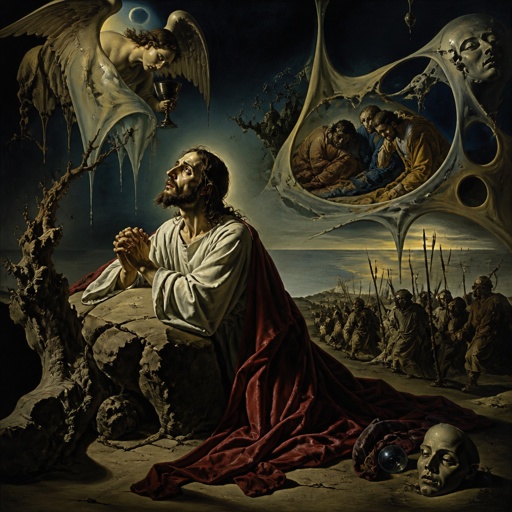
Matthew 26:36-46
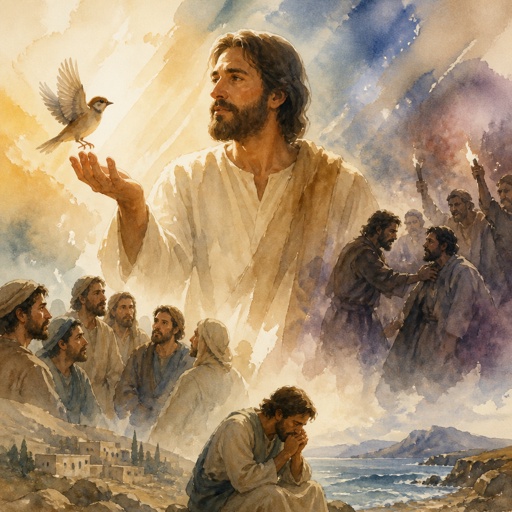
Matthew 10:26-33

Matthew 26:26 - "¶ And as they were eating, Jesus took bread, and blessed it, and brake it, and gave it to the disciples, and said, Take, eat; this is my body."

Matthew 7:7

Matthew 22:26 - "Likewise the second also, and the third, unto the seventh."

Matthew 9:26 - "And the fame hereof went abroad into all that land."

Matthew 26:54 - "But how then shall the scriptures be fulfilled, that thus it must be?"

Matthew 26:6 - "¶ Now when Jesus was in Bethany, in the house of Simon the leper,"

Matthew 26:4 - "And consulted that they might take Jesus by subtilty, and kill him."

Matthew 26:5 - "But they said, Not on the feast day, lest there be an uproar among the people."

Matthew 26:16 - "And from that time he sought opportunity to betray him."

Proverbs 7:26

Matthew 26:72 - "And again he denied with an oath, I do not know the man."

Matthew 11:26 - "Even so, Father: for so it seemed good in thy sight."

Matthew 26:20 - "Now when the even was come, he sat down with the twelve."

Matthew 26:30 - "And when they had sung an hymn, they went out into the mount of Olives."

Matthew 26:66 - "What think ye? They answered and said, He is guilty of death."