What does Nehemiah 10:28 mean?
“And the rest of the people, the priests, the Levites, the porters, the singers, the Nethinims, and all they that had separated themselves from the people of the lands unto the law of God, their wives, their sons, and their daughters, every one having knowledge, and having understanding;” — Nehemiah 10:28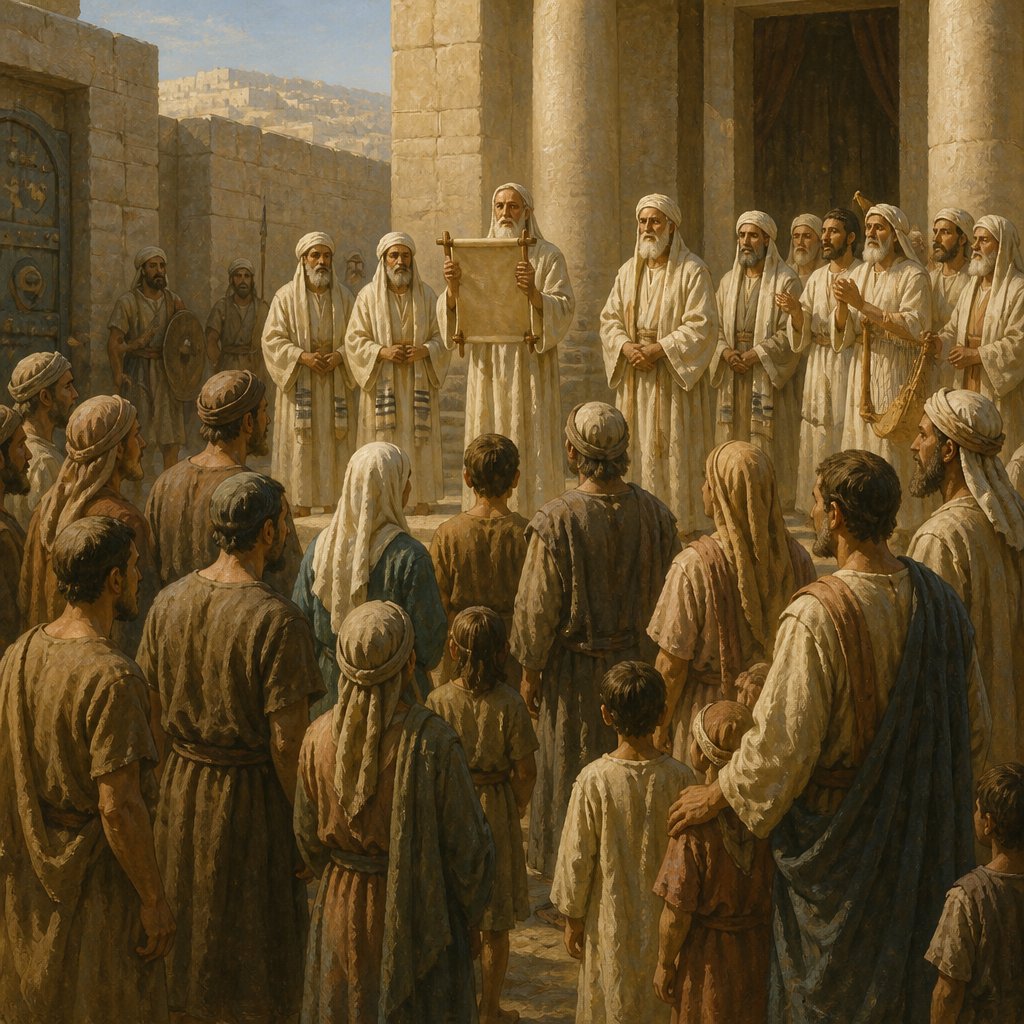
Nehemiah 10:28 (KJV) reads, "And the rest of the people, the priests, the Levites, the porters, the singers, the Nethinims, and all they that had separated themselves from the people of the lands unto the law of God, their wives, their sons, and their daughters, every one having knowledge, and having understanding."
In order to fully understand the meaning and significance of this verse, it is important to provide some context. The book of Nehemiah is set in the fifth century BC and focuses on the efforts of Nehemiah, a Jewish leader, to rebuild the walls of Jerusalem. This verse comes from a list of those who have agreed to follow the Law of Moses and have made a commitment to live according to God's commands.
The first part of the verse mentions several groups of people who have separated themselves from the people of the lands unto the law of God. This separation indicates a deliberate decision to live differently from the surrounding culture and to adhere to the laws and teachings found in the Old Testament. The priests, Levites, porters, singers, and Nethinims were all specific roles within the religious community of Israel, and their separation from the people of the lands emphasizes their dedication to fulfilling their religious duties and responsibilities. This also reflects their commitment to maintaining the purity and sanctity of the Jewish faith.
Additionally, the verse mentions that "all they that had separated themselves" included not only the designated religious leaders, but also their families. This emphasizes the communal nature of their commitment to following God's law. It was not just individual adherence to the law, but also a commitment to ensure that their spouses and children also lived in accordance with God's commands. This demonstrates the importance of passing down religious traditions and teachings from one generation to the next within the Jewish community.
The verse also highlights the importance of knowledge and understanding in relation to God's law. It emphasizes that each person, regardless of their role or status, was required to have knowledge and understanding of God's laws. This signifies the importance of education within the religious community and the responsibility of each individual to understand and follow God's commands. It also suggests that adherence to the law was not simply about blind obedience, but rather about making an informed and intentional decision to follow God.
The themes present in this verse include dedication, separation, family, and knowledge. The people listed in the verse demonstrate their dedication to their faith by separating themselves from the surrounding culture and committing to following God's law. This dedication is not just personal, but extends to their families as well. The emphasis on knowledge and understanding signifies the importance of education and intentional commitment to following God's commands.
Symbolically, this verse represents a collective commitment to faith and obedience to God. The inclusion of various groups of people from the religious community, along with their families, signifies the unity and solidarity of the Jewish people in their commitment to the law. This verse also serves as a reminder of the importance of passing down religious traditions and teachings from one generation to the next. Additionally, the emphasis on knowledge and understanding highlights the importance of intentionality and informed decision-making in following God's commands.
In conclusion, Nehemiah 10:28 (KJV) holds deep significance within the context of the book of Nehemiah and the broader biblical narrative. It serves as a reflection of the communal commitment to faith and obedience to God, as well as the importance of passing down religious teachings and traditions from one generation to the next. This verse serves as a reminder of the collective responsibility to live according to God's commands, and the importance of intentional commitment and understanding in following the law of God.
Get our apps


Artwork for Nehemiah 10:28

Nehemiah 10:28 - "¶ And the rest of the people, the priests, the Levites, the porters, the singers, the Nethinims, and all they that had separated themselves from the people of the lands unto the law of God, their wives, their sons, and their daughters, every one having knowledge, and having understanding;"
"¶ And the rest of the people, the priests, the Levites, the porters, the singers, the Nethinims, and all they that had separated themselves from the people of the lands unto the law of God, their wives, their sons, and their daughters, every one having knowledge, and having understanding;" - Nehemiah 10:28

Nehemiah 11:28 - "And at Ziklag, and at Mekonah, and in the villages thereof,"

Nehemiah 7:28 - "The men of Beth-azmaveth, forty and two."

Nehemiah 10:1 - "Now those that sealed were, Nehemiah, the Tirshatha, the son of Hachaliah, and Zidkijah,"

Nehemiah 10:10 - "And their brethren, Shebaniah, Hodijah, Kelita, Pelaiah, Hanan,"

Nehemiah 8:10

Nehemiah 8:10

Nehemiah 8:10

"And at Ziklag, and at Mekonah, and in the villages thereof," - Nehemiah 11:28

Nehemiah 10:22 - "Pelatiah, Hanan, Anaiah,"

Nehemiah 10:24 - "Hallohesh, Pileha, Shobek,"

Nehemiah 10:5 - "Harim, Meremoth, Obadiah,"

Nehemiah 10:21 - "Meshezabeel, Zadok, Jaddua,"

Nehemiah 10:23 - "Hoshea, Hananiah, Hashub,"

Nehemiah 10:7 - "Meshullam, Abijah, Mijamin,"

Nehemiah 10:25 - "Rehum, Hashabnah, Maaseiah,"

Nehemiah 10:11 - "Micha, Rehob, Hashabiah,"

Nehemiah 10:27 - "Malluch, Harim, Baanah."

Nehemiah 10:19 - "Hariph, Anathoth, Nebai,"

Nehemiah 10:6 - "Daniel, Ginnethon, Baruch,"

Nehemiah 10:26 - "And Ahijah, Hanan, Anan,"

Nehemiah 10:16 - "Adonijah, Bigvai, Adin,"

Nehemiah 10:18 - "Hodijah, Hashum, Bezai,"

Nehemiah 10:4 - "Hattush, Shebaniah, Malluch,"

Nehemiah 10:2 - "Seraiah, Azariah, Jeremiah,"

Nehemiah 10:20 - "Magpiash, Meshullam, Hezir,"

Nehemiah 10:3 - "Pashur, Amariah, Malchijah,"

Nehemiah 10:17 - "Ater, Hizkijah, Azzur,"

Nehemiah 10:15 - "Bunni, Azgad, Bebai,"