What does Nehemiah 10:34 mean?
“And we cast the lots among the priests, the Levites, and the people, for the wood offering, to bring it into the house of our God, after the houses of our fathers, at times appointed year by year, to burn upon the altar of the LORD our God, as it is written in the law:” — Nehemiah 10:34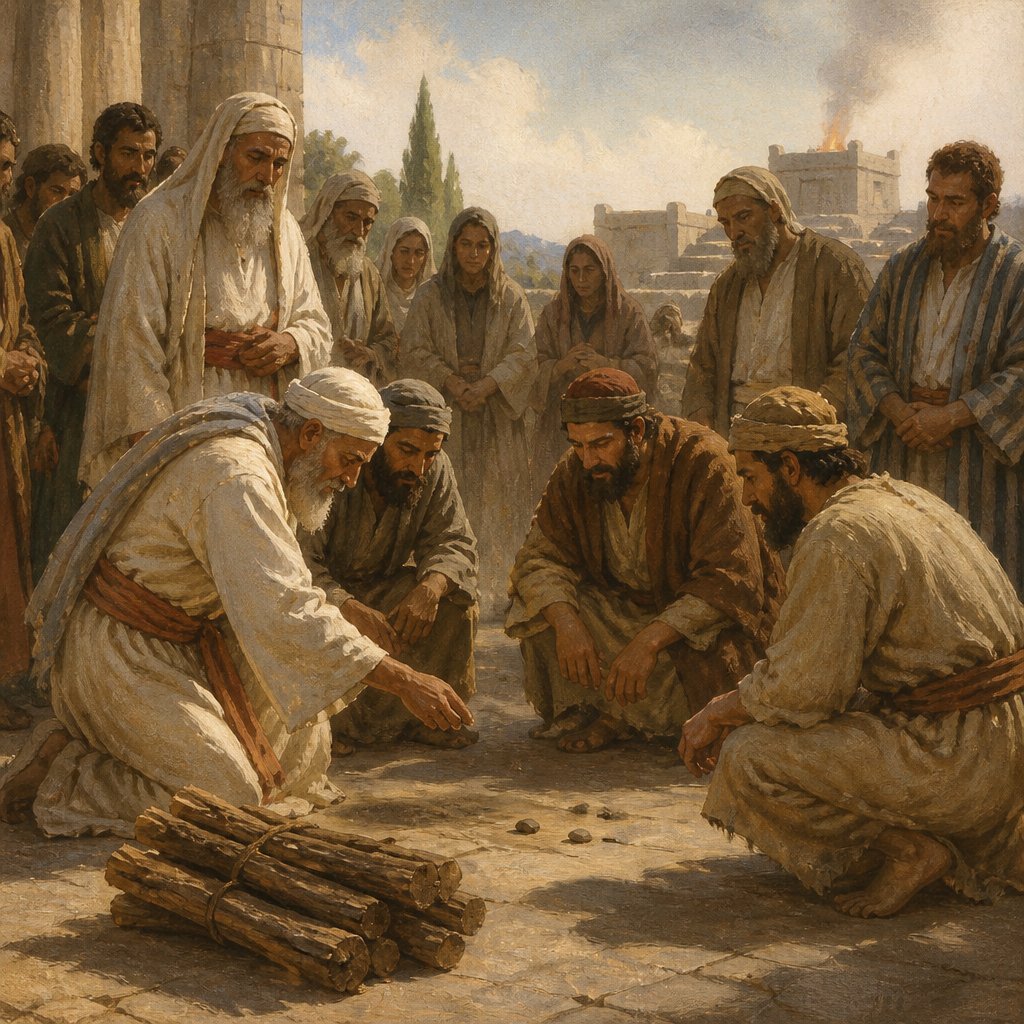
Nehemiah 10:34 (KJV) reads, "And we cast the lots among the priests, the Levites, and the people, for the wood offering, to bring it into the house of our God, after the houses of our fathers, at times appointed year by year, to burn upon the altar of the Lord our God, as it is written in the law."
This verse is a part of the larger context of the Book of Nehemiah, which details the efforts of Nehemiah, a cupbearer to King Artaxerxes, to rebuild the walls of Jerusalem and to reform the spiritual and social life of the Jewish people who had returned to the city from exile. This specific verse comes from a passage in which the people, having committed themselves to God and his commandments, vow to support the temple and its priests through regular contributions of wood for the altar.
One of the key themes in this verse is stewardship. The people of Israel recognized the importance of providing for the needs of the temple, both in terms of physical resources and spiritual supplications. By casting lots among the priests, Levites, and the people, they ensured that the responsibility for providing wood for the altar was shared fairly among the community. This practice of using lots also brought a sense of divine order and fairness to the process, as the outcome was ultimately determined by God. From this, we can derive a lesson in the importance of equitable distribution, collaboration, and shared responsibility in fulfilling the needs of the religious community.
Another significant theme in this verse is obedience to the law. The people are committed to following the instructions laid out in the Law of Moses regarding the wood offerings, which demonstrates their fidelity to God's commandments. By obeying these laws, they are not only honoring God, but also ensuring the proper functioning of the temple and the perpetuation of the sacrificial system. This act of obedience serves as a reminder of the importance of adhering to the teachings and statutes of God, which are designed to guide and sustain the spiritual life of his people.
The concept of sacrifice is also symbolically present in this verse. The wood offerings mentioned here were used to fuel the fires on the altar, which were integral to the offering of sacrifices to God. Through these sacrifices, the people sought atonement for their sins and strove to maintain a relationship with God. Therefore, the provision of wood for the altar was crucial in facilitating the worship and communion between the people of Israel and their Creator. This highlights the sacrificial nature of the worship in the Old Testament, which foreshadows the ultimate sacrifice of Jesus Christ in the New Testament, who offered himself as a perfect atonement for the sins of humanity.
Contextually, this verse falls within the broader narrative of the restoration and renewal of Israel. The people of Israel, having returned from exile, are fervently recommitting themselves to God and his covenant. The rebuilding of the temple and the restoration of religious practices are central to this renewal, and the commitment to provide wood for the altar reflects the people's dedication to the spiritual revival of their community.
In conclusion, Nehemiah 10:34 embodies several important themes such as stewardship, obedience to the law, and sacrifice. Through this verse, we are reminded of the significance of shared responsibility within the religious community, the importance of following God's commandments, and the central role of sacrifice in the worship and reconciliation with God. This verse serves as a testament to the faithfulness and devotion of the people of Israel, and it offers valuable insights into their spiritual journey of renewal and restoration.
Get our apps


Artwork for Nehemiah 10:34

Nehemiah 10:34 - "And we cast the lots among the priests, the Levites, and the people, for the wood offering, to bring it into the house of our God, after the houses of our fathers, at times appointed year by year, to burn upon the altar of the LORD our God, as it is written in the law:"
"And we cast the lots among the priests, the Levites, and the people, for the wood offering, to bring it into the house of our God, after the houses of our fathers, at times appointed year by year, to burn upon the altar of the LORD our God, as it is written in the law:" - Nehemiah 10:34

Nehemiah 11:34 - "Hadid, Zeboim, Neballat,"

Nehemiah 12:34 - "Judah, and Benjamin, and Shemaiah, and Jeremiah,"

"Hadid, Zeboim, Neballat," - Nehemiah 11:34

Nehemiah 7:34 - "The children of the other Elam, a thousand two hundred fifty and four."

"Judah, and Benjamin, and Shemaiah, and Jeremiah," - Nehemiah 12:34

Nehemiah 10:1 - "Now those that sealed were, Nehemiah, the Tirshatha, the son of Hachaliah, and Zidkijah,"

Nehemiah 10:10 - "And their brethren, Shebaniah, Hodijah, Kelita, Pelaiah, Hanan,"

Nehemiah 8:10

Nehemiah 8:10

Nehemiah 8:10

Nehemiah 10:24 - "Hallohesh, Pileha, Shobek,"

Nehemiah 10:22 - "Pelatiah, Hanan, Anaiah,"

Nehemiah 10:5 - "Harim, Meremoth, Obadiah,"

Nehemiah 10:23 - "Hoshea, Hananiah, Hashub,"

Nehemiah 10:21 - "Meshezabeel, Zadok, Jaddua,"

Nehemiah 10:7 - "Meshullam, Abijah, Mijamin,"

Nehemiah 10:11 - "Micha, Rehob, Hashabiah,"

Nehemiah 10:27 - "Malluch, Harim, Baanah."

Nehemiah 10:25 - "Rehum, Hashabnah, Maaseiah,"

Nehemiah 10:19 - "Hariph, Anathoth, Nebai,"

Nehemiah 10:6 - "Daniel, Ginnethon, Baruch,"

Nehemiah 10:26 - "And Ahijah, Hanan, Anan,"

Nehemiah 10:16 - "Adonijah, Bigvai, Adin,"

Nehemiah 10:18 - "Hodijah, Hashum, Bezai,"

Nehemiah 10:20 - "Magpiash, Meshullam, Hezir,"

Nehemiah 10:3 - "Pashur, Amariah, Malchijah,"

Nehemiah 10:17 - "Ater, Hizkijah, Azzur,"

Nehemiah 10:4 - "Hattush, Shebaniah, Malluch,"