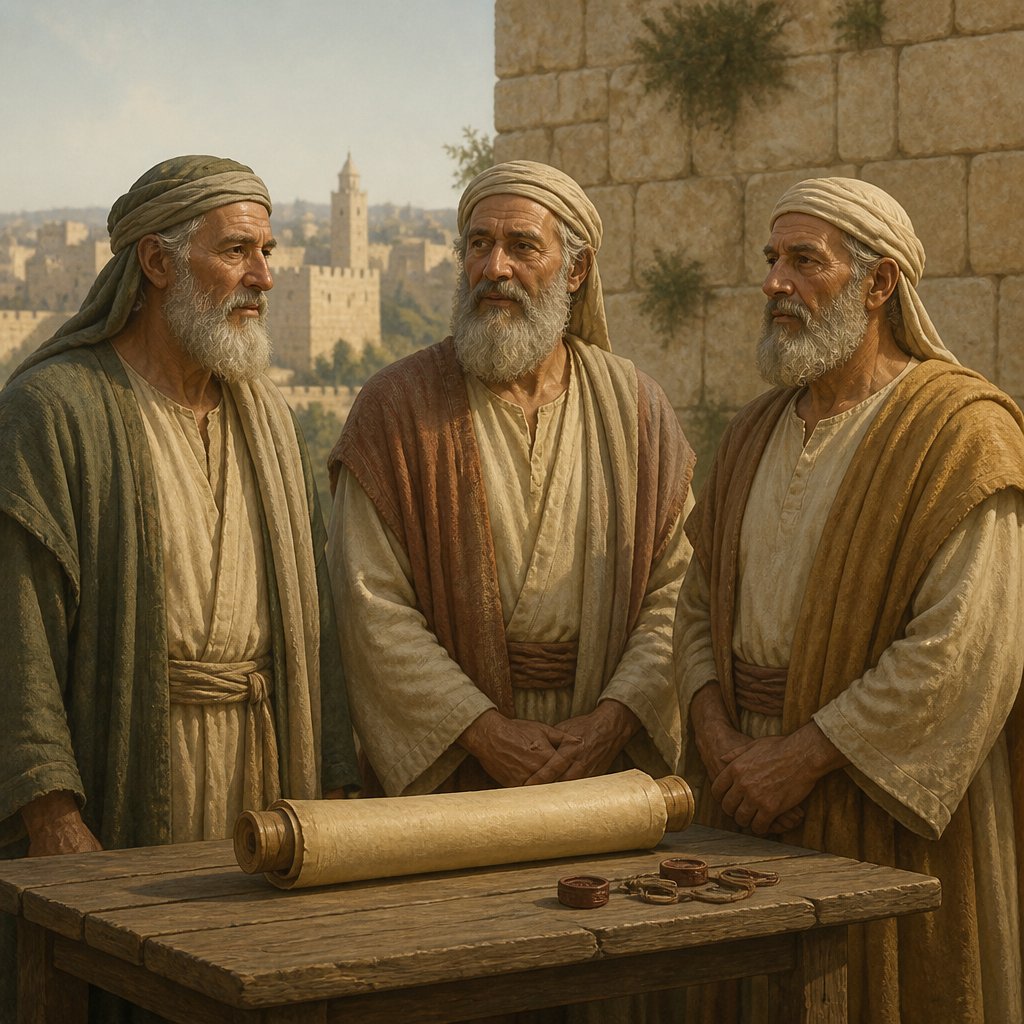
Nehemiah 10:17 (KJV) states, "And the children of Levi shall bring the offering of the corn, of the new wine, and the oil, unto the chambers, where are the vessels of the sanctuary, and the priests that minister, and the porters, and the singers: and we will not forsake the house of our God."
This verse is part of a larger passage in the book of Nehemiah that describes the people of Israel renewing their covenant with God after returning to Jerusalem following their exile in Babylon. The book of Nehemiah recounts the efforts of Nehemiah, a Jewish leader, to rebuild the walls of Jerusalem and restore the spiritual and moral integrity of the people.
In this specific verse, the children of Levi, who were assigned the role of priests and caretakers of the temple, are instructed to bring offerings of corn, new wine, and oil to the chambers where the vessels of the sanctuary are kept. This act of bringing offerings to the temple was an essential part of Israelite worship and was intended to demonstrate reverence and gratitude to God.
The verse emphasizes the importance of the Levites fulfilling their responsibilities in the temple, ensuring that the vessels of the sanctuary are properly cared for and that the priests, porters, and singers are provided for. It also affirms the people's commitment to not forsake the house of God, indicating their dedication to the worship and service of God.
One of the key themes in this verse is the concept of stewardship. The children of Levi are tasked with bringing offerings to the temple, demonstrating their role as stewards of the sacred items and their responsibility to care for the house of God. This reflects the broader biblical principle of stewardship, which emphasizes the faithful and responsible management of resources that belong to God. The verse serves as a reminder that all aspects of life, including material possessions, should be dedicated to God and used in ways that honor and glorify Him.
Another important theme in this verse is the idea of commitment and loyalty to God. The people of Israel are pledging to not forsake the house of God, indicating their determination to remain faithful in their worship and service. This theme of loyalty to God is a recurring theme throughout the Bible, emphasizing the importance of maintaining a close relationship with God and not turning away from Him.
Symbolism plays a significant role in the interpretation of this verse. The offerings of corn, new wine, and oil are symbolic of the abundance and sustenance that God provides to His people. These offerings were not only physical items but also represented the spiritual blessings and provisions that God bestows on His people. The vessels of the sanctuary symbolize the sacredness and holiness of the temple, highlighting the reverence and care that should be shown in the worship of God.
In the broader context of the book of Nehemiah, this verse and the entire passage reflect the spiritual renewal and recommitment of the people of Israel to God. After years of exile and hardship, the people are taking deliberate steps to restore their relationship with God and reaffirm their covenant with Him. The verse serves as a declaration of their determination to honor and serve God faithfully, ensuring that the worship and care of the temple are maintained.
In conclusion, Nehemiah 10:17 is a verse that conveys the themes of stewardship, commitment, and the reverence of God. It emphasizes the responsibility of the Levites to care for the temple and bring offerings, as well as the unwavering commitment of the people to not forsake the house of God. The verse reflects the broader message of the book of Nehemiah, which is one of spiritual renewal, restoration, and recommitment to God. It serves as a reminder of the importance of faithful worship and service to God, as well as the significance of honoring Him in all aspects of life.
Get our apps


Artwork for Nehemiah 10:17

Nehemiah 10:17 - "Ater, Hizkijah, Azzur,"
"Ater, Hizkijah, Azzur," - Nehemiah 10:17

Nehemiah 10:1 - "Now those that sealed were, Nehemiah, the Tirshatha, the son of Hachaliah, and Zidkijah,"

Nehemiah 10:10 - "And their brethren, Shebaniah, Hodijah, Kelita, Pelaiah, Hanan,"

Nehemiah 8:10

Nehemiah 8:10

Nehemiah 8:10

Nehemiah 12:17 - "Of Abijah, Zichri; of Miniamin, of Moadiah, Piltai;"

Nehemiah 10:22 - "Pelatiah, Hanan, Anaiah,"

Nehemiah 10:24 - "Hallohesh, Pileha, Shobek,"

Nehemiah 10:5 - "Harim, Meremoth, Obadiah,"

Nehemiah 10:21 - "Meshezabeel, Zadok, Jaddua,"

Nehemiah 10:23 - "Hoshea, Hananiah, Hashub,"

Nehemiah 10:7 - "Meshullam, Abijah, Mijamin,"

Nehemiah 10:25 - "Rehum, Hashabnah, Maaseiah,"

Nehemiah 10:11 - "Micha, Rehob, Hashabiah,"

Nehemiah 10:27 - "Malluch, Harim, Baanah."

Nehemiah 10:19 - "Hariph, Anathoth, Nebai,"

Nehemiah 10:6 - "Daniel, Ginnethon, Baruch,"

Nehemiah 10:26 - "And Ahijah, Hanan, Anan,"

Nehemiah 10:16 - "Adonijah, Bigvai, Adin,"

Nehemiah 10:18 - "Hodijah, Hashum, Bezai,"

Nehemiah 10:4 - "Hattush, Shebaniah, Malluch,"

Nehemiah 10:2 - "Seraiah, Azariah, Jeremiah,"

Nehemiah 10:20 - "Magpiash, Meshullam, Hezir,"

Nehemiah 10:3 - "Pashur, Amariah, Malchijah,"

Nehemiah 10:15 - "Bunni, Azgad, Bebai,"

Nehemiah 10:13 - "Hodijah, Bani, Beninu."

Nehemiah 10:12 - "Zaccur, Sherebiah, Shebaniah,"

Nehemiah 11:10 - "Of the priests: Jedaiah the son of Joiarib, Jachin."