What does Nehemiah 10:38 mean?
“And the priest the son of Aaron shall be with the Levites, when the Levites take tithes: and the Levites shall bring up the tithe of the tithes unto the house of our God, to the chambers, into the treasure house.” — Nehemiah 10:38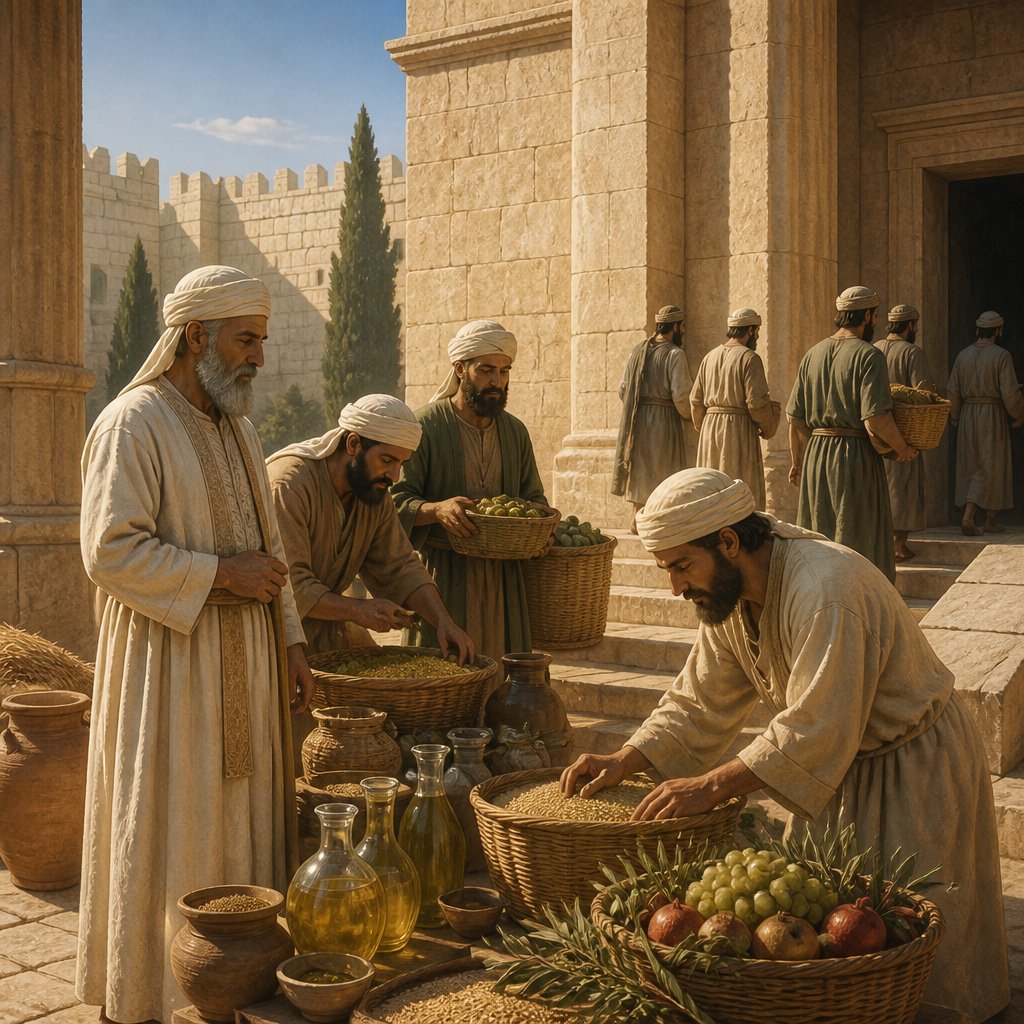
Nehemiah 10:38 (KJV) reads: "And the priest the son of Aaron shall be with the Levites, when the Levites take tithes: and the Levites shall bring up the tithe of the tithes unto the house of our God, to the chambers, into the treasure house."
This verse comes from the book of Nehemiah in the Old Testament, which tells the story of the Israelites' return from exile in Babylon and their efforts to rebuild the city of Jerusalem. The context of this verse is a list of agreements made by the Israelites to follow God's laws and to support the maintenance of the temple and the priests who served there.
In this verse, the Israelites are committing to the practice of tithing, which is giving a tenth of their income or produce to the Levites, who were the priestly tribe of Israel. The Levites, in turn, were responsible for bringing a tenth of these tithes to the house of God, specifically to the chambers and the treasure house.
The theme of this verse is the importance of supporting the work of the temple and the priests who served there. Tithing was a way for the Israelites to provide for the material needs of the temple and its workers, as well as to show their gratitude to God for his provision. This verse also emphasizes the responsibility of the Levites to ensure that the tithes brought to the temple were used for their intended purpose and stored in the designated chambers and treasure house.
Symbolically, this verse speaks to the broader theme of stewardship and faithfulness in giving. The Israelites were called to bring their tithes to the temple as an act of worship and obedience to God. By doing so, they acknowledged that all they had came from God and that they were merely stewards of the resources entrusted to them. The Levites, in turn, were entrusted with the responsibility of managing these offerings and ensuring they were used for the upkeep of the temple and the support of the priestly ministry.
This verse also reflects the overarching theme of the Old Testament, which is the covenant between God and his chosen people. The agreements made by the Israelites in Nehemiah 10, including the commitment to tithing, were a reaffirmation of their covenant relationship with God. By pledging to support the temple and the priests, the Israelites were demonstrating their desire to honor God and fulfill their part of the covenant.
Overall, Nehemiah 10:38 underscores the importance of faithful stewardship, both in giving to support the work of God's house and in ensuring that those resources are managed and utilized responsibly. It serves as a reminder to Christians today of the significance of giving back to God and supporting the work of the church, as well as the need for integrity and accountability in the handling of financial resources.
Get our apps


Artwork for Nehemiah 10:38

Nehemiah 10:38 - "And the priest the son of Aaron shall be with the Levites, when the Levites take tithes: and the Levites shall bring up the tithe of the tithes unto the house of our God, to the chambers, into the treasure house."
"And the priest the son of Aaron shall be with the Levites, when the Levites take tithes: and the Levites shall bring up the tithe of the tithes unto the house of our God, to the chambers, into the treasure house." - Nehemiah 10:38

Nehemiah 7:38 - "The children of Senaah, three thousand nine hundred and thirty."

Nehemiah 9:38 - "And because of all this we make a sure covenant, and write it; and our princes, Levites, and priests, seal unto it."

Nehemiah 10:1 - "Now those that sealed were, Nehemiah, the Tirshatha, the son of Hachaliah, and Zidkijah,"

"The children of Senaah, three thousand nine hundred and thirty." - Nehemiah 7:38

Nehemiah 10:10 - "And their brethren, Shebaniah, Hodijah, Kelita, Pelaiah, Hanan,"

Nehemiah 8:10

Nehemiah 8:10

Nehemiah 8:10

Nehemiah 10:24 - "Hallohesh, Pileha, Shobek,"

Nehemiah 10:22 - "Pelatiah, Hanan, Anaiah,"

Nehemiah 10:5 - "Harim, Meremoth, Obadiah,"

Nehemiah 10:23 - "Hoshea, Hananiah, Hashub,"

Nehemiah 10:21 - "Meshezabeel, Zadok, Jaddua,"

Nehemiah 10:7 - "Meshullam, Abijah, Mijamin,"

Nehemiah 10:11 - "Micha, Rehob, Hashabiah,"

Nehemiah 10:27 - "Malluch, Harim, Baanah."

Nehemiah 10:25 - "Rehum, Hashabnah, Maaseiah,"

Nehemiah 10:19 - "Hariph, Anathoth, Nebai,"

Nehemiah 10:6 - "Daniel, Ginnethon, Baruch,"

Nehemiah 10:26 - "And Ahijah, Hanan, Anan,"

Nehemiah 10:16 - "Adonijah, Bigvai, Adin,"

Nehemiah 10:18 - "Hodijah, Hashum, Bezai,"

Nehemiah 10:20 - "Magpiash, Meshullam, Hezir,"

Nehemiah 10:3 - "Pashur, Amariah, Malchijah,"

Nehemiah 10:17 - "Ater, Hizkijah, Azzur,"

Nehemiah 10:4 - "Hattush, Shebaniah, Malluch,"

Nehemiah 10:2 - "Seraiah, Azariah, Jeremiah,"

Nehemiah 10:12 - "Zaccur, Sherebiah, Shebaniah,"