What does Nehemiah 11:1 mean?
“And the rulers of the people dwelt at Jerusalem: the rest of the people also cast lots, to bring one of ten to dwell in Jerusalem the holy city, and nine parts to dwell in other cities.” — Nehemiah 11:1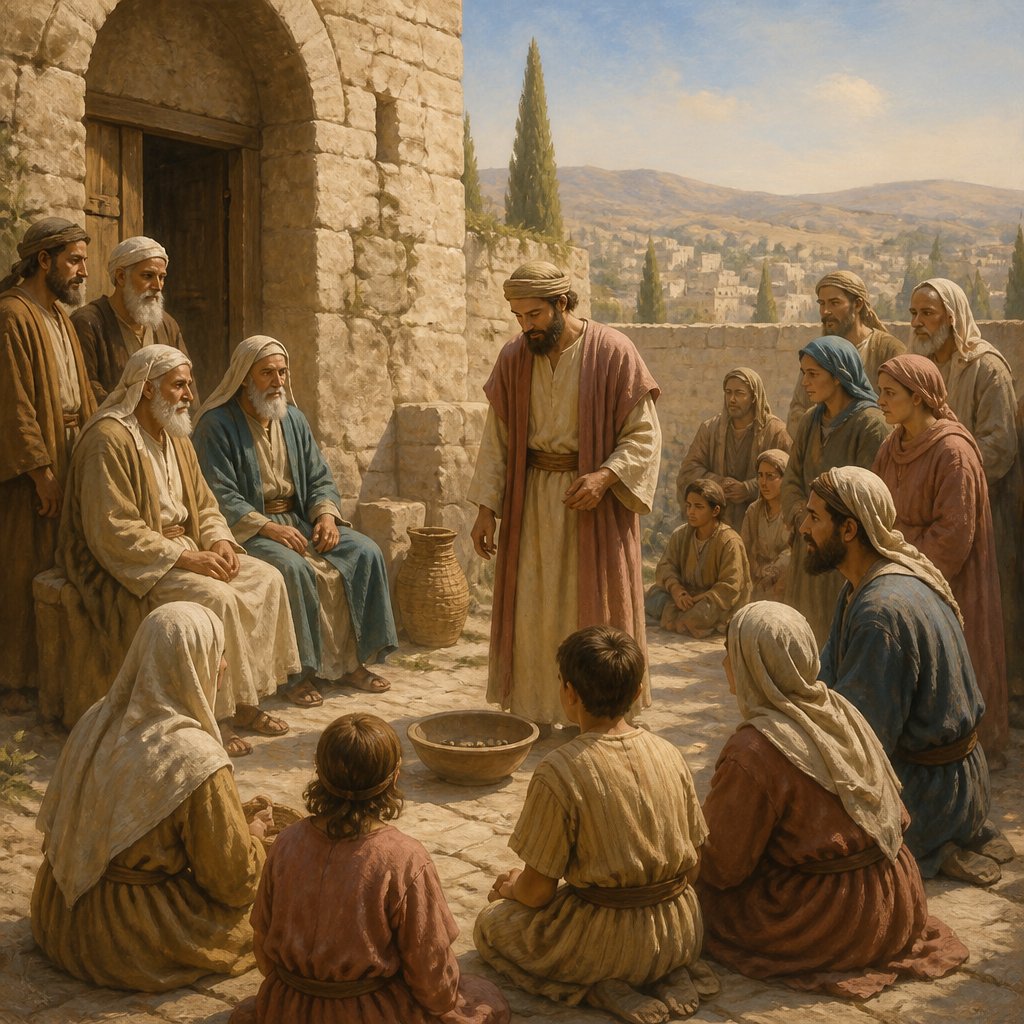
The Bible verse Nehemiah 11:1 in the King James Version reads, "And the rulers of the people dwelt at Jerusalem: the rest of the people also cast lots, to bring one of ten to dwell in Jerusalem the holy city, and nine parts to dwell in other cities."
To understand the meaning and significance of this verse, it is important to consider the historical and cultural context in which it was written. The book of Nehemiah is set in the time of the restoration of Jerusalem after the Babylonian exile. Nehemiah, a high official in the Persian court, led a group of Jewish exiles back to Jerusalem to rebuild the city's walls and restore its religious and social life. The verse specifically refers to the administration of the city, as well as the settlement of the people in Jerusalem and surrounding areas.
The verse begins by stating that "the rulers of the people dwelt at Jerusalem." This indicates that the leaders and officials of the community resided in the city, actively participating in its governance and affairs. The presence of these leaders in Jerusalem was crucial for the stability and order of the city, as they were responsible for making decisions and implementing policies that affected the entire community.
The latter part of the verse describes how the remaining population cast lots to determine which individuals would dwell in Jerusalem and which ones would reside in other cities. Casting lots was a common practice in ancient Israel for making decisions, and it was seen as a way for God to guide the outcome (Proverbs 16:33). By leaving the decision to chance, the people trusted in God's providence and accepted the results as His will. This process ensured that a portion of the population would continue to live in the holy city, upholding its religious and cultural significance, while others would settle in the surrounding areas and contribute to the growth and development of the region.
The themes present in this verse include the importance of civic administration and leadership, the organization of the community, and the recognition of Jerusalem as the holy city. Jerusalem held a central place in Jewish history and was considered the religious and political capital of the nation. Therefore, the restoration and maintenance of the city were of utmost importance for the preservation of Jewish identity and faith.
The symbolism in this verse lies in the division of the people between Jerusalem and other cities. While Jerusalem represented the spiritual center and focal point of the community, the dispersion of the population into other areas signified the spreading of the Jewish faith and culture throughout the land. This dispersion would have allowed for the influence of Jerusalem to extend to the surrounding regions, contributing to the overall flourishing and unity of the Jewish people.
Overall, Nehemiah 11:1 emphasizes the significance of leadership, community organization, and the preservation of religious and cultural heritage. It underscores the role of Jerusalem as the holy city and the need for its inhabitants to actively contribute to its well-being. The verse also reflects the commitment of the Jewish people to maintain their identity and faith, even in the midst of challenging circumstances. Through its historical context, themes, and symbolism, this verse continues to convey timeless lessons about community, faith, and the providence of God.
Get our apps


Artwork for Nehemiah 11:1

Nehemiah 11:1-19

Nehemiah 11:1 - "And the rulers of the people dwelt at Jerusalem: the rest of the people also cast lots, to bring one of ten to dwell in Jerusalem the holy city, and nine parts to dwell in other cities."
"And the rulers of the people dwelt at Jerusalem: the rest of the people also cast lots, to bring one of ten to dwell in Jerusalem the holy city, and nine parts to dwell in other cities." - Nehemiah 11:1

Nehemiah 11:11-14

Nehemiah 11:13

Nehemiah 11:34 - "Hadid, Zeboim, Neballat,"

Nehemiah 10:11 - "Micha, Rehob, Hashabiah,"

Nehemiah 11:33 - "Hazor, Ramah, Gittaim,"

Nehemiah 11:32 - "And at Anathoth, Nob, Ananiah,"

Nehemiah 11:26 - "And at Jeshua, and at Moladah, and at Beth-phelet,"

Nehemiah 11:29 - "And at En-rimmon, and at Zareah, and at Jarmuth,"

Nehemiah 11:35 - "Lod, and Ono, the valley of craftsmen."

Nehemiah 11:28 - "And at Ziklag, and at Mekonah, and in the villages thereof,"

Nehemiah 11:36 - "And of the Levites were divisions in Judah, and in Benjamin."

Nehemiah 11:10 - "Of the priests: Jedaiah the son of Joiarib, Jachin."

A biblical scene from Nehemiah 1:5-11 - Nehemiah, a Caucasian male in middle-eastern garb, is depicted respectfully requesting time from the king, a Middle-Eastern male seated at the dinner table while Nehemiah is serving his drink. He is asking for the opportunity to return to Judah and help his people build a wall. The setting is a grand royal court marked by golden hues, opulent textiles, and architecturally rich columns.

A biblical scene from Nehemiah 1:5-11 - Nehemiah, a Caucasian male in middle-eastern garb, is depicted respectfully requesting time from the king, a Middle-Eastern male seated on a throne. He is asking for the opportunity to return to Judah and help his people build a wall. The setting is a grand royal court marked by golden hues, opulent textiles, and architecturally rich columns. Nehemiah is the king's servant.

Nehemiah 12:11 - "And Joiada begat Jonathan, and Jonathan begat Jaddua."

Nehemiah 11:27 - "And at Hazar-shual, and at Beer-sheba, and in the villages thereof,"

Nehemiah 2:11 - "So I came to Jerusalem, and was there three days."

Nehemiah 11:11 - "Seraiah the son of Hilkiah, the son of Meshullam, the son of Zadok, the son of Meraioth, the son of Ahitub, was the ruler of the house of God."

A biblical scene from Nehemiah 1:5-11 - Nehemiah, a middle-age Caucasian male in middle-eastern garb, is serving a drink to the Persian king, a Middle-Eastern male seated at the dinner table. The setting is a grand royal court marked by golden hues, opulent textiles, and architecturally rich columns.

A biblical scene from Nehemiah 1:5-11 - Nehemiah, a Caucasian male in middle-eastern garb, is depicted respectfully requesting time from the king, a Middle-Eastern male seated at the dinner table while Nehemiah is serving his drink. He is asking for the opportunity to return to Judah and help his people build a wall. The setting is a grand royal court marked by golden hues, opulent textiles, and architecturally rich columns.

A biblical scene from Nehemiah 1:5-11 - Nehemiah, a Caucasian male in middle-eastern garb, is depicted respectfully requesting time from the king, a Middle-Eastern male seated on a throne. He is asking for the opportunity to return to Judah and help his people build a wall. The setting is a grand royal court marked by golden hues, opulent textiles, and architecturally rich columns. Only the king and Nehemiah, the king's cup bearer, are in the room.

A biblical scene from Nehemiah 1:5-11 - Nehemiah, a Caucasian male in middle-eastern garb, is depicted respectfully requesting time from the king, a Middle-Eastern male seated at the dinner table while Nehemiah is serving his drink. He is asking for the opportunity to return to Judah and help his people build a wall. The setting is a grand royal court marked by golden hues, opulent textiles, and architecturally rich columns.

A biblical scene from Nehemiah 1:5-11 - Nehemiah, a middle-age Caucasian male in middle-eastern garb and simple headdress, is standing, serving a drink to the Persian king, a Middle-Eastern male seated at the dinner table. The setting is a grand royal court marked by golden hues, opulent textiles, and architecturally rich columns.

"And at Anathoth, Nob, Ananiah," - Nehemiah 11:32

Nehemiah 1:1 - "The words of Nehemiah the son of Hachaliah. And it came to pass in the month Chisleu, in the twentieth year, as I was in Shushan the palace,"

"Hadid, Zeboim, Neballat," - Nehemiah 11:34

"Hazor, Ramah, Gittaim," - Nehemiah 11:33