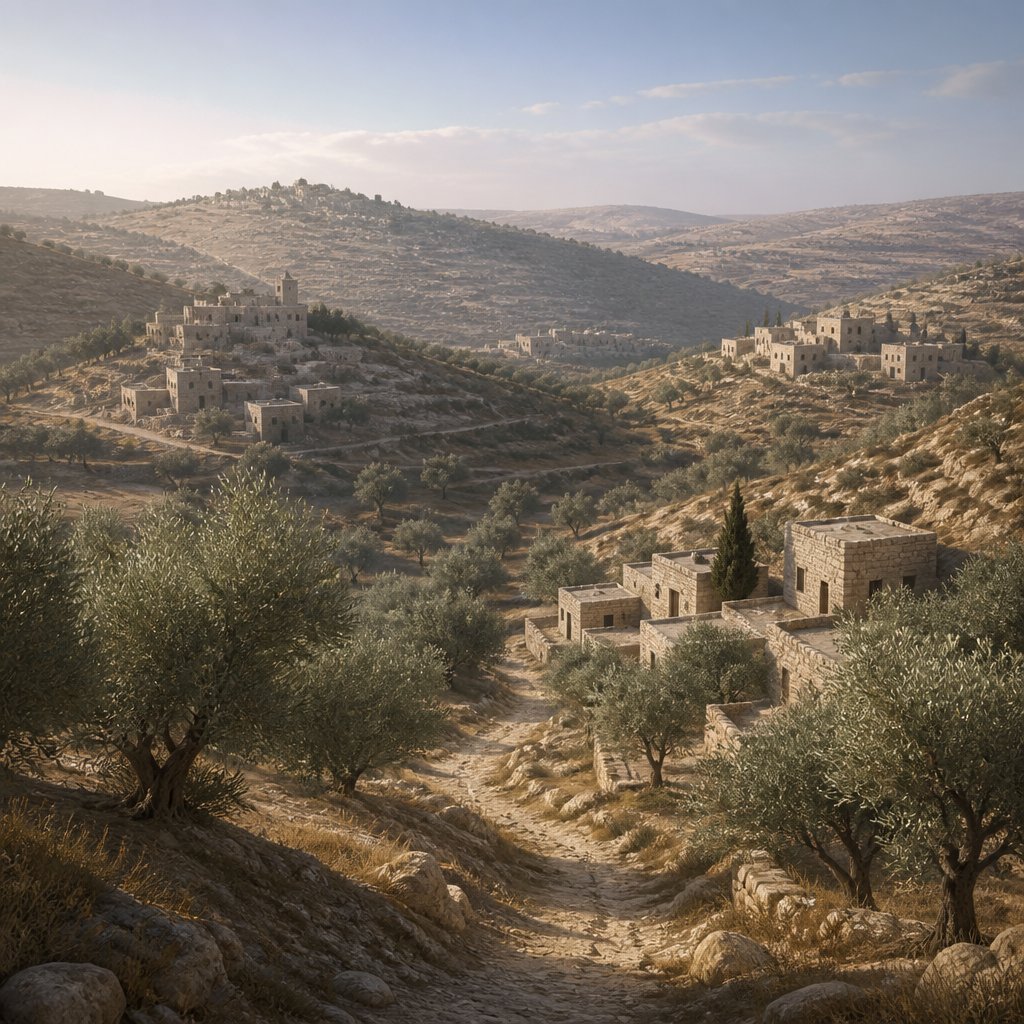
The Bible verse Nehemiah 11:32 from the King James Version (KJV) reads: "And at Anathoth, Nob, Ananiah" (Nehemiah 11:32, KJV). At first glance, this verse may seem like a mere listing of names, but when looked at in its larger context, it becomes clear that there is a deeper meaning and significance to these place names.
First, let's provide some context. The book of Nehemiah is set in the 5th century BC, during the time when the Israelites were rebuilding Jerusalem after their exile in Babylon. Nehemiah, a high-ranking official in the Persian court, was given permission by the Persian king to return to Jerusalem and oversee the project of rebuilding the city walls and gates. The book of Nehemiah describes the challenges faced by Nehemiah and the Israelites as they faced opposition from enemies and had to work tirelessly to restore Jerusalem to its former glory.
In Nehemiah 11, the focus shifts from the construction of the city walls to the repopulation of Jerusalem. The Israelites had returned to their homeland after the exile, but the city was largely uninhabited. Nehemiah led an effort to repopulate Jerusalem by choosing one out of every ten people to live in the city, while the rest remained in their towns and villages to provide for their families. This was a strategic move to ensure the security and viability of the city.
Now, let's take a closer look at the specifics of Nehemiah 11:32. The verse mentions three places: Anathoth, Nob, and Ananiah. Each of these places has its own historical and symbolic significance.
Anathoth was a town in the territory of Benjamin, and it was allocated to the priestly descendants of Aaron (Joshua 21:18). It is also known as the birthplace of the prophet Jeremiah (Jeremiah 1:1). The mention of Anathoth in Nehemiah 11:32 likely signifies the resettlement of priests in this town, as it was designated for the Levites.
Nob was another town in the territory of Benjamin, and it was associated with the tabernacle of David. It was here that David sought refuge and received bread and a sword from the priest Ahimelech (1 Samuel 21:1-9). However, later on, Nob was destroyed by King Saul, and the priests were massacred (1 Samuel 22:11-19). The mention of Nob in Nehemiah 11:32 may symbolize the restoration of this once-great city and the reinstatement of the priesthood in the area.
Ananiah is less well-known than Anathoth and Nob, but it is also likely a town in the territory of Benjamin. Its mention in Nehemiah 11:32 may simply serve to show the extent of the repopulation efforts, as the Israelites sought to inhabit every town and village in the region.
In analyzing these place names, we can see a theme of restoration, reclamation, and rebuilding. The repopulation of these towns symbolizes the renewal and revival of the land of Israel after the devastation of the exile. It represents the reestablishment of the priesthood and the reoccupation of the sacred spaces that had been neglected during the years of exile.
Overall, Nehemiah 11:32 is a reminder of the faithfulness and providence of God in restoring His people and their land. It serves as a testament to the resilience and determination of the Israelites as they sought to rebuild their lives and their spiritual heritage. The mentioning of these towns also highlights the importance of the historical and cultural significance of these places and the role they played in the narrative of the Israelites.
In conclusion, Nehemiah 11:32 may seem like a simple list of names, but when examined in its broader context, it reveals a deeper message about restoration, renewal, and the enduring faithfulness of God. It serves as a reminder to trust in God's sovereignty and to persevere in the face of adversity, knowing that He is always at work to bring about redemption and restoration.
Get our apps


Artwork for Nehemiah 11:32

Nehemiah 11:32 - "And at Anathoth, Nob, Ananiah,"

"And at Anathoth, Nob, Ananiah," - Nehemiah 11:32

Nehemiah 7:32 - "The men of Beth-el and Ai, an hundred twenty and three."

Nehemiah 12:32 - "And after them went Hoshaiah, and half of the princes of Judah,"

Nehemiah 11:11-14

Nehemiah 11:13

Nehemiah 3:32 - "And between the going up of the corner unto the sheep gate repaired the goldsmiths and the merchants."

Nehemiah 11:1-19

Nehemiah 11:34 - "Hadid, Zeboim, Neballat,"

Nehemiah 10:11 - "Micha, Rehob, Hashabiah,"

Nehemiah 11:33 - "Hazor, Ramah, Gittaim,"

Nehemiah 10:32 - "Also we made ordinances for us, to charge ourselves yearly with the third part of a shekel for the service of the house of our God;"

Nehemiah 11:26 - "And at Jeshua, and at Moladah, and at Beth-phelet,"

Nehemiah 11:29 - "And at En-rimmon, and at Zareah, and at Jarmuth,"
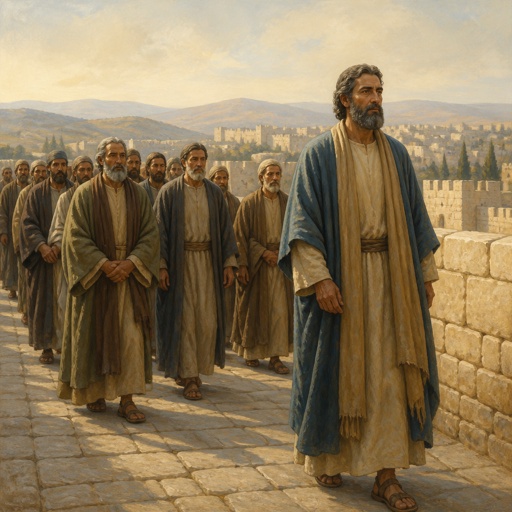
"And after them went Hoshaiah, and half of the princes of Judah," - Nehemiah 12:32

"The men of Beth-el and Ai, an hundred twenty and three." - Nehemiah 7:32

Nehemiah 11:35 - "Lod, and Ono, the valley of craftsmen."

Nehemiah 11:28 - "And at Ziklag, and at Mekonah, and in the villages thereof,"

Nehemiah 11:36 - "And of the Levites were divisions in Judah, and in Benjamin."

Nehemiah 11:10 - "Of the priests: Jedaiah the son of Joiarib, Jachin."

Nehemiah 12:11 - "And Joiada begat Jonathan, and Jonathan begat Jaddua."

Nehemiah 11:27 - "And at Hazar-shual, and at Beer-sheba, and in the villages thereof,"

Nehemiah 2:11 - "So I came to Jerusalem, and was there three days."

Nehemiah 11:11 - "Seraiah the son of Hilkiah, the son of Meshullam, the son of Zadok, the son of Meraioth, the son of Ahitub, was the ruler of the house of God."

"Hadid, Zeboim, Neballat," - Nehemiah 11:34

"Hazor, Ramah, Gittaim," - Nehemiah 11:33

"Micha, Rehob, Hashabiah," - Nehemiah 10:11

Nehemiah 11:21 - "But the Nethinims dwelt in Ophel: and Ziha and Gispa were over the Nethinims."

Nehemiah 11:8 - "And after him Gabbai, Sallai, nine hundred twenty and eight."

Romans 11:25-32