What does Nehemiah 11:9 mean?
“And Joel the son of Zichri was their overseer: and Judah the son of Senuah was second over the city.” — Nehemiah 11:9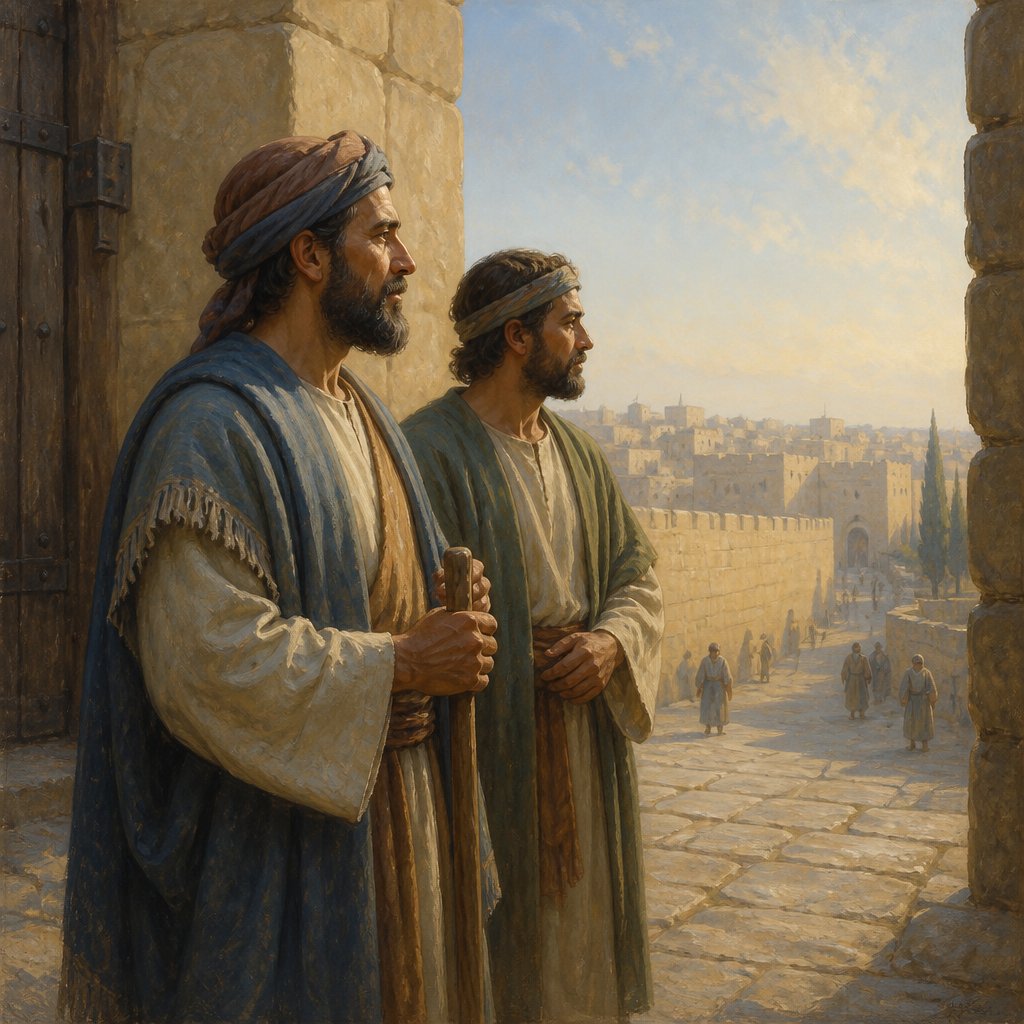
Nehemiah 11:9 in the King James Version of the Bible reads: "And Joel the son of Zichri was their overseer: and Judah the son of Senuah was second over the city."
This verse is part of the book of Nehemiah, which is a historical account of the Israelites' return from exile in Babylon and the rebuilding of the wall of Jerusalem. Nehemiah, a Jewish cupbearer to the Persian king Artaxerxes, was appointed as governor of Judah and tasked with the responsibility of leading the people in the reconstruction of the city.
In Nehemiah 11, the territory of Jerusalem was repopulated following the completion of the wall. The verse specifically mentions two individuals, Joel and Judah, who were given oversight and leadership roles in the city. This verse may seem insignificant at first glance, but it actually holds important themes and offers valuable insights into the historical and spiritual context of the Israelites' return to Jerusalem.
One of the key themes in this verse is the restoration and rebuilding of the community. After years of exile and destruction, the Israelites faced the challenge of rebuilding their homeland. The appointment of Joel and Judah as overseers demonstrates the need for strong leadership and organization in the process of rebuilding. Their roles were crucial in ensuring the well-being and security of the people living in the city. This reflects the importance of leadership and governance in establishing a stable and flourishing community, a theme that is relevant in both historical and contemporary contexts.
Furthermore, the verse emphasizes the significance of individual responsibility and contribution to the community. Joel and Judah were entrusted with positions of authority, which required them to fulfill their duties with diligence and integrity. Their leadership roles were essential for the functioning of the city and the welfare of its inhabitants. This highlights the biblical principle of stewardship, emphasizing the idea that every member of the community has a role to play in its prosperity and well-being.
In addition, the verse conveys the idea of divine order and authority. The appointment of Joel and Judah as overseers was not merely a human decision, but was ultimately ordained by God. Throughout the book of Nehemiah, there is a recurring theme of seeking God's guidance and relying on His intervention in the process of restoration. The leaders appointed in this verse were chosen and empowered by God to fulfill their roles effectively. This illustrates the biblical concept of God's sovereignty and His involvement in the affairs of His people.
Symbolically, the names Joel and Judah also hold significance. Joel means "Yahweh is God" and Judah means "praised." These names reflect the spiritual and theological underpinnings of the Israelites' restoration. The rebuilding of the city of Jerusalem was ultimately an act of praise and worship to Yahweh, the God of Israel. The appointment of leaders with such symbolic names underscores the spiritual significance of the community's restoration and the central role of faith in their endeavors.
In conclusion, Nehemiah 11:9 holds important themes of leadership, community restoration, and divine sovereignty. It provides valuable insights into the historical and spiritual context of the Israelites' return to Jerusalem and offers timeless principles of governance and stewardship. The verse serves as a reminder of the enduring importance of strong leadership, individual responsibility, and faith in the process of rebuilding and sustaining a flourishing community.
Get our apps


Artwork for Nehemiah 11:9

Nehemiah 11:9 - "And Joel the son of Zichri was their overseer: and Judah the son of Senuah was second over the city."
"And Joel the son of Zichri was their overseer: and Judah the son of Senuah was second over the city." - Nehemiah 11:9

Nehemiah 11:1-19

Nehemiah 9:11 - "And thou didst divide the sea before them, so that they went through the midst of the sea on the dry land; and their persecutors thou threwest into the deeps, as a stone into the mighty waters."

Nehemiah 11:11-14

Nehemiah 11:13

Nehemiah 6:9

Nehemiah 11:34 - "Hadid, Zeboim, Neballat,"

Nehemiah 10:11 - "Micha, Rehob, Hashabiah,"

Nehemiah 11:33 - "Hazor, Ramah, Gittaim,"

Nehemiah 11:32 - "And at Anathoth, Nob, Ananiah,"

Nehemiah 11:26 - "And at Jeshua, and at Moladah, and at Beth-phelet,"

Nehemiah 11:29 - "And at En-rimmon, and at Zareah, and at Jarmuth,"

Nehemiah 9:9 - "And didst see the affliction of our fathers in Egypt, and heardest their cry by the Red sea;"

Nehemiah 11:35 - "Lod, and Ono, the valley of craftsmen."

Nehemiah 11:28 - "And at Ziklag, and at Mekonah, and in the villages thereof,"

Nehemiah 11:36 - "And of the Levites were divisions in Judah, and in Benjamin."

Nehemiah 11:10 - "Of the priests: Jedaiah the son of Joiarib, Jachin."

Nehemiah 12:11 - "And Joiada begat Jonathan, and Jonathan begat Jaddua."

Nehemiah 7:9 - "The children of Shephatiah, three hundred seventy and two."

Nehemiah 11:27 - "And at Hazar-shual, and at Beer-sheba, and in the villages thereof,"

Nehemiah 2:11 - "So I came to Jerusalem, and was there three days."

Nehemiah 11:11 - "Seraiah the son of Hilkiah, the son of Meshullam, the son of Zadok, the son of Meraioth, the son of Ahitub, was the ruler of the house of God."

"And at Anathoth, Nob, Ananiah," - Nehemiah 11:32

"Hadid, Zeboim, Neballat," - Nehemiah 11:34

"Hazor, Ramah, Gittaim," - Nehemiah 11:33

"Micha, Rehob, Hashabiah," - Nehemiah 10:11

Nehemiah 11:21 - "But the Nethinims dwelt in Ophel: and Ziha and Gispa were over the Nethinims."

Nehemiah 11:8 - "And after him Gabbai, Sallai, nine hundred twenty and eight."

Nehemiah 11:2 - "And the people blessed all the men, that willingly offered themselves to dwell at Jerusalem."