What does Nehemiah 12:11 mean?
“And Joiada begat Jonathan, and Jonathan begat Jaddua.” — Nehemiah 12:11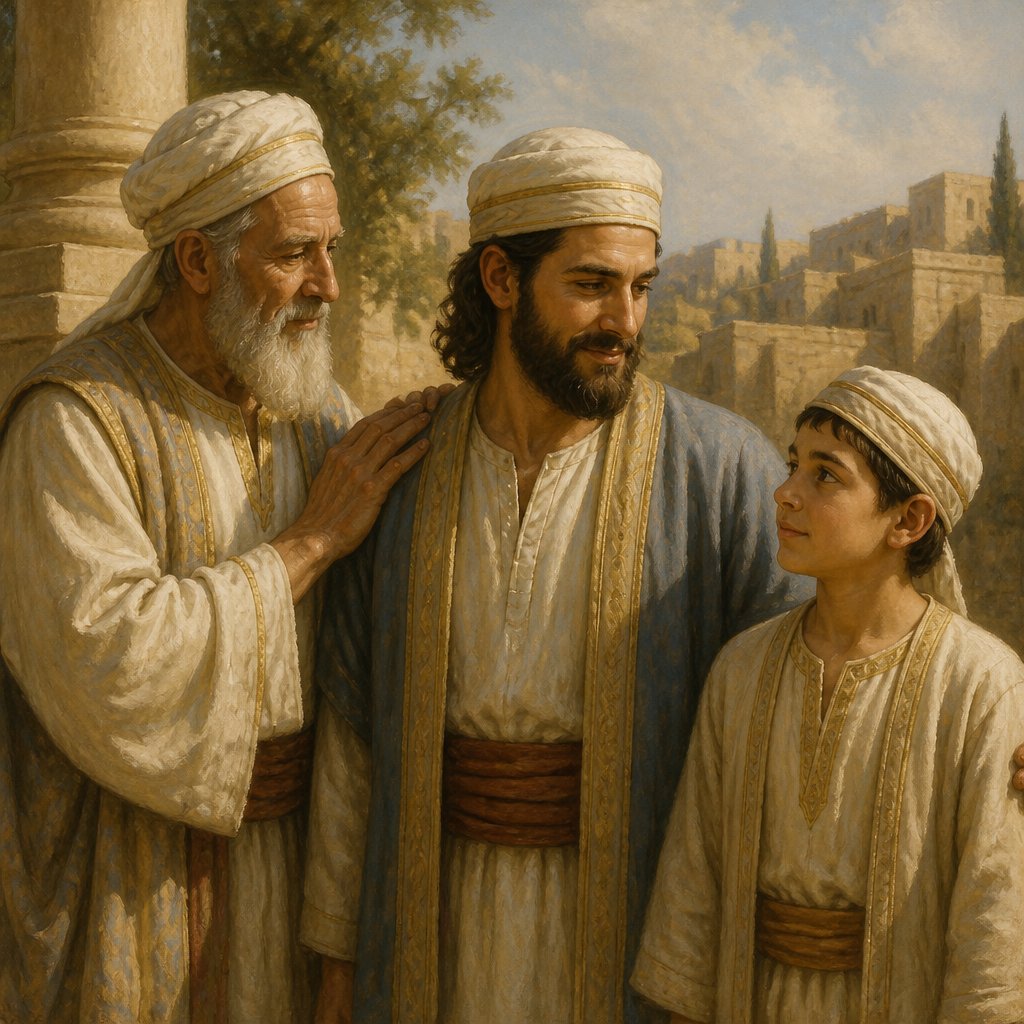
Nehemiah 12:11 (KJV) says, "And Joiada begat Jonathan, and Jonathan begat Jaddua." At first glance, this verse may seem like a simple genealogical record, listing the descendants of Joiada. However, when examined more closely and placed in context with the rest of the book of Nehemiah, this seemingly straightforward verse takes on deeper significance.
The book of Nehemiah, which is part of the Hebrew Bible and the Christian Old Testament, tells the story of the restoration of Jerusalem and the rebuilding of its walls. Nehemiah, a Jewish exile serving as cupbearer to the Persian king, is moved to action when he hears about the desperate state of his homeland. With the king's blessing and support, Nehemiah returns to Jerusalem and leads the people in the monumental task of rebuilding the city's walls and reviving their spiritual life.
In the context of Nehemiah's narrative, the genealogy presented in Nehemiah 12:11 is a reminder of the importance of lineage and continuity in the Jewish community. It serves as a connection to the past, linking the present generation with their ancestors and their historic legacy. By tracing the line from Joiada to Jaddua, the verse emphasizes the enduring nature of God's promises and the continuity of the priesthood, which was a central institution in the religious life of the Jewish people.
Furthermore, the mention of these names holds theological significance as well. Joiada, a priest who served as a leader in the restoration of the Jerusalem wall, is a symbolic figure representing faithfulness and dedication to the work of God. His descendants, Jonathan and Jaddua, continue the legacy of their forefather and contribute to the ongoing story of God's work in the world.
The use of genealogy in the Bible often serves as a tool for conveying spiritual truth. It establishes a sense of continuity and permanence, linking the present generation to their ancestors and reinforcing the idea of God's faithfulness throughout history. This connection to the past is integral to the Jewish identity and plays a crucial role in shaping their understanding of themselves as a chosen people with a unique covenant with God.
In addition to its historical and theological significance, the genealogy in Nehemiah 12:11 also carries symbolic weight. The names Joiada, Jonathan, and Jaddua are not only markers of lineage but also carry meaning in their own right. In Hebrew tradition, names are imbued with significance and often convey aspects of a person's character or destiny. Joiada means "Yahweh knows," Jonathan means "Yahweh has given," and Jaddua means "known by Yahweh." These meanings can be seen as a reflection of the faith and dependence on God that characterized the priests and leaders of the Jewish community.
Ultimately, Nehemiah 12:11 serves as a reminder of the enduring faithfulness of God and the continuous work of God's people throughout history. It highlights the importance of continuity and legacy within the community of believers and underscores the significance of individual faithfulness in carrying out the work of God. As followers of Christ today, we can draw inspiration from the example of Joiada, Jonathan, and Jaddua, recognizing the importance of our own spiritual lineage and the call to continue the work of God in our time.
Get our apps


Artwork for Nehemiah 12:11

Nehemiah 12:11 - "And Joiada begat Jonathan, and Jonathan begat Jaddua."
"And Joiada begat Jonathan, and Jonathan begat Jaddua." - Nehemiah 12:11

Nehemiah 11:12 - "And their brethren that did the work of the house were eight hundred twenty and two: and Adaiah the son of Jeroham, the son of Pelaliah, the son of Amzi, the son of Zechariah, the son of Pashur, the son of Malchiah,"

Nehemiah 11:11-14

Nehemiah 11:13

Nehemiah 12:26 - "These were in the days of Joiakim the son of Jeshua, the son of Jozadak, and in the days of Nehemiah the governor, and of Ezra the priest, the scribe."

Nehemiah 11:34 - "Hadid, Zeboim, Neballat,"

Nehemiah 10:11 - "Micha, Rehob, Hashabiah,"

Nehemiah 12:33 - "And Azariah, Ezra, and Meshullam,"

Nehemiah 12:5 - "Miamin, Maadiah, Bilgah,"

Nehemiah 12:2 - "Amariah, Malluch, Hattush,"

Nehemiah 12:4 - "Iddo, Ginnetho, Abijah,"

Nehemiah 12:3 - "Shechaniah, Rehum, Meremoth,"

Nehemiah 10:12 - "Zaccur, Sherebiah, Shebaniah,"

Nehemiah 12:6 - "Shemaiah, and Joiarib, Jedaiah,"

Nehemiah 11:33 - "Hazor, Ramah, Gittaim,"

Nehemiah 11:32 - "And at Anathoth, Nob, Ananiah,"

Nehemiah 11:1-19

Nehemiah 12:12 - "And in the days of Joiakim were priests, the chief of the fathers: of Seraiah, Meraiah; of Jeremiah, Hananiah;"

Nehemiah 11:26 - "And at Jeshua, and at Moladah, and at Beth-phelet,"

Nehemiah 11:29 - "And at En-rimmon, and at Zareah, and at Jarmuth,"

Nehemiah 12:16 - "Of Iddo, Zechariah; of Ginnethon, Meshullam;"

Nehemiah 12:13 - "Of Ezra, Meshullam; of Amariah, Jehohanan;"

Nehemiah 12:20 - "Of Sallai, Kallai; of Amok, Eber;"

Nehemiah 12:19 - "And of Joiarib, Mattenai; of Jedaiah, Uzzi;"

Nehemiah 12:34 - "Judah, and Benjamin, and Shemaiah, and Jeremiah,"

Nehemiah 12:15 - "Of Harim, Adna; of Meraioth, Helkai;"

Nehemiah 12:18 - "Of Bilgah, Shammua; of Shemaiah, Jehonathan;"

Nehemiah 12:14 - "Of Melicu, Jonathan; of Shebaniah, Joseph;"

Nehemiah 12:21 - "Of Hilkiah, Hashabiah; of Jedaiah, Nethaneel."