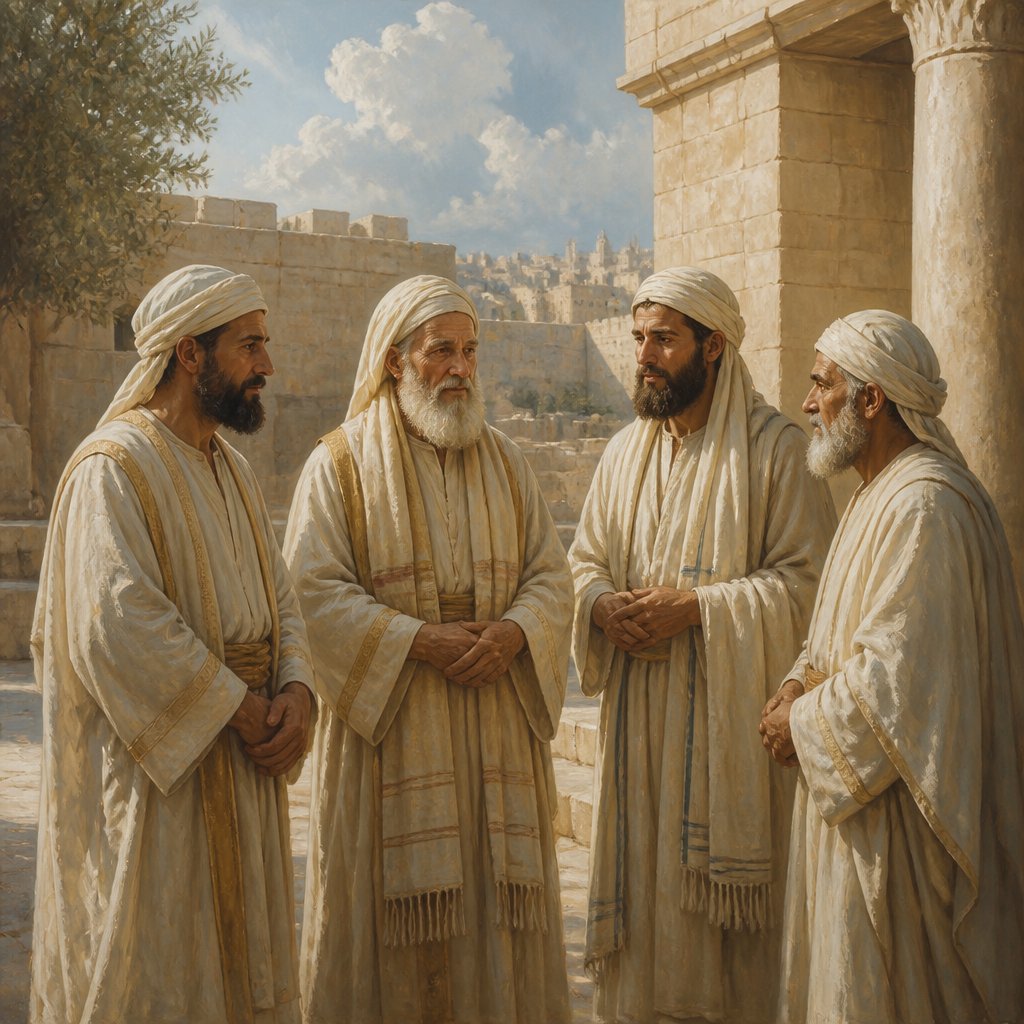
Nehemiah 12:20 (KJV) - "And the rest of the sons of Levi were these: Of the sons of Amram; Shubael: of the sons of Shubael; Jehdeiah."
This verse is a part of the genealogy of the Levites who were responsible for the service of the temple in Jerusalem during the time of Nehemiah. In order to truly understand the depth and significance of this verse, we must first consider its context within the larger narrative of the book of Nehemiah.
The book of Nehemiah is set during the period of Jewish exile in Babylon, when the Israelites were allowed to return to Jerusalem to rebuild the city and the temple under the decree of King Cyrus of Persia. Nehemiah, a cupbearer to the king, is appointed as the governor of Judah and is tasked with the reconstruction of the city walls. In addition to the physical restoration of Jerusalem, Nehemiah is also concerned with the spiritual rejuvenation of the people.
The verse in question is a part of a list of the sons of Levi, who were one of the twelve tribes of Israel and were set apart for the service of the tabernacle and later the temple. The passage is a reminder of the importance of the Levites in the religious life of Israel. The lineage of the Levites was meticulously recorded and preserved, as they were entrusted with the sacred duties of ministering before the Lord. The verse serves as a testament to the continuity of the Levitical line and the faithfulness of God in preserving his chosen people.
The mention of Shubael and Jehdeiah is significant as it provides a snapshot of the individuals who held the hereditary office within the tribe of Levi. Shubael is the son of Amram, who was a prominent figure in the Levitical line, and Jehdeiah is the son of Shubael. This genealogy demonstrates the continuous chain of succession within the priesthood, highlighting the importance of lineage and heritage in the service of God.
Furthermore, this verse points to the significance of individual names within the lineage. In Hebrew culture, names carried great importance and often held symbolic meaning. The name Shubael can be interpreted to mean "returning to God" or "recompense of God," while Jehdeiah can be understood as "Jehovah is praise." These names serve as a reminder of the spiritual significance and purpose of the Levitical ministry.
Moreover, the verse also speaks to the sense of continuity and tradition within the Jewish faith. The preservation of the Levitical lineage was central to the maintenance of the sacrificial system and the worship practices of the temple. The Levites played a crucial role in leading the people in worship, offering sacrifices, and upholding the teachings of the law. This verse emphasizes the unbroken continuity of the Levitical line and the faithfulness of God in preserving the priesthood despite the challenges faced by the Israelites.
In conclusion, Nehemiah 12:20 serves as a testament to the historical and spiritual significance of the Levitical lineage within the religious life of Israel. The verse highlights the importance of lineage and tradition in the service of God, as well as the faithfulness of God in preserving his chosen people. It also points to the significance of individual names and their symbolic meanings within the context of the Levitical ministry. Overall, this verse provides a glimpse into the intricate details of the priesthood and underscores the sense of continuity and tradition within the Jewish faith.
Get our apps


Artwork for Nehemiah 12:20

Nehemiah 12:20 - "Of Sallai, Kallai; of Amok, Eber;"
"Of Sallai, Kallai; of Amok, Eber;" - Nehemiah 12:20

Nehemiah 10:20 - "Magpiash, Meshullam, Hezir,"

Nehemiah 12:26 - "These were in the days of Joiakim the son of Jeshua, the son of Jozadak, and in the days of Nehemiah the governor, and of Ezra the priest, the scribe."

Nehemiah 7:20 - "The children of Adin, six hundred fifty and five."

Nehemiah 12:5 - "Miamin, Maadiah, Bilgah,"

Nehemiah 12:33 - "And Azariah, Ezra, and Meshullam,"

Nehemiah 12:4 - "Iddo, Ginnetho, Abijah,"

Nehemiah 12:2 - "Amariah, Malluch, Hattush,"

Nehemiah 12:3 - "Shechaniah, Rehum, Meremoth,"

Nehemiah 10:12 - "Zaccur, Sherebiah, Shebaniah,"

Nehemiah 12:6 - "Shemaiah, and Joiarib, Jedaiah,"

Nehemiah 12:12 - "And in the days of Joiakim were priests, the chief of the fathers: of Seraiah, Meraiah; of Jeremiah, Hananiah;"

Nehemiah 12:13 - "Of Ezra, Meshullam; of Amariah, Jehohanan;"

Nehemiah 12:16 - "Of Iddo, Zechariah; of Ginnethon, Meshullam;"

Nehemiah 12:19 - "And of Joiarib, Mattenai; of Jedaiah, Uzzi;"

Nehemiah 12:34 - "Judah, and Benjamin, and Shemaiah, and Jeremiah,"

Nehemiah 12:15 - "Of Harim, Adna; of Meraioth, Helkai;"

Nehemiah 12:18 - "Of Bilgah, Shammua; of Shemaiah, Jehonathan;"

Nehemiah 12:21 - "Of Hilkiah, Hashabiah; of Jedaiah, Nethaneel."

Nehemiah 12:14 - "Of Melicu, Jonathan; of Shebaniah, Joseph;"

"Magpiash, Meshullam, Hezir," - Nehemiah 10:20

Nehemiah 12:17 - "Of Abijah, Zichri; of Miniamin, of Moadiah, Piltai;"

Nehemiah 12:11 - "And Joiada begat Jonathan, and Jonathan begat Jaddua."

Nehemiah 7:12 - "The children of Elam, a thousand two hundred fifty and four."

Nehemiah 12:32 - "And after them went Hoshaiah, and half of the princes of Judah,"

Nehemiah 13:20 - "So the merchants and sellers of all kind of ware lodged without Jerusalem once or twice."

"Miamin, Maadiah, Bilgah," - Nehemiah 12:5

"Shemaiah, and Joiarib, Jedaiah," - Nehemiah 12:6

"Iddo, Ginnetho, Abijah," - Nehemiah 12:4