What does Nehemiah 12:44 mean?
“And at that time were some appointed over the chambers for the treasures, for the offerings, for the firstfruits, and for the tithes, to gather into them out of the fields of the cities the portions of the law for the priests and Levites: for Judah rejoiced for the priests and for the Levites that waited.” — Nehemiah 12:44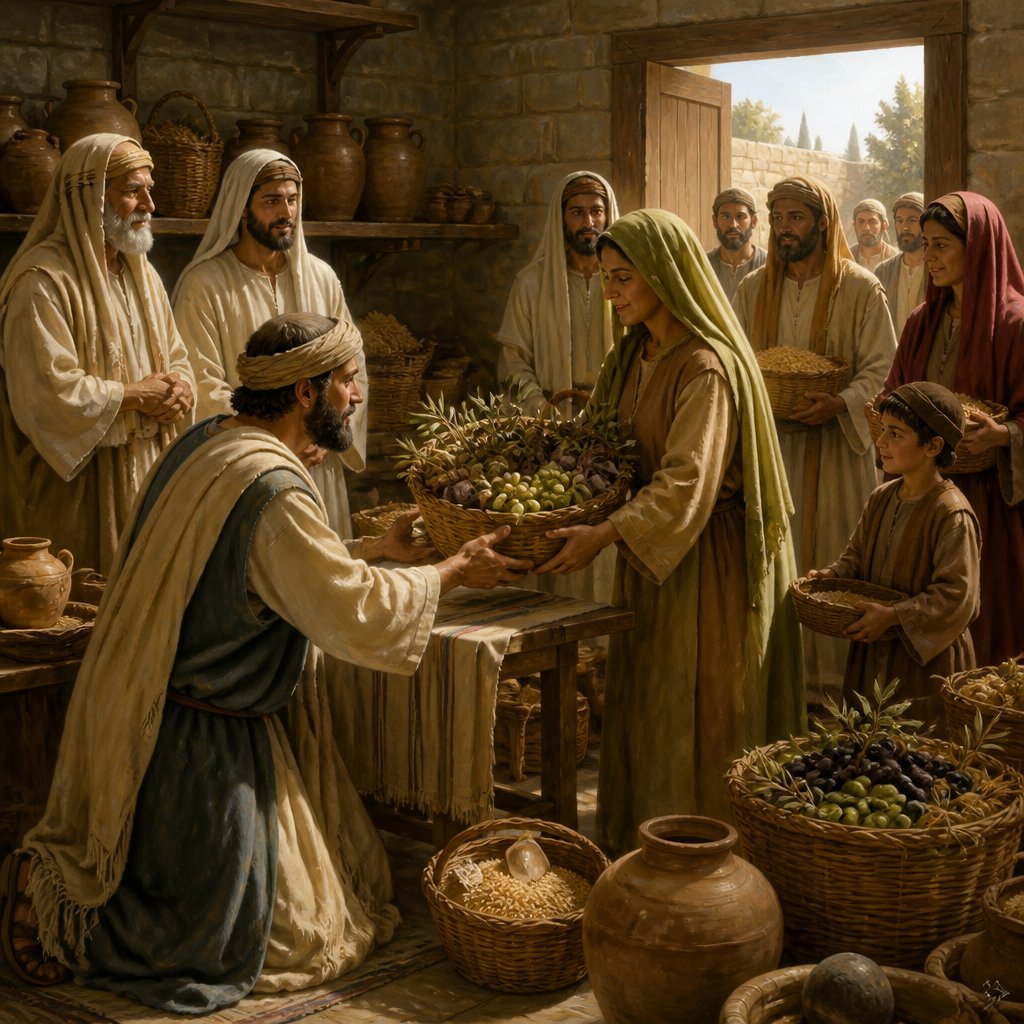
The Bible verse Nehemiah 12:44, from the King James Version (KJV), states:
"And at that time were some appointed over the chambers for the treasures, for the offerings, for the firstfruits, and for the tithes, to gather into them out of the fields of the cities the portions of the law for the priests and Levites: for Judah rejoiced for the priests and for the Levites that waited."
This passage occurs in the Book of Nehemiah, which is part of the Hebrew Bible and the Christian Old Testament. The book tells the story of Nehemiah, a Jewish leader who was involved in the rebuilding of the walls of Jerusalem and the restoration of the city after the Babylonian exile. This verse specifically focuses on the appointment of individuals to oversee the chambers for the storing of treasures, offerings, firstfruits, and tithes. These stored items were to be distributed to the priests and Levites as commanded by the law of Moses. The verse also mentions that the people of Judah rejoiced for the priests and Levites who were faithfully carrying out their duties.
One of the overarching themes of this verse is the importance of obedience to the laws and commandments of God. In the Old Testament, the Levites were a designated tribe of Israel who were responsible for the religious duties at the tabernacle and later at the temple in Jerusalem. The priests and Levites relied on the tithes and offerings from the people to sustain themselves and carry out their religious responsibilities. By appointing individuals to oversee the storage and distribution of these provisions, Nehemiah was ensuring that the priests and Levites would be cared for according to God's instructions. This demonstrates a commitment to upholding the religious requirements outlined in the Mosaic law, which was a central aspect of the Jewish faith at that time.
Another important theme in this verse is the concept of rejoicing and gratitude. The text emphasizes that the people of Judah rejoiced for the priests and Levites who were faithfully carrying out their duties. This expression of joy and thankfulness reflects an attitude of appreciation for those who were serving the community in a religious capacity. It also highlights the interconnectedness of the community and the importance of supporting and honoring those who are dedicated to serving God.
The context of this verse is also significant. The book of Nehemiah takes place during a period of restoration and renewal for the Jewish people. Following the exile in Babylon, Nehemiah led efforts to rebuild the walls of Jerusalem and reestablish the city. This was a time of spiritual and physical rebuilding, and the appointment of individuals to oversee the storage and distribution of offerings and tithes was part of the larger process of restoring the religious and cultural practices of the community.
In terms of symbolism, the chambers for the treasures, offerings, firstfruits, and tithes can be seen as representative of the organization and stewardship of the resources that were dedicated to the worship of God. The careful management of these provisions was a tangible way of demonstrating reverence for God and providing for the spiritual needs of the community. Additionally, the appointment of specific individuals to oversee this task symbolizes the importance of responsible leadership and administration within the religious community.
In conclusion, Nehemiah 12:44 from the King James Version of the Bible carries themes of obedience to God's laws, rejoicing and gratitude for religious leaders, and the restoration of the Jewish community following the exile. The verse provides valuable insight into the religious and cultural practices of the time, as well as the importance of honoring and supporting those who are dedicated to serving God. It serves as a reminder of the significance of stewardship and faithful commitment to the principles of the faith.
Get our apps


Artwork for Nehemiah 12:44

Nehemiah 12:44 - "¶ And at that time were some appointed over the chambers for the treasures, for the offerings, for the firstfruits, and for the tithes, to gather into them out of the fields of the cities the portions of the law for the priests and Levites: for Judah rejoiced for the priests and for the Levites that waited."
"¶ And at that time were some appointed over the chambers for the treasures, for the offerings, for the firstfruits, and for the tithes, to gather into them out of the fields of the cities the portions of the law for the priests and Levites: for Judah rejoiced for the priests and for the Levites that waited." - Nehemiah 12:44

Nehemiah 7:44 - "¶ The singers: the children of Asaph, an hundred forty and eight."

"¶ The singers: the children of Asaph, an hundred forty and eight." - Nehemiah 7:44

Mark 12:41 - 44
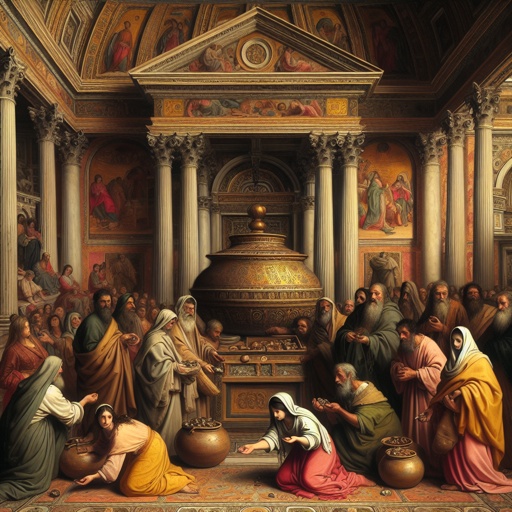
Mark 12:41 - 44

Mark 12:41 - 44

Mark 12:41 - 44

Mark 12:41 - 44

Nehemiah 12:26 - "These were in the days of Joiakim the son of Jeshua, the son of Jozadak, and in the days of Nehemiah the governor, and of Ezra the priest, the scribe."

Nehemiah 12:33 - "And Azariah, Ezra, and Meshullam,"

Nehemiah 12:5 - "Miamin, Maadiah, Bilgah,"

Nehemiah 12:2 - "Amariah, Malluch, Hattush,"

Nehemiah 12:4 - "Iddo, Ginnetho, Abijah,"

Nehemiah 12:3 - "Shechaniah, Rehum, Meremoth,"

Nehemiah 10:12 - "Zaccur, Sherebiah, Shebaniah,"

Nehemiah 12:6 - "Shemaiah, and Joiarib, Jedaiah,"

Nehemiah 12:12 - "And in the days of Joiakim were priests, the chief of the fathers: of Seraiah, Meraiah; of Jeremiah, Hananiah;"

Nehemiah 12:16 - "Of Iddo, Zechariah; of Ginnethon, Meshullam;"

Nehemiah 12:13 - "Of Ezra, Meshullam; of Amariah, Jehohanan;"

Nehemiah 12:20 - "Of Sallai, Kallai; of Amok, Eber;"

Nehemiah 12:19 - "And of Joiarib, Mattenai; of Jedaiah, Uzzi;"

Nehemiah 12:34 - "Judah, and Benjamin, and Shemaiah, and Jeremiah,"

Nehemiah 12:15 - "Of Harim, Adna; of Meraioth, Helkai;"

Nehemiah 12:18 - "Of Bilgah, Shammua; of Shemaiah, Jehonathan;"

Nehemiah 12:14 - "Of Melicu, Jonathan; of Shebaniah, Joseph;"

Nehemiah 12:21 - "Of Hilkiah, Hashabiah; of Jedaiah, Nethaneel."

Nehemiah 12:17 - "Of Abijah, Zichri; of Miniamin, of Moadiah, Piltai;"

Nehemiah 12:11 - "And Joiada begat Jonathan, and Jonathan begat Jaddua."

Psalms 44:12 - "Thou sellest thy people for nought, and dost not increase thy wealth by their price."