What does Nehemiah 12:9 mean?
“Also Bakbukiah and Unni, their brethren, were over against them in the watches.” — Nehemiah 12:9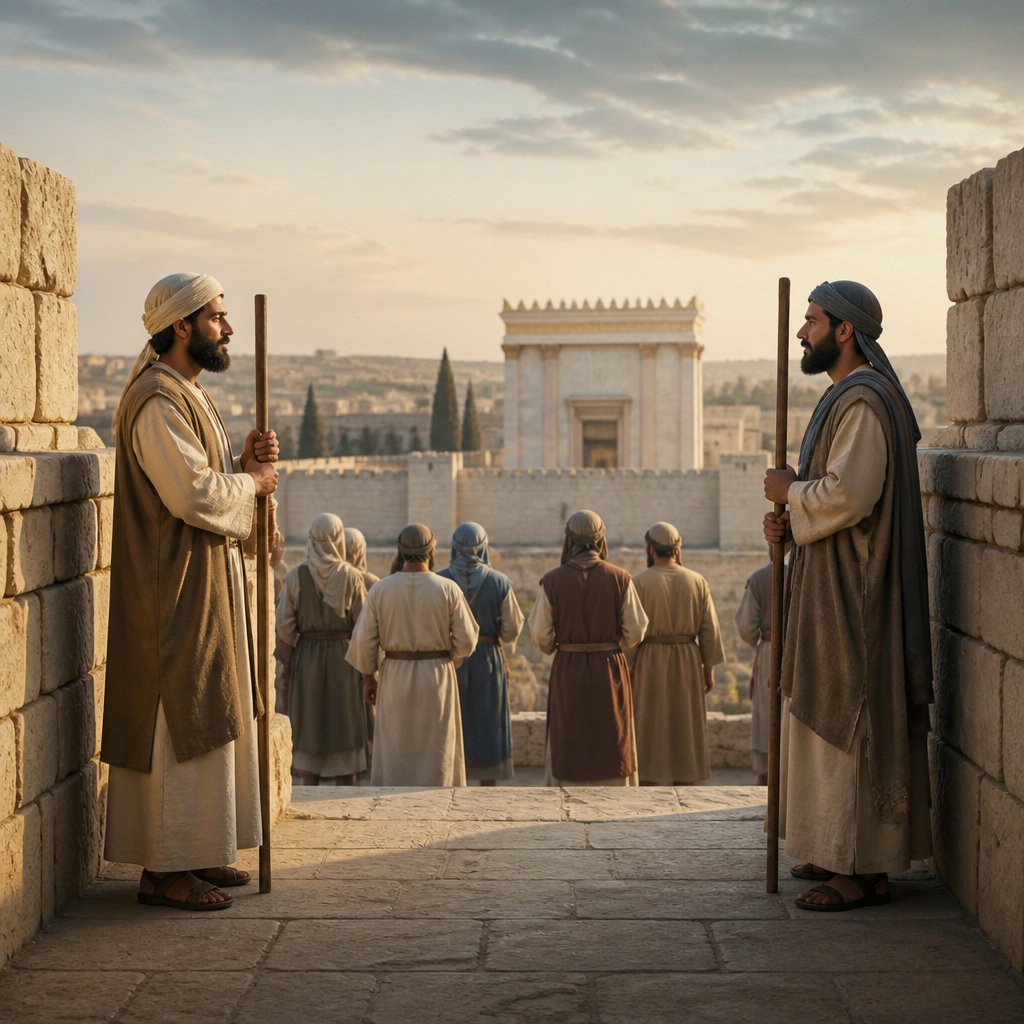
Nehemiah 12:9 in the King James Version (KJV) reads: "Also Bakbukiah and Unni, their brethren, were over against them in the watches."
Nehemiah is a book in the Old Testament that narrates the efforts of Nehemiah, a Jewish leader, to rebuild the walls of Jerusalem and restore the spiritual and physical well-being of the Jewish people. This particular verse is part of a list of the priests and Levites who served in the time of Joiakim the son of Jeshua, the son of Jozadak, and in the days of Nehemiah the governor, and of Ezra the priest, the scribe.
In this verse, Bakbukiah and Unni, who were brothers, were responsible for overseeing the watches. The "watches" refer to the different shifts or divisions of priests and Levites who were assigned to serve in the temple and its related activities, such as guarding and offering sacrifices. The verse indicates that Bakbukiah and Unni were placed in a position of authority and responsibility, overseeing the activities of the other priests and Levites.
The context of this verse is significant in understanding its meaning and implications. The rebuilding of the walls of Jerusalem and the restoration of the temple were crucial for the Jewish community at that time. These efforts aimed to reestablish the spiritual and physical identity of the people and to protect them from external threats. The appointment of Bakbukiah and Unni in a position of leadership reflects the importance of organized and responsible leadership in carrying out the religious and communal duties of the priests and Levites.
The themes of leadership, responsibility, and service to the community are prominent in this verse. Bakbukiah and Unni were entrusted with the important task of overseeing the watches, which required diligence, vigilance, and dedication. They were expected to lead by example and ensure that the religious and ceremonial obligations of the priests and Levites were carried out faithfully. This demonstrates the significance of leadership in upholding the religious and communal life of the Jewish people.
Symbolically, the appointment of Bakbukiah and Unni can be seen as a representation of the broader role of leaders within the community. Their leadership in overseeing the watches serves as a reminder of the importance of those in positions of authority to guide and protect the people in times of spiritual and physical vulnerability. Additionally, their role highlights the need for responsible and accountable leadership, as well as the significance of collaboration and support among brethren in fulfilling communal duties.
Overall, Nehemiah 12:9 conveys important themes of leadership, responsibility, and service within the context of the restoration and reestablishment of the Jewish community. It emphasizes the significance of organized and vigilant leadership in carrying out religious and communal duties. The verse serves as a testament to the importance of strong and faithful leadership in times of rebuilding and renewal.
Get our apps


Artwork for Nehemiah 12:9

Nehemiah 12:9 - "Also Bakbukiah and Unni, their brethren, were over against them in the watches."
"Also Bakbukiah and Unni, their brethren, were over against them in the watches." - Nehemiah 12:9

Nehemiah 9:12 - "Moreover thou leddest them in the day by a cloudy pillar; and in the night by a pillar of fire, to give them light in the way wherein they should go."

"Moreover thou leddest them in the day by a cloudy pillar; and in the night by a pillar of fire, to give them light in the way wherein they should go." - Nehemiah 9:12

Nehemiah 6:9

Nehemiah 12:26 - "These were in the days of Joiakim the son of Jeshua, the son of Jozadak, and in the days of Nehemiah the governor, and of Ezra the priest, the scribe."

Nehemiah 12:5 - "Miamin, Maadiah, Bilgah,"

Nehemiah 12:33 - "And Azariah, Ezra, and Meshullam,"

Nehemiah 12:4 - "Iddo, Ginnetho, Abijah,"

Nehemiah 12:2 - "Amariah, Malluch, Hattush,"

Nehemiah 12:3 - "Shechaniah, Rehum, Meremoth,"

Nehemiah 10:12 - "Zaccur, Sherebiah, Shebaniah,"

Nehemiah 12:6 - "Shemaiah, and Joiarib, Jedaiah,"

Nehemiah 12:12 - "And in the days of Joiakim were priests, the chief of the fathers: of Seraiah, Meraiah; of Jeremiah, Hananiah;"

Nehemiah 12:13 - "Of Ezra, Meshullam; of Amariah, Jehohanan;"

Nehemiah 12:16 - "Of Iddo, Zechariah; of Ginnethon, Meshullam;"

Nehemiah 12:20 - "Of Sallai, Kallai; of Amok, Eber;"

Nehemiah 9:9 - "And didst see the affliction of our fathers in Egypt, and heardest their cry by the Red sea;"

Nehemiah 12:19 - "And of Joiarib, Mattenai; of Jedaiah, Uzzi;"

Nehemiah 12:34 - "Judah, and Benjamin, and Shemaiah, and Jeremiah,"

Nehemiah 12:15 - "Of Harim, Adna; of Meraioth, Helkai;"

Nehemiah 12:18 - "Of Bilgah, Shammua; of Shemaiah, Jehonathan;"

Nehemiah 12:21 - "Of Hilkiah, Hashabiah; of Jedaiah, Nethaneel."

Nehemiah 12:14 - "Of Melicu, Jonathan; of Shebaniah, Joseph;"

Nehemiah 12:17 - "Of Abijah, Zichri; of Miniamin, of Moadiah, Piltai;"

Nehemiah 12:11 - "And Joiada begat Jonathan, and Jonathan begat Jaddua."

Nehemiah 7:9 - "The children of Shephatiah, three hundred seventy and two."

Nehemiah 7:12 - "The children of Elam, a thousand two hundred fifty and four."

Nehemiah 12:32 - "And after them went Hoshaiah, and half of the princes of Judah,"

"Miamin, Maadiah, Bilgah," - Nehemiah 12:5