What does Nehemiah 13:27 mean?
“Shall we then hearken unto you to do all this great evil, to transgress against our God in marrying strange wives?” — Nehemiah 13:27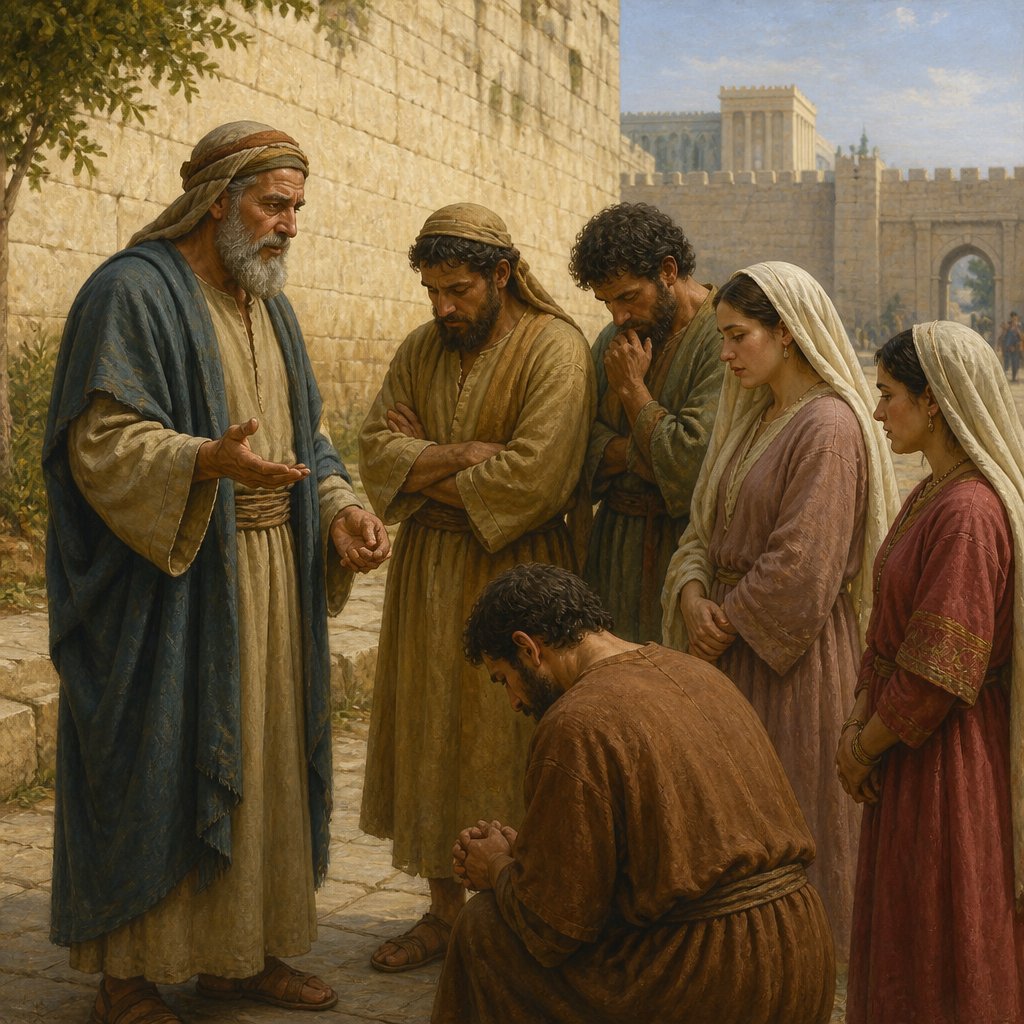
The verse Nehemiah 13:27 in the King James Version of the Bible reads, "Should we then hearken unto you to do all this great evil, to transgress against our God in marrying strange wives?" This verse comes from the Book of Nehemiah, which is a historical account of the Israelites' return from exile in Babylon and the rebuilding of the city of Jerusalem.
The context of this verse is the final chapter of the Book of Nehemiah, where Nehemiah returns to Jerusalem after a period of absence and discovers that the people have been disobedient to God's laws. Specifically, they have intermarried with foreign women, which was strictly forbidden by the Mosaic law. This verse is a rebuke from Nehemiah to the people for their disobedience and a call to repentance.
The themes in this verse are obedience to God's laws, the consequences of disobedience, and the importance of maintaining the purity of the Israelite community. Throughout the Book of Nehemiah, there is a recurring theme of the Israelites struggling to remain faithful to God and His commandments. Nehemiah himself is a figure who exemplifies obedience and devotion to God, and he is instrumental in leading the people back to faithfulness.
The marrying of foreign women was a particularly egregious sin in the eyes of the Israelites, as it was seen as a threat to the purity of their faith and the unity of their community. The symbolism of this act is deeply rooted in the Israelites' understanding of their identity as God's chosen people. Interacting with other nations was not inherently sinful, but marrying foreign women was viewed as a compromise of their distinctiveness and a potential source of idolatry and unfaithfulness to God.
In this verse, Nehemiah's use of the phrase "strange wives" carries a weight of condemnation, as it implies a departure from the prescribed boundaries of the Israelite community. The language used reflects a sense of moral and spiritual betrayal, as the people are accused of committing "great evil" by transgressing against God through their intermarriage.
Nehemiah's question, "Should we then hearken unto you to do all this great evil?" is a rhetorical one, highlighting the absurdity of the people's actions and the need for them to recognize the gravity of their sin. It also serves as a call to personal responsibility, as Nehemiah challenges the people to consider whether they are willing to continue in their disobedience or to turn back to God in repentance.
Ultimately, this verse serves as a sobering reminder of the consequences of disobedience and the imperative of remaining faithful to God's commands. The Book of Nehemiah as a whole provides a powerful example of the challenges and triumphs of maintaining fidelity to God in the face of opposition and temptation.
In conclusion, Nehemiah 13:27 contains a strong message of repentance and renewal, as Nehemiah confronts the Israelites with the gravity of their disobedience and calls them to turn back to God. The verse also reflects the deep-seated themes of obedience, purity, and fidelity to God's laws that permeate the narrative of the Book of Nehemiah. The symbolism of intermarriage serves as a powerful representation of the Israelites' struggle to maintain their distinctiveness and faithfulness in the face of external influences. Overall, this verse carries significant weight in conveying the timeless lesson of the need for personal and communal recommitment to God and His ways.
Get our apps


Artwork for Nehemiah 13:27

Nehemiah 13:27 - "Shall we then hearken unto you to do all this great evil, to transgress against our God in marrying strange wives?"
"Shall we then hearken unto you to do all this great evil, to transgress against our God in marrying strange wives?" - Nehemiah 13:27

Nehemiah 10:27 - "Malluch, Harim, Baanah."

Nehemiah 7:27 - "The men of Anathoth, an hundred twenty and eight."

Nehemiah 11:27 - "And at Hazar-shual, and at Beer-sheba, and in the villages thereof,"

"Malluch, Harim, Baanah." - Nehemiah 10:27

Nehemiah 11:13

Nehemiah 10:13 - "Hodijah, Bani, Beninu."

Nehemiah 12:13 - "Of Ezra, Meshullam; of Amariah, Jehohanan;"
"The men of Anathoth, an hundred twenty and eight." - Nehemiah 7:27

Nehemiah 7:13 - "The children of Zattu, eight hundred forty and five."
"And at Hazar-shual, and at Beer-sheba, and in the villages thereof," - Nehemiah 11:27

"Hodijah, Bani, Beninu." - Nehemiah 10:13

Nehemiah 3:27 - "After them the Tekoites repaired another piece, over against the great tower that lieth out, even unto the wall of Ophel."

"Of Ezra, Meshullam; of Amariah, Jehohanan;" - Nehemiah 12:13

Nehemiah 13:12 - "Then brought all Judah the tithe of the corn and the new wine and the oil unto the treasuries."

Nehemiah 13:31 - "And for the wood offering, at times appointed, and for the firstfruits. Remember me, O my God, for good."

Nehemiah 13:20 - "So the merchants and sellers of all kind of ware lodged without Jerusalem once or twice."

Nehemiah 13:4 - "¶ And before this, Eliashib the priest, having the oversight of the chamber of the house of our God, was allied unto Tobiah:"

Nehemiah 13:23 - "¶ In those days also saw I Jews that had married wives of Ashdod, of Ammon, and of Moab:"

Nehemiah 13:29 - "Remember them, O my God, because they have defiled the priesthood, and the covenant of the priesthood, and of the Levites."

Nehemiah 12:27 - "¶ And at the dedication of the wall of Jerusalem they sought the Levites out of all their places, to bring them to Jerusalem, to keep the dedication with gladness, both with thanksgivings, and with singing, with cymbals, psalteries, and with harps."

Nehemiah 13:24 - "And their children spake half in the speech of Ashdod, and could not speak in the Jews' language, but according to the language of each people."

Nehemiah 13:8 - "And it grieved me sore: therefore I cast forth all the household stuff of Tobiah out of the chamber."

Nehemiah 13:3 - "Now it came to pass, when they had heard the law, that they separated from Israel all the mixed multitude."

Nehemiah 13:9 - "Then I commanded, and they cleansed the chambers: and thither brought I again the vessels of the house of God, with the meat offering and the frankincense."

Nehemiah 13:7 - "And I came to Jerusalem, and understood of the evil that Eliashib did for Tobiah, in preparing him a chamber in the courts of the house of God."

"The children of Zattu, eight hundred forty and five." - Nehemiah 7:13

Psalm 27:13-14

Luke 13:28-27