What does Nehemiah 13:7 mean?
“And I came to Jerusalem, and understood of the evil that Eliashib did for Tobiah, in preparing him a chamber in the courts of the house of God.” — Nehemiah 13:7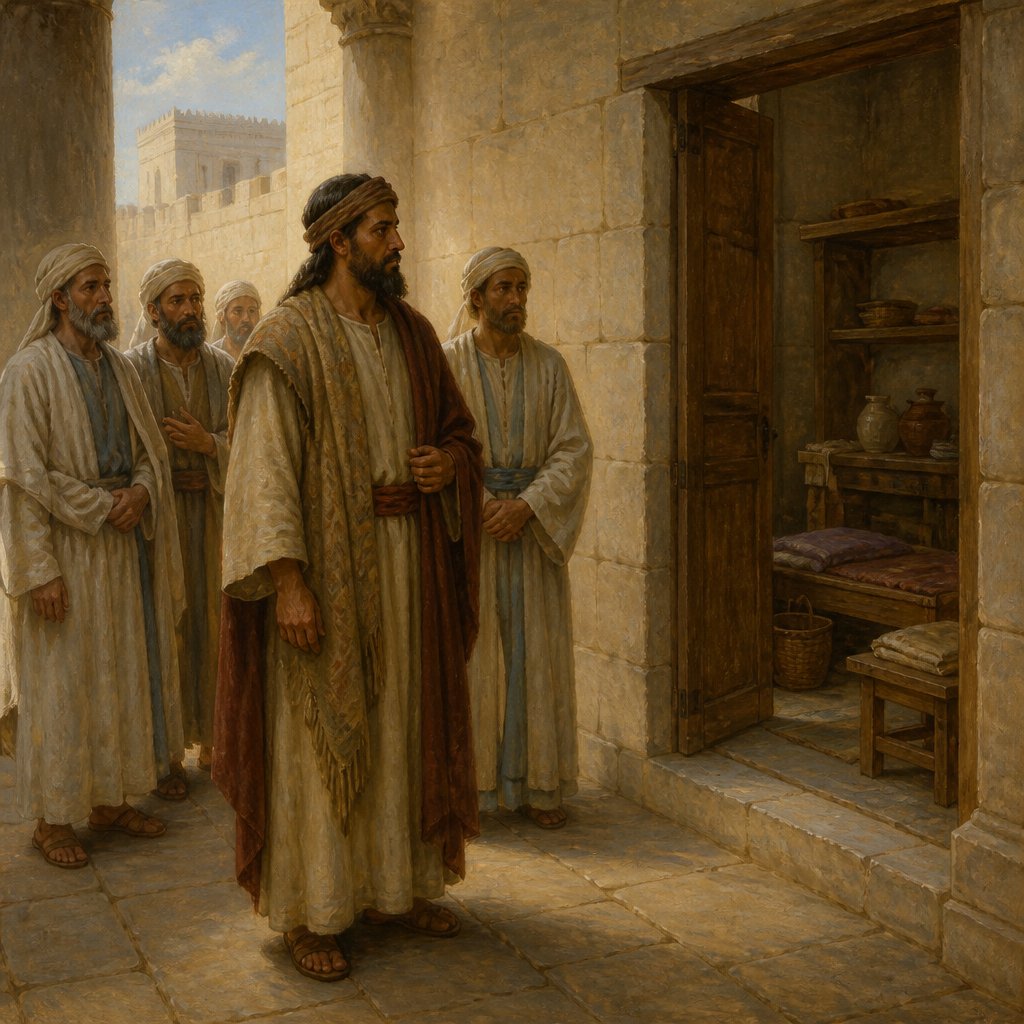
The verse Nehemiah 13:7 in the King James Version (KJV) of the Bible states, "And I came to Jerusalem, and understood of the evil that Eliashib did for Tobiah, in preparing him a chamber in the courts of the house of God."
To fully understand the depth and significance of this verse, it is important to take into consideration the broader context of the book of Nehemiah. Nehemiah was a Jewish leader who played a crucial role in the rebuilding of Jerusalem's walls after the Babylonian exile. He was appointed as the governor of Judah by the Persian king Artaxerxes and led a group of Jewish exiles back to Jerusalem to restore the city and its people.
In the preceding chapters of Nehemiah, we see how Nehemiah worked tirelessly to rebuild the walls of Jerusalem and restore the city's integrity. He faced opposition from neighboring enemies, internal strife among the Jewish people, and the challenge of restoring faithfulness to God's law. The book of Nehemiah is ultimately about the restoration of Jerusalem, both physically and spiritually.
In Nehemiah 13:7, Nehemiah returns to Jerusalem after an absence and is shocked to discover that the high priest Eliashib had allowed Tobiah, an Ammonite who was an adversary of the Jewish people, to be given a chamber in the courts of the house of God. This act is seen as a great evil, as it defiles the sacredness of the temple and compromises the purity of the Jewish faith.
The verse speaks to themes of faithfulness, purity, and the importance of maintaining the sanctity of sacred places. The house of God is meant to be a holy and consecrated space, and the presence of an enemy within its walls is a grave violation of the sanctity of the temple. Nehemiah's response to this discovery is one of righteous anger and determination to rectify the situation. It underscores the significance of upholding and protecting the spiritual purity of the faith community and the sacred spaces associated with it.
The verse also carries a broader symbolic meaning, representing the ongoing struggle between good and evil, purity and corruption. The placement of an enemy within the house of God is a powerful metaphor for the infiltration of impurity and corruption into the spiritual domain. It serves as a reminder of the constant vigilance and effort required to maintain the integrity and purity of the faith community.
Furthermore, Nehemiah's response to this revelation demonstrates his unwavering commitment to upholding the law of God and protecting the sacred identity of Jerusalem. His actions exemplify the qualities of strong leadership, righteous indignation in the face of evil, and a resolute dedication to the preservation of faith and purity.
In conclusion, Nehemiah 13:7 is a verse that holds significant spiritual and symbolic meaning within the broader context of the book of Nehemiah. It speaks to themes of spiritual purity, faithfulness, and the ongoing struggle against evil and corruption. It serves as a reminder of the importance of upholding the sanctity of sacred spaces and the unwavering commitment to preserving the purity of the faith community. The verse stands as a testament to Nehemiah's strong leadership and dedication to upholding the law of God, and it continues to inspire and challenge readers to maintain the integrity of their faith and sacred spaces in the face of ongoing spiritual and moral challenges.
Get our apps


Artwork for Nehemiah 13:7

Nehemiah 13:7 - "And I came to Jerusalem, and understood of the evil that Eliashib did for Tobiah, in preparing him a chamber in the courts of the house of God."
"And I came to Jerusalem, and understood of the evil that Eliashib did for Tobiah, in preparing him a chamber in the courts of the house of God." - Nehemiah 13:7

Nehemiah 7:13 - "The children of Zattu, eight hundred forty and five."

"The children of Zattu, eight hundred forty and five." - Nehemiah 7:13

Nehemiah 11:13

Nehemiah 7:7 - "Who came with Zerubbabel, Jeshua, Nehemiah, Azariah, Raamiah, Nahamani, Mordecai, Bilshan, Mispereth, Bigvai, Nehum, Baanah. The number, I say, of the men of the people of Israel was this;"

Nehemiah 10:13 - "Hodijah, Bani, Beninu."

Nehemiah 12:13 - "Of Ezra, Meshullam; of Amariah, Jehohanan;"

Nehemiah 10:7 - "Meshullam, Abijah, Mijamin,"

Nehemiah 7:42 - "The children of Harim, a thousand and seventeen."

Nehemiah 7:24 - "The children of Hariph, an hundred and twelve."

Nehemiah 7:56 - "The children of Neziah, the children of Hatipha."

Nehemiah 7:25 - "The children of Gibeon, ninety and five."

Nehemiah 7:40 - "The children of Immer, a thousand fifty and two."

Nehemiah 7:31 - "The men of Michmas, an hundred and twenty and two."

Nehemiah 7:33 - "The men of the other Nebo, fifty and two."

Nehemiah 7:21 - "The children of Ater of Hezekiah, ninety and eight."

Nehemiah 7:28 - "The men of Beth-azmaveth, forty and two."

Nehemiah 7:14 - "The children of Zaccai, seven hundred and threescore."

Nehemiah 7:27 - "The men of Anathoth, an hundred twenty and eight."

Nehemiah 7:35 - "The children of Harim, three hundred and twenty."

"Hodijah, Bani, Beninu." - Nehemiah 10:13

Nehemiah 7:16 - "The children of Bebai, six hundred twenty and eight."

Nehemiah 7:58 - "The children of Jaala, the children of Darkon, the children of Giddel,"

Nehemiah 7:9 - "The children of Shephatiah, three hundred seventy and two."

Nehemiah 7:48 - "The children of Lebana, the children of Hagaba, the children of Shalmai,"

Nehemiah 7:19 - "The children of Bigvai, two thousand threescore and seven."

Nehemiah 7:15 - "The children of Binnui, six hundred forty and eight."

Nehemiah 7:44 - "¶ The singers: the children of Asaph, an hundred forty and eight."

Nehemiah 7:18 - "The children of Adonikam, six hundred threescore and seven."