What does Nehemiah 13:24 mean?
“And their children spake half in the speech of Ashdod, and could not speak in the Jews’ language, but according to the language of each people.” — Nehemiah 13:24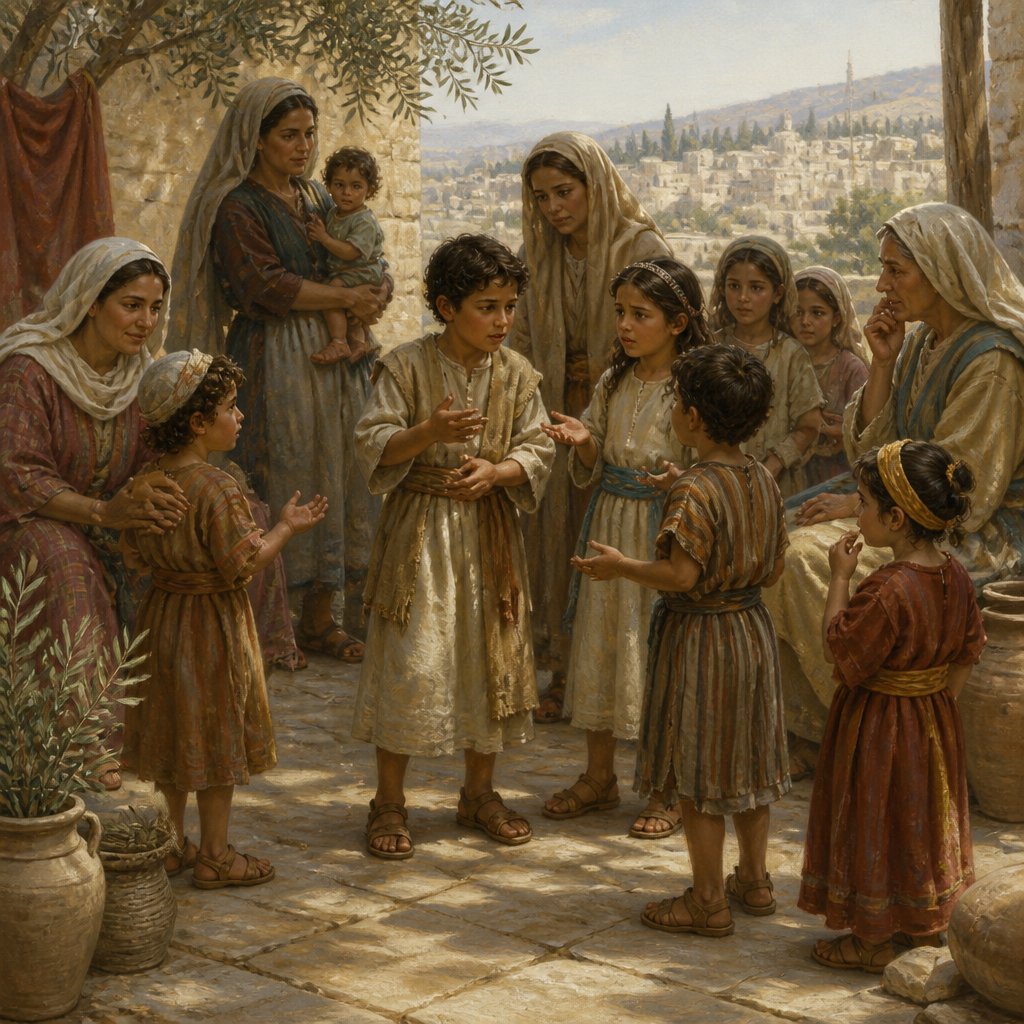
Nehemiah 13:24 (KJV): "And their children spake half in the speech of Ashdod, and could not speak in the Jews' language, but according to the language of each people."
This verse is part of the book of Nehemiah, which tells the story of the Israelites' return to Jerusalem after the Babylonian exile. It specifically refers to the efforts of Nehemiah to purify the community by re-establishing the laws and ways of worship and governance that had been neglected during the exile.
In this particular verse, Nehemiah is addressing a specific issue within the community: the intermarriage with people of Ashdod and other neighboring nations, which had led to a dilution of the Jewish identity. The children of these mixed marriages were failing to speak the "Jews' language," which was likely Hebrew.
The verse highlights the importance of language and cultural identity, as well as the impact of intermarriage and assimilation on the preservation of a distinct culture and religious tradition. It underscores the significance of maintaining a strong and distinct community identity in the face of external influences.
One of the key themes in this verse is the concept of cultural and religious purity. In the context of post-exilic Jerusalem, this theme is of utmost importance as the returning Israelites sought to maintain their unique identity as the chosen people of God. The verse reflects Nehemiah's concern for the sanctity and distinctiveness of the Jewish community, which had been compromised by intermarriage and assimilation with neighboring nations.
The verse also addresses the issue of language as a crucial component of cultural and religious identity. The fact that the children of these mixed marriages were unable to speak the Jews' language indicates a loss of cultural and religious heritage and perhaps a weakening of their connection to their Jewish roots.
Furthermore, the mention of the "speech of Ashdod" alludes to the influence of the surrounding pagan culture on the Israelites, and the danger of adopting the customs and practices of those outside the faith. This serves as a cautionary tale about the importance of maintaining boundaries and upholding the purity of the faith in the face of external influences.
Symbolically, the verse can be seen as a warning against cultural and religious assimilation, emphasizing the importance of preserving the distinctiveness of one's faith and heritage. It also serves as a reminder of the ongoing struggle to maintain cultural and religious identity in the midst of a diverse and ever-changing world.
Overall, Nehemiah 13:24 addresses the complex issues of intermarriage, language, and cultural identity, and underscores the eternal struggle to preserve the sanctity and distinctiveness of a faith community in the face of external influences. It serves as a powerful reminder of the enduring importance of maintaining the purity and uniqueness of one's cultural and religious heritage.
Get our apps


Artwork for Nehemiah 13:24

Nehemiah 13:24 - "And their children spake half in the speech of Ashdod, and could not speak in the Jews' language, but according to the language of each people."
"And their children spake half in the speech of Ashdod, and could not speak in the Jews' language, but according to the language of each people." - Nehemiah 13:24

Nehemiah 10:24 - "Hallohesh, Pileha, Shobek,"

Nehemiah 7:24 - "The children of Hariph, an hundred and twelve."

Nehemiah 11:13

"Hallohesh, Pileha, Shobek," - Nehemiah 10:24

Nehemiah 10:13 - "Hodijah, Bani, Beninu."

Nehemiah 12:13 - "Of Ezra, Meshullam; of Amariah, Jehohanan;"

"The children of Hariph, an hundred and twelve." - Nehemiah 7:24

Nehemiah 7:13 - "The children of Zattu, eight hundred forty and five."

"Hodijah, Bani, Beninu." - Nehemiah 10:13

Nehemiah 11:24 - "And Pethahiah the son of Meshezabeel, of the children of Zerah the son of Judah, was at the king's hand in all matters concerning the people."

"Of Ezra, Meshullam; of Amariah, Jehohanan;" - Nehemiah 12:13

Nehemiah 13:12 - "Then brought all Judah the tithe of the corn and the new wine and the oil unto the treasuries."

Nehemiah 13:31 - "And for the wood offering, at times appointed, and for the firstfruits. Remember me, O my God, for good."

Nehemiah 13:20 - "So the merchants and sellers of all kind of ware lodged without Jerusalem once or twice."

Nehemiah 3:24 - "After him repaired Binnui the son of Henadad another piece, from the house of Azariah unto the turning of the wall, even unto the corner."

Nehemiah 13:4 - "¶ And before this, Eliashib the priest, having the oversight of the chamber of the house of our God, was allied unto Tobiah:"

Nehemiah 13:23 - "¶ In those days also saw I Jews that had married wives of Ashdod, of Ammon, and of Moab:"

Nehemiah 13:29 - "Remember them, O my God, because they have defiled the priesthood, and the covenant of the priesthood, and of the Levites."

Nehemiah 13:8 - "And it grieved me sore: therefore I cast forth all the household stuff of Tobiah out of the chamber."

Nehemiah 13:3 - "Now it came to pass, when they had heard the law, that they separated from Israel all the mixed multitude."

Nehemiah 13:9 - "Then I commanded, and they cleansed the chambers: and thither brought I again the vessels of the house of God, with the meat offering and the frankincense."

Nehemiah 13:7 - "And I came to Jerusalem, and understood of the evil that Eliashib did for Tobiah, in preparing him a chamber in the courts of the house of God."

"The children of Zattu, eight hundred forty and five." - Nehemiah 7:13

Luke 13:24
Genesis 24-13

Nehemiah 13:13 - "And I made treasurers over the treasuries, Shelemiah the priest, and Zadok the scribe, and of the Levites, Pedaiah: and next to them was Hanan the son of Zaccur, the son of Mattaniah: for they were counted faithful, and their office was to distribute unto their brethren."

Nehemiah 13:30 - "Thus cleansed I them from all strangers, and appointed the wards of the priests and the Levites, every one in his business;"

Nehemiah 13:17 - "Then I contended with the nobles of Judah, and said unto them, What evil thing is this that ye do, and profane the sabbath day?"