What does Nehemiah 2:13 mean?
“And I went out by night by the gate of the valley, even before the dragon well, and to the dung port, and viewed the walls of Jerusalem, which were broken down, and the gates thereof were consumed with fire.” — Nehemiah 2:13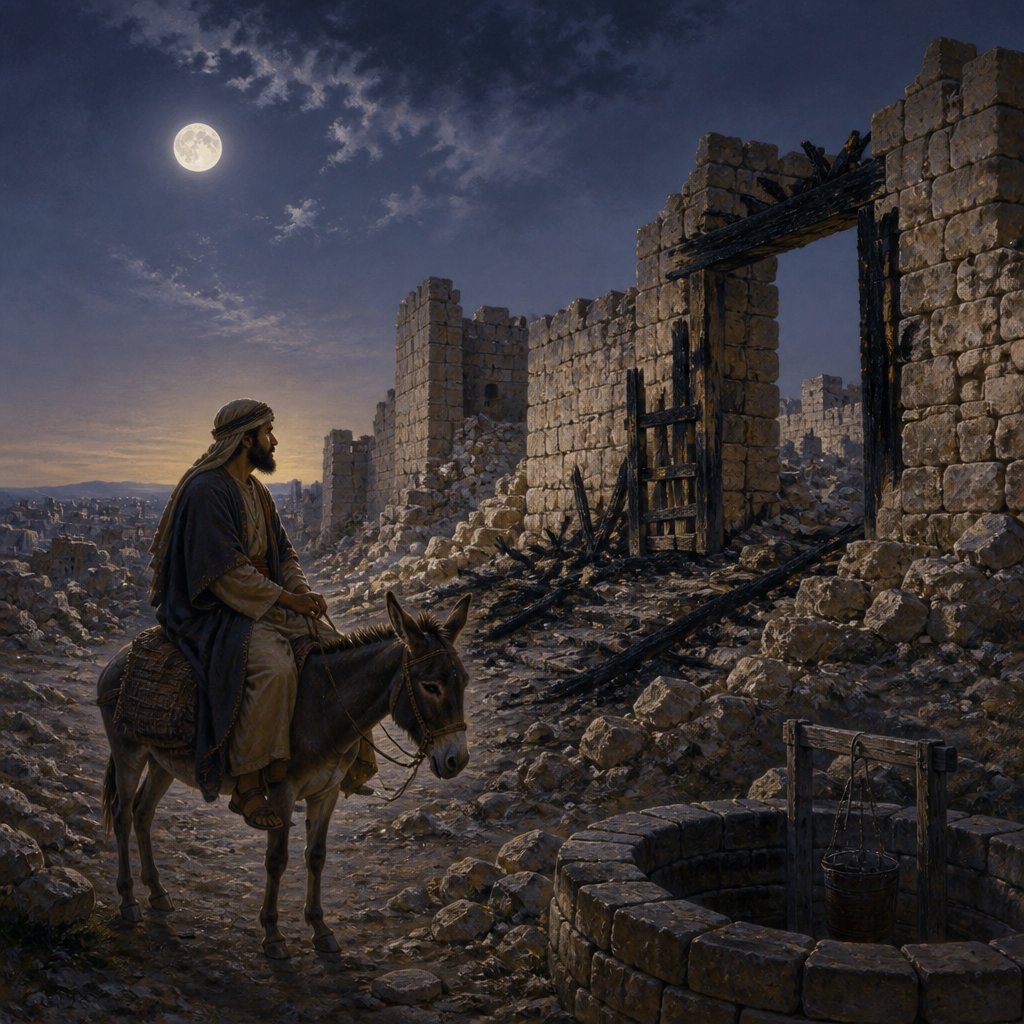
"Nehemiah 2:13 (KJV) - And I went out by night by the gate of the valley, even before the dragon well, and to the dung port, and viewed the walls of Jerusalem, which were broken down, and the gates thereof were consumed with fire."
The book of Nehemiah is a significant part of the Hebrew Bible and the Christian Old Testament, and it tells the story of a Jewish leader who, despite great opposition, successfully leads the people of Judah to rebuild the walls of Jerusalem. The verse Nehemiah 2:13 occurs at the beginning of Nehemiah’s journey to assess the damage done to the city’s walls. As Nehemiah sets out to inspect the state of Jerusalem's walls, this particular verse highlights several key themes and provides insight into the context and symbolism of the larger narrative.
Context:
Nehemiah, a Jewish cupbearer to the Persian king Artaxerxes, receives word from his fellow countrymen that Jerusalem is in a state of disrepair and its inhabitants are vulnerable to attacks from neighboring tribes. This news deeply distresses Nehemiah, and he seeks permission from the king to return to Judah and oversee the rebuilding of the city’s walls. As Nehemiah arrives in Jerusalem, he begins his assessment of the city's defenses, which is where we find him in verse 13. He inspects the damage done to the gates and walls of the city, taking note of the extensive destruction caused by fire.
Meaning and Commentary:
The verse Nehemiah 2:13 is significant in several ways. First, it reflects Nehemiah's commitment to understanding the depth of the problem before taking action. Despite being eager to embark on the task of rebuilding, Nehemiah recognizes the importance of fully grasping the extent of the damage. This demonstrates the importance of proper assessment and planning before tackling a major project, which is a timeless lesson applicable to both personal and collective endeavors.
Second, the mention of specific locations, such as the gate of the valley and the dung port, adds geographical and historical authenticity to the narrative. These references provide a sense of concreteness to the account, making it clear that Nehemiah's actions take place in a real, tangible setting. This specificity allows readers to immerse themselves in the story and better understand the physical realities faced by Nehemiah and the people of Jerusalem.
The broken walls and consumed gates serve as a powerful symbol of the city's vulnerability and desolation. They represent the disintegration of Jerusalem's defenses, leaving its inhabitants exposed and unprotected. This imagery underscores the desperate need for restoration and serves as a metaphor for the spiritual and moral decay that can occur when the foundations of a community or society are neglected.
Moreover, Nehemiah's decision to conduct his inspection by night is noteworthy. It indicates his discretion and strategic thinking, as he seeks to assess the situation without drawing unnecessary attention or causing alarm. This highlights Nehemiah's wisdom and prudence as a leader, qualities that will become increasingly evident as the narrative unfolds.
Themes:
The verse Nehemiah 2:13 contains several themes that resonate throughout the book of Nehemiah. One of the central themes is the importance of leadership and the impact that a single individual can have on a community. Nehemiah's unwavering determination and sense of purpose inspire others to join him in the monumental task of rebuilding the walls. His leadership exemplifies the power of vision, determination, and perseverance in the face of seemingly insurmountable challenges.
Another prominent theme is the concept of restoration and renewal. The broken walls of Jerusalem symbolize not only physical destruction but also the potential for renewal and revitalization. This theme of restoration echoes throughout the book, as Nehemiah rallies the people to work together in rebuilding their city, ultimately restoring its strength and dignity.
In conclusion, Nehemiah 2:13 serves as a pivotal moment in the narrative, setting the stage for the larger themes of leadership, restoration, and resilience that define the book of Nehemiah. The verse offers valuable insights into Nehemiah's character and the challenges faced by the community of Jerusalem. Its detailed imagery and historical context contribute to a rich and profound understanding of the larger biblical story.
Get our apps


Artwork for Nehemiah 2:13

Nehemiah 2:13 - "And I went out by night by the gate of the valley, even before the dragon well, and to the dung port, and viewed the walls of Jerusalem, which were broken down, and the gates thereof were consumed with fire."
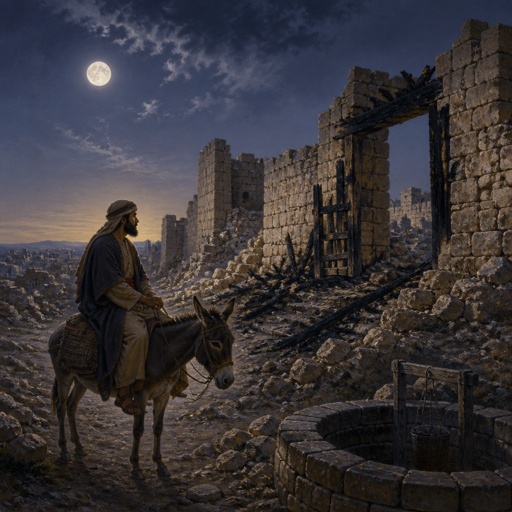
"And I went out by night by the gate of the valley, even before the dragon well, and to the dung port, and viewed the walls of Jerusalem, which were broken down, and the gates thereof were consumed with fire." - Nehemiah 2:13

Nehemiah 11:13

Nehemiah 13:2 - "Because they met not the children of Israel with bread and with water, but hired Balaam against them, that he should curse them: howbeit our God turned the curse into a blessing."

Nehemiah 10:13 - "Hodijah, Bani, Beninu."

Nehemiah 12:13 - "Of Ezra, Meshullam; of Amariah, Jehohanan;"

Nehemiah 7:13 - "The children of Zattu, eight hundred forty and five."

"Hodijah, Bani, Beninu." - Nehemiah 10:13

"Of Ezra, Meshullam; of Amariah, Jehohanan;" - Nehemiah 12:13

Nehemiah 13:12 - "Then brought all Judah the tithe of the corn and the new wine and the oil unto the treasuries."

Nehemiah 13:31 - "And for the wood offering, at times appointed, and for the firstfruits. Remember me, O my God, for good."

Nehemiah 13:20 - "So the merchants and sellers of all kind of ware lodged without Jerusalem once or twice."

Nehemiah 13:4 - "¶ And before this, Eliashib the priest, having the oversight of the chamber of the house of our God, was allied unto Tobiah:"

Nehemiah 13:23 - "¶ In those days also saw I Jews that had married wives of Ashdod, of Ammon, and of Moab:"

Nehemiah 13:29 - "Remember them, O my God, because they have defiled the priesthood, and the covenant of the priesthood, and of the Levites."

Nehemiah 12:2 - "Amariah, Malluch, Hattush,"

Nehemiah 13:24 - "And their children spake half in the speech of Ashdod, and could not speak in the Jews' language, but according to the language of each people."

Nehemiah 13:8 - "And it grieved me sore: therefore I cast forth all the household stuff of Tobiah out of the chamber."

Nehemiah 10:2 - "Seraiah, Azariah, Jeremiah,"

Nehemiah 13:3 - "Now it came to pass, when they had heard the law, that they separated from Israel all the mixed multitude."

Nehemiah 13:9 - "Then I commanded, and they cleansed the chambers: and thither brought I again the vessels of the house of God, with the meat offering and the frankincense."

Nehemiah 13:7 - "And I came to Jerusalem, and understood of the evil that Eliashib did for Tobiah, in preparing him a chamber in the courts of the house of God."

"The children of Zattu, eight hundred forty and five." - Nehemiah 7:13

Nehemiah 13:13 - "And I made treasurers over the treasuries, Shelemiah the priest, and Zadok the scribe, and of the Levites, Pedaiah: and next to them was Hanan the son of Zaccur, the son of Mattaniah: for they were counted faithful, and their office was to distribute unto their brethren."

Nehemiah 13:30 - "Thus cleansed I them from all strangers, and appointed the wards of the priests and the Levites, every one in his business;"

Nehemiah 13:17 - "Then I contended with the nobles of Judah, and said unto them, What evil thing is this that ye do, and profane the sabbath day?"

Nehemiah 13:11 - "Then contended I with the rulers, and said, Why is the house of God forsaken? And I gathered them together, and set them in their place."

Nehemiah 13:1 - "On that day they read in the book of Moses in the audience of the people; and therein was found written, that the Ammonite and the Moabite should not come into the congregation of God for ever;"

Nehemiah 13:27 - "Shall we then hearken unto you to do all this great evil, to transgress against our God in marrying strange wives?"

Nehemiah 2:11 - "So I came to Jerusalem, and was there three days."