What does Nehemiah 2:5 mean?
“And I said unto the king, If it please the king, and if thy servant have found favour in thy sight, that thou wouldest send me unto Judah, unto the city of my fathers’ sepulchres, that I may build it.” — Nehemiah 2:5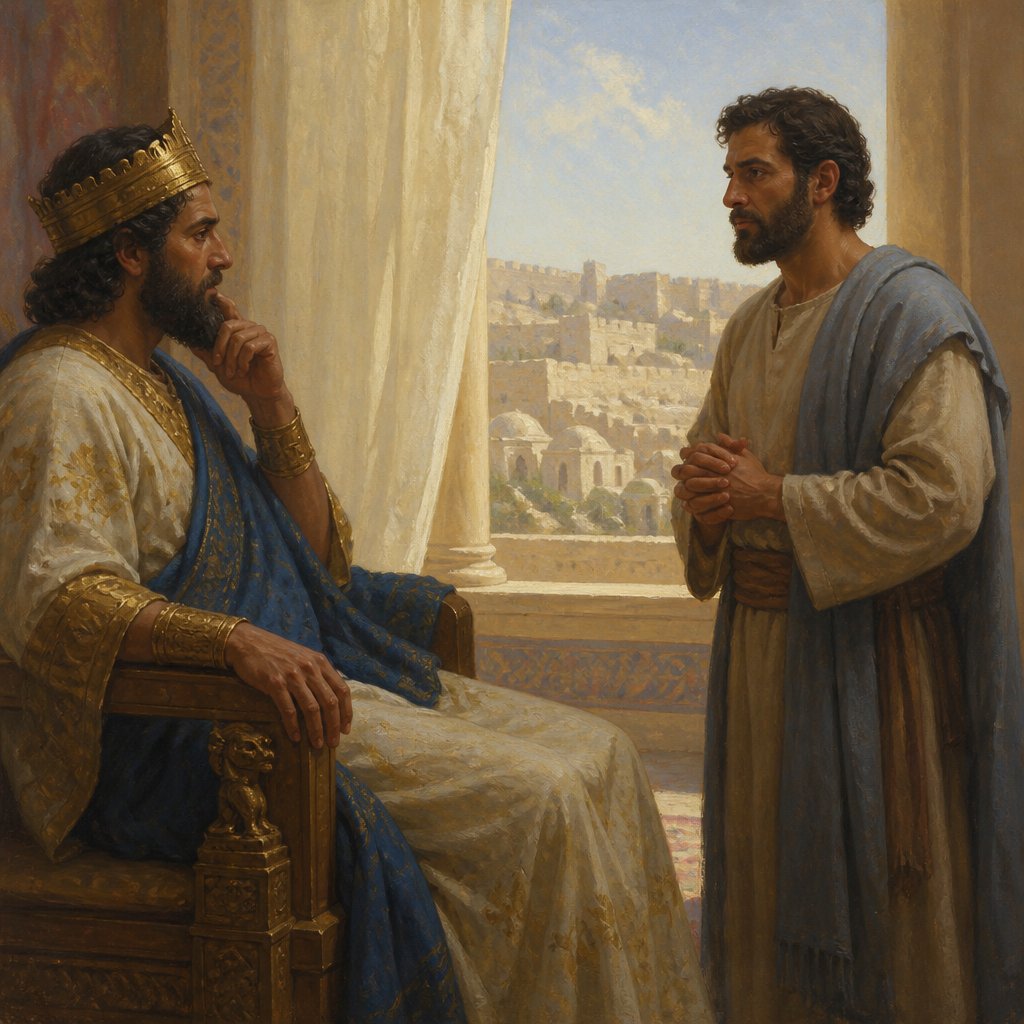
Nehemiah 2:5 (KJV) – “And I said unto the king, If it please the king, and if thy servant have found favour in thy sight, that thou wouldest send me unto Judah, unto the city of my fathers’ sepulchres, that I may build it.”
The book of Nehemiah is a powerful narrative of a man who faced great opposition and challenges but remained steadfast in his faith and commitment to God. The verse Nehemiah 2:5 from the King James Version (KJV) is a significant moment in the story of Nehemiah as it captures his boldness, humility, and unwavering trust in God’s providence.
The context of this verse is crucial to understanding its significance. Nehemiah was cupbearer to King Artaxerxes, a position that held great influence and proximity to the king. At this time, the city of Jerusalem lay in ruins, and its inhabitants were in distress. Upon hearing about the state of Jerusalem, Nehemiah was deeply moved and burdened for his people. He prayed to God for guidance and favor before approaching the king to seek permission and resources to rebuild the city.
Nehemiah’s approach to the king reflects several themes that are prevalent throughout the Bible, including faith, obedience, and the sovereignty of God. When he addressed the king, Nehemiah began by expressing respect and deference, acknowledging the king’s authority and seeking his favor. This serves as an example of humility and wisdom in approaching those in positions of authority, demonstrating respect and trust in God’s guidance.
Moreover, Nehemiah’s request to the king also showed a deep sense of patriotism and love for his people and their heritage. He desired to return to Judah, the city of his fathers’ sepulchres, to honor and preserve the legacy and history of his ancestors. This reflects the importance of legacy and ancestry in the biblical narrative, highlighting the significance of preserving and honoring the past while looking towards the future.
The symbolism within this verse is also profound. The city of Jerusalem and its restoration symbolize the redemption and renewal that God brings to His people. Nehemiah’s willingness to undertake this monumental task and his reliance on God’s favor and protection parallels the spiritual and moral rebuilding that takes place within the hearts of believers. This act of rebuilding was not just a physical endeavor but a spiritual one, reflecting the restoration and redemption that God offers to His people.
Furthermore, Nehemiah’s journey to Judah serves as a metaphor for the Christian journey of faith. His willingness to leave the comforts of the palace and face the challenges of rebuilding Jerusalem demonstrates the courage and determination required to follow God’s calling. This narrative encourages believers to step out in faith, trusting in God’s provision and guidance, even in the face of adversity and resistance.
In conclusion, Nehemiah 2:5 from the King James Version (KJV) captures a pivotal moment in the story of Nehemiah, showcasing his humility, faith, and commitment to honoring God’s purposes. This verse speaks to the themes of respect for authority, patriotism, and the spiritual journey of faith, challenging believers to trust in God’s sovereignty and step out boldly in obedience to His call. Overall, Nehemiah’s example of unwavering faith and determination serves as an inspiration for believers to pursue God’s purposes with courage and humility.
Get our apps


Artwork for Nehemiah 2:5
Nehemiah 2:5 - "And I said unto the king, If it please the king, and if thy servant have found favour in thy sight, that thou wouldest send me unto Judah, unto the city of my fathers' sepulchres, that I may build it."
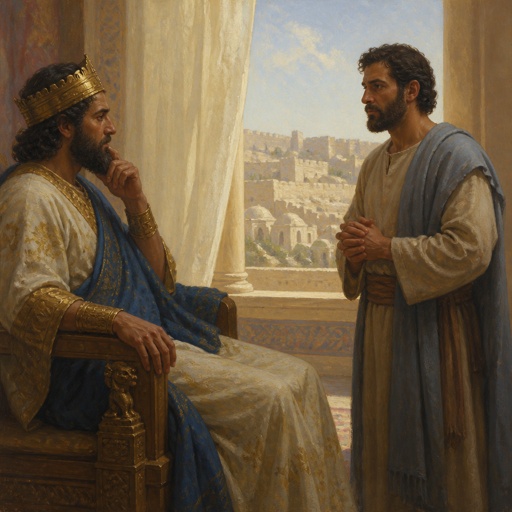
"And I said unto the king, If it please the king, and if thy servant have found favour in thy sight, that thou wouldest send me unto Judah, unto the city of my fathers' sepulchres, that I may build it." - Nehemiah 2:5

Nehemiah 5:2 - "For there were that said, We, our sons, and our daughters, are many: therefore we take up corn for them, that we may eat, and live."

Nehemiah 10:5 - "Harim, Meremoth, Obadiah,"

Nehemiah 12:5 - "Miamin, Maadiah, Bilgah,"

Nehemiah 5:1 - "And there was a great cry of the people and of their wives against their brethren the Jews."

"Harim, Meremoth, Obadiah," - Nehemiah 10:5

"Miamin, Maadiah, Bilgah," - Nehemiah 12:5

Nehemiah 5:6 - "¶ And I was very angry when I heard their cry and these words."

Nehemiah 3:5 - "And next unto them the Tekoites repaired; but their nobles put not their necks to the work of their Lord."

Nehemiah 12:2 - "Amariah, Malluch, Hattush,"

Nehemiah 10:2 - "Seraiah, Azariah, Jeremiah,"

Nehemiah 5:19 - "Think upon me, my God, for good, according to all that I have done for this people."

Nehemiah 5:4 - "There were also that said, We have borrowed money for the king's tribute, and that upon our lands and vineyards."

Nehemiah 6:5 - "Then sent Sanballat his servant unto me in like manner the fifth time with an open letter in his hand;"

Nehemiah 2:11 - "So I came to Jerusalem, and was there three days."

Nehemiah 4:5 - "And cover not their iniquity, and let not their sin be blotted out from before thee: for they have provoked thee to anger before the builders."

Nehemiah 11:5 - "And Maaseiah the son of Baruch, the son of Col-hozeh, the son of Hazaiah, the son of Adaiah, the son of Joiarib, the son of Zechariah, the son of Shiloni."

"And there was a great cry of the people and of their wives against their brethren the Jews." - Nehemiah 5:1
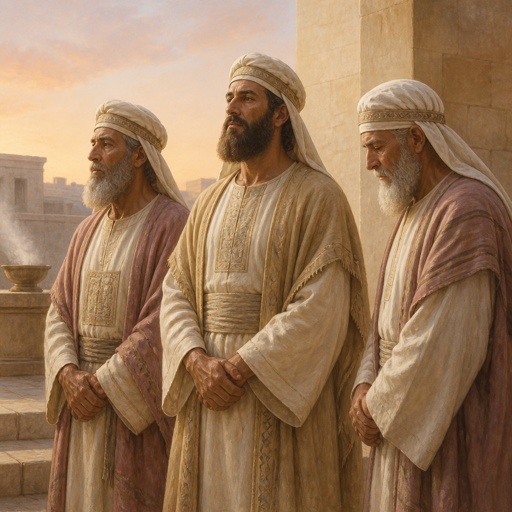
"Amariah, Malluch, Hattush," - Nehemiah 12:2
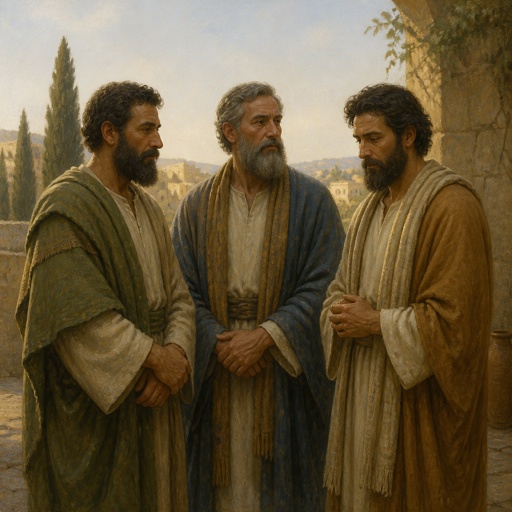
"Seraiah, Azariah, Jeremiah," - Nehemiah 10:2

A biblical scene from Nehemiah 1:5-11 - Nehemiah, a Caucasian male in middle-eastern garb, is depicted respectfully requesting time from the king, a Middle-Eastern male seated at the dinner table while Nehemiah is serving his drink. He is asking for the opportunity to return to Judah and help his people build a wall. The setting is a grand royal court marked by golden hues, opulent textiles, and architecturally rich columns.

Nehemiah 5:3 - "Some also there were that said, We have mortgaged our lands, vineyards, and houses, that we might buy corn, because of the dearth."

Nehemiah 5:9 - "Also I said, It is not good that ye do: ought ye not to walk in the fear of our God because of the reproach of the heathen our enemies?"

Nehemiah 8:5 - "And Ezra opened the book in the sight of all the people; (for he was above all the people;) and when he opened it, all the people stood up:"

A biblical scene from Nehemiah 1:5-11 - Nehemiah, a Caucasian male in middle-eastern garb, is depicted respectfully requesting time from the king, a Middle-Eastern male seated on a throne. He is asking for the opportunity to return to Judah and help his people build a wall. The setting is a grand royal court marked by golden hues, opulent textiles, and architecturally rich columns. Nehemiah is the king's servant.
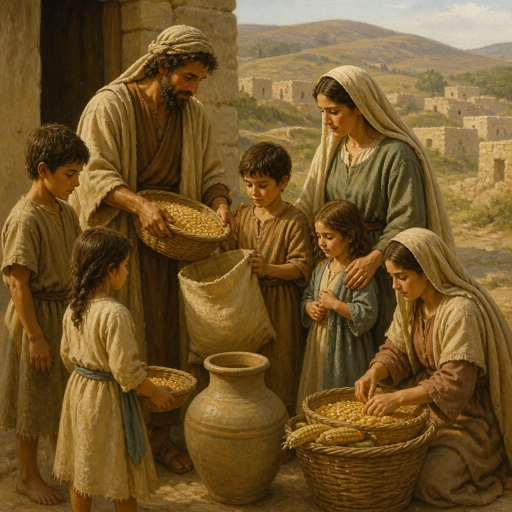
"For there were that said, We, our sons, and our daughters, are many: therefore we take up corn for them, that we may eat, and live." - Nehemiah 5:2

Nehemiah 11:2 - "And the people blessed all the men, that willingly offered themselves to dwell at Jerusalem."

Nehemiah 5:17 - "Moreover there were at my table an hundred and fifty of the Jews and rulers, beside those that came unto us from among the heathen that are about us."

A biblical scene from Nehemiah 1:5-11 - Nehemiah, a Caucasian male in middle-eastern garb, is depicted respectfully requesting time from the king, a Middle-Eastern male seated at the dinner table while Nehemiah is serving his drink. He is asking for the opportunity to return to Judah and help his people build a wall. The setting is a grand royal court marked by golden hues, opulent textiles, and architecturally rich columns.