What does Nehemiah 2:3 mean?
“And said unto the king, Let the king live for ever: why should not my countenance be sad, when the city, the place of my fathers’ sepulchres, lieth waste, and the gates thereof are consumed with fire?” — Nehemiah 2:3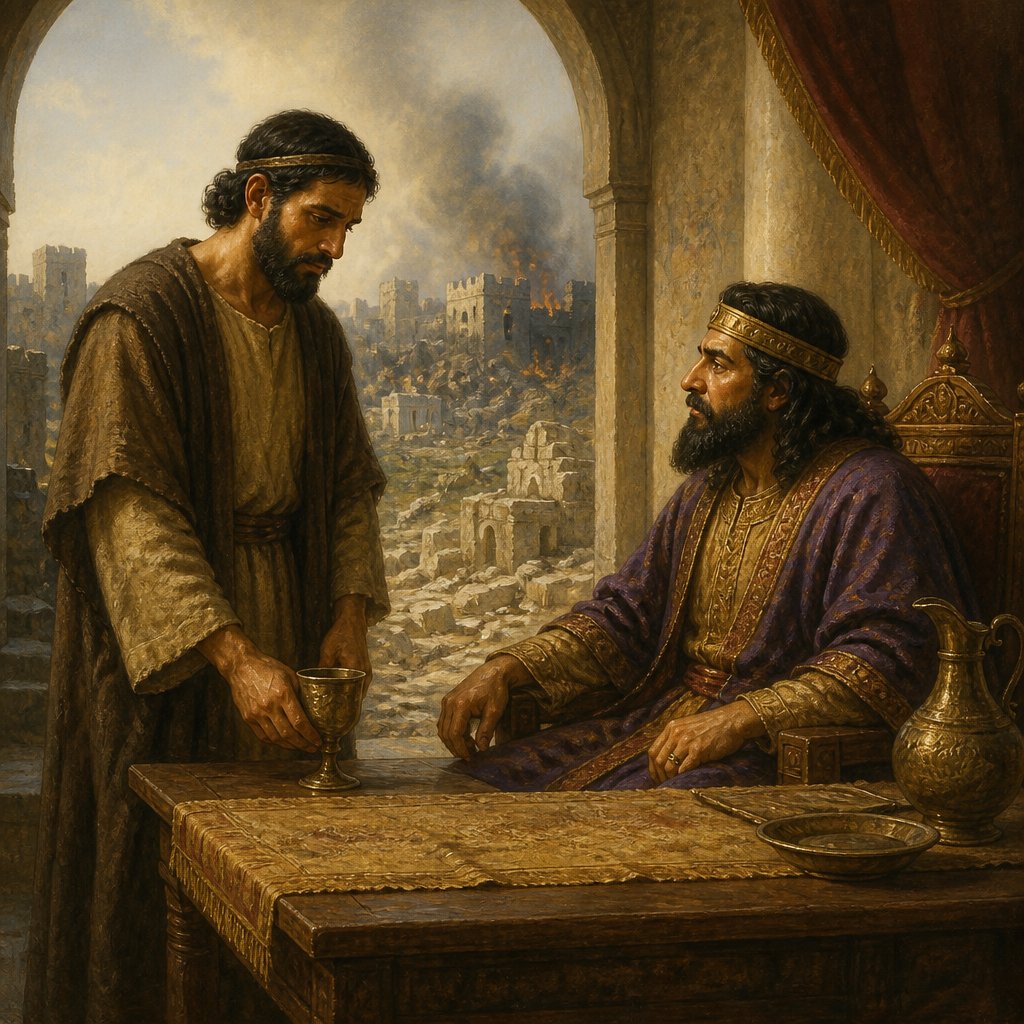
Nehemiah 2:3 (KJV) says, "And said unto the king, Let the king live for ever: why should not my countenance be sad, when the city, the place of my fathers' sepulchres, lieth waste, and the gates thereof are consumed with fire?" This verse occurs in the Old Testament book of Nehemiah, which is one of the historical books in the Bible. The passage is part of the narrative in which Nehemiah, a Jewish cupbearer to the Persian king Artaxerxes, requests permission to return to Jerusalem and rebuild the city walls.
The context of this verse is Nehemiah's inner turmoil and distress over the state of Jerusalem, the city of his ancestors. The concern for the well-being of Jerusalem is at the heart of this passage. Nehemiah had heard about the dire condition of the city, and it had deeply troubled him. The desolation and destruction of the city, as well as the state of the tombs of his forefathers, grieved Nehemiah deeply.
One of the key themes in this verse and the surrounding narrative is the concept of duty and responsibility. Nehemiah felt a moral obligation to take action in the face of the devastation of Jerusalem. He was not content to simply lament the situation but was moved to do something about it. This sense of duty and responsibility is an important aspect of Nehemiah's character. It also serves as a reminder of the importance of taking responsibility and seeking to bring about positive change in the face of adversity.
Another important theme in this verse is the power of prayer. Prior to approaching the king, Nehemiah had spent time in prayer, seeking guidance and strength. His response when the king inquired about his sadness was to offer a quick prayer to God before answering (Nehemiah 2:4). This illustrates Nehemiah's reliance on prayer and his recognition of the importance of seeking divine help and guidance when facing challenging situations.
The symbolism in this verse is also significant. The dilapidated state of the city and its walls can be seen as a symbol of spiritual and moral decay. Nehemiah's distress over the ruined state of Jerusalem can be viewed in a broader sense as a lament over the spiritual and moral condition of God's people. The city's state serves as a visual representation of the need for restoration and renewal, both physically and spiritually.
The verse also highlights the tension between personal loyalty and national loyalty. As a high-ranking official in the Persian court, Nehemiah had a duty to serve and honor the king. However, he also felt a deep connection to his homeland and a sense of loyalty to his people. This tension is evident in the way Nehemiah approaches the king, expressing his sadness while also acknowledging the king's authority and longevity.
In summary, Nehemiah 2:3 is a powerful and poignant verse that captures Nehemiah's deep concern for the state of Jerusalem. It conveys themes of duty, responsibility, prayer, and national loyalty. The passage serves as a reminder of the importance of taking action when faced with adversity, as well as the significance of seeking divine guidance and strength. The verse also highlights the symbolism of Jerusalem's ruined state as a representation of the need for spiritual and moral renewal. Ultimately, this passage sets the stage for Nehemiah's important role in the restoration and rebuilding of Jerusalem, demonstrating the impact of one individual's commitment and leadership.
Get our apps


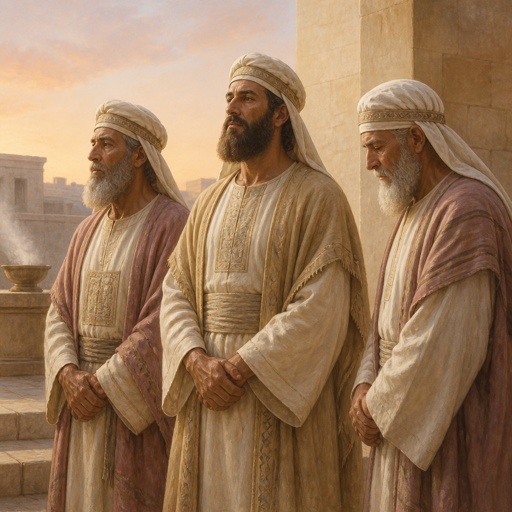
Artwork for Nehemiah 2:3

Nehemiah 2:3 - "And said unto the king, Let the king live for ever: why should not my countenance be sad, when the city, the place of my fathers' sepulchres, lieth waste, and the gates thereof are consumed with fire?"
"And said unto the king, Let the king live for ever: why should not my countenance be sad, when the city, the place of my fathers' sepulchres, lieth waste, and the gates thereof are consumed with fire?" - Nehemiah 2:3

Nehemiah 3:2 - "And next unto him builded the men of Jericho. And next to them builded Zaccur the son of Imri."

Nehemiah 12:3 - "Shechaniah, Rehum, Meremoth,"

Nehemiah 10:3 - "Pashur, Amariah, Malchijah,"

Nehemiah 3:22 - "And after him repaired the priests, the men of the plain."
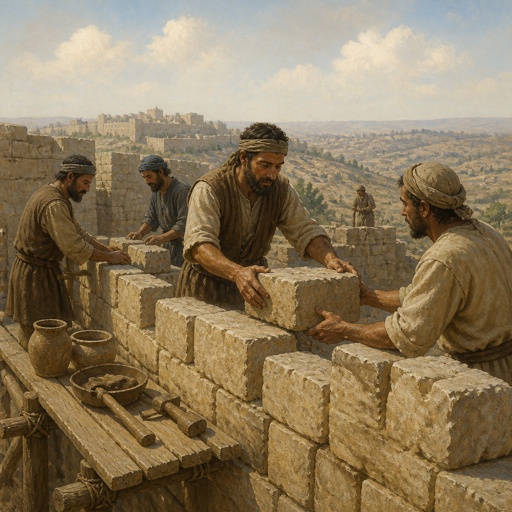
"And next unto him builded the men of Jericho. And next to them builded Zaccur the son of Imri." - Nehemiah 3:2

Nehemiah 3:16 - "After him repaired Nehemiah the son of Azbuk, the ruler of the half part of Beth-zur, unto the place over against the sepulchres of David, and to the pool that was made, and unto the house of the mighty."

"Pashur, Amariah, Malchijah," - Nehemiah 10:3

"Shechaniah, Rehum, Meremoth," - Nehemiah 12:3

Nehemiah 12:2 - "Amariah, Malluch, Hattush,"

Nehemiah 10:2 - "Seraiah, Azariah, Jeremiah,"

Nehemiah 3:32 - "And between the going up of the corner unto the sheep gate repaired the goldsmiths and the merchants."

Nehemiah 3:5 - "And next unto them the Tekoites repaired; but their nobles put not their necks to the work of their Lord."

Nehemiah 3:3 - "But the fish gate did the sons of Hassenaah build, who also laid the beams thereof, and set up the doors thereof, the locks thereof, and the bars thereof."

Nehemiah 3:9 - "And next unto them repaired Rephaiah the son of Hur, the ruler of the half part of Jerusalem."

Nehemiah 3:18 - "After him repaired their brethren, Bavai the son of Henadad, the ruler of the half part of Keilah."

Nehemiah 3:11 - "Malchijah the son of Harim, and Hashub the son of Pahath-moab, repaired the other piece, and the tower of the furnaces."

Nehemiah 3:28 - "From above the horse gate repaired the priests, every one over against his house."

Nehemiah 2:11 - "So I came to Jerusalem, and was there three days."

Nehemiah 13:3 - "Now it came to pass, when they had heard the law, that they separated from Israel all the mixed multitude."

"And after him repaired the priests, the men of the plain." - Nehemiah 3:22

Nehemiah 3:12 - "And next unto him repaired Shallum the son of Halohesh, the ruler of the half part of Jerusalem, he and his daughters."
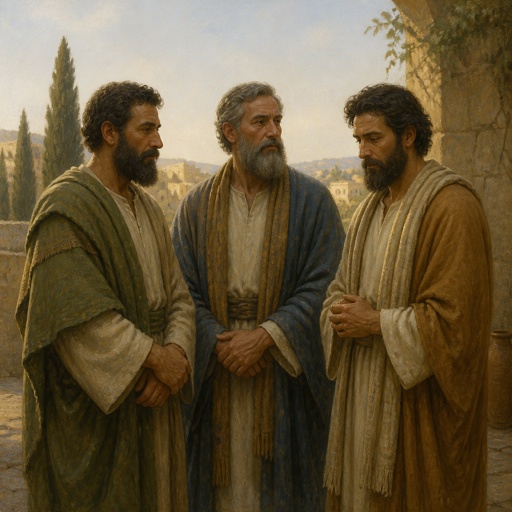
"Seraiah, Azariah, Jeremiah," - Nehemiah 10:2
"Amariah, Malluch, Hattush," - Nehemiah 12:2

Nehemiah 3:26 - "Moreover the Nethinims dwelt in Ophel, unto the place over against the water gate toward the east, and the tower that lieth out."

Nehemiah 11:2 - "And the people blessed all the men, that willingly offered themselves to dwell at Jerusalem."

Nehemiah 3:27 - "After them the Tekoites repaired another piece, over against the great tower that lieth out, even unto the wall of Ophel."

Nehemiah 3:7 - "And next unto them repaired Melatiah the Gibeonite, and Jadon the Meronothite, the men of Gibeon, and of Mizpah, unto the throne of the governor on this side the river."

Nehemiah 3:24 - "After him repaired Binnui the son of Henadad another piece, from the house of Azariah unto the turning of the wall, even unto the corner."