What does Nehemiah 3:10 mean?
“And next unto them repaired Jedaiah the son of Harumaph, even over against his house. And next unto him repaired Hattush the son of Hashabniah.” — Nehemiah 3:10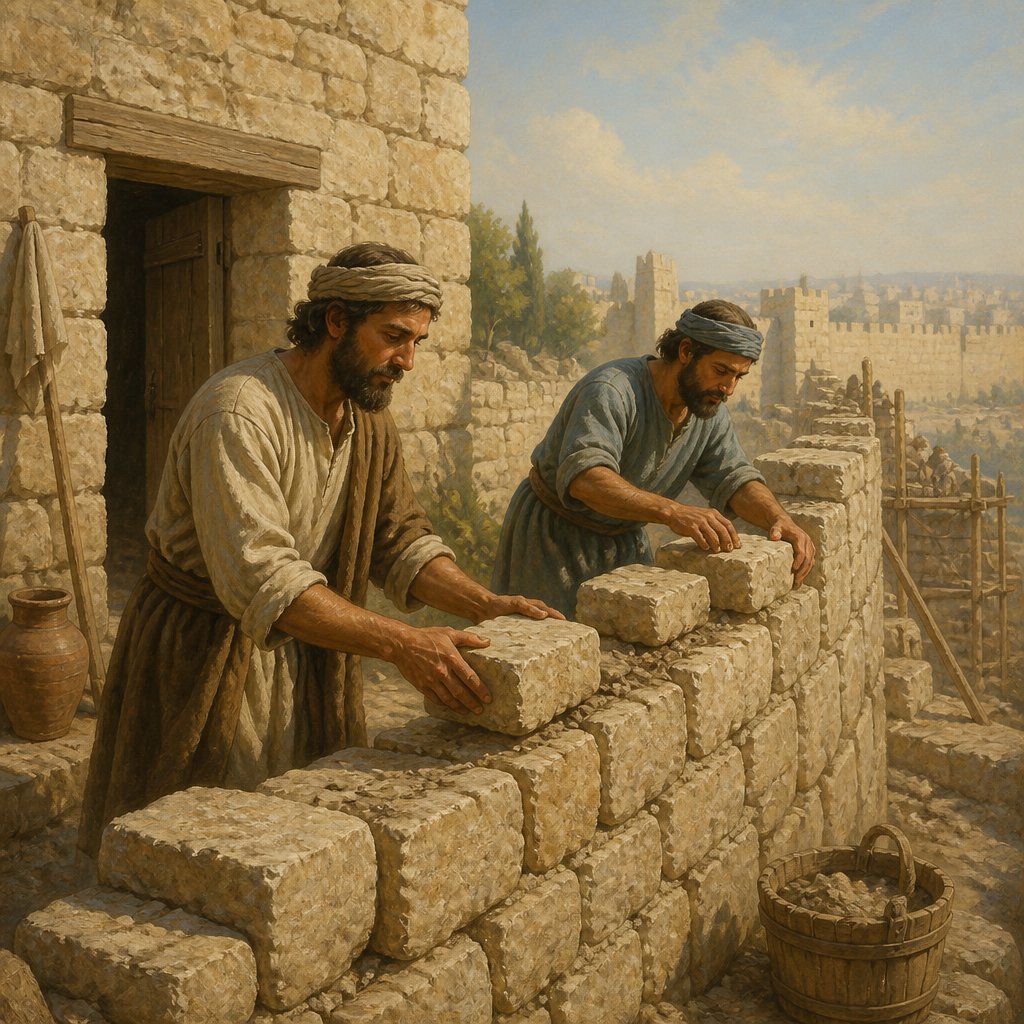
The Bible verse Nehemiah 3:10 from the King James Version (KJV) reads: "And next unto them repaired Jedaiah the son of Harumaph, even over against his house. And next unto him repaired Hattush the son of Hashabniah."
Nehemiah 3:10 is part of the Old Testament book of Nehemiah, which tells the story of the Israelites' return to Jerusalem and the rebuilding of the city's walls. The historical context of this verse is crucial to understanding its significance. In the 5th century BC, the Israelites had been taken into captivity by the Babylonians. However, following a decree by King Cyrus of Persia, they were allowed to return to Jerusalem to rebuild the city and its temple. Nehemiah, a trusted servant of the Persian king, was appointed governor of Judah and given the task of overseeing the rebuilding of Jerusalem's walls.
Nehemiah 3:10 is part of a passage that details the specific sections of the wall that different groups of people worked on. This verse mentions two individuals, Jedaiah and Hattush, who were actively involved in the reconstruction efforts. Their names may not be familiar to most readers, but their contributions to the rebuilding of the walls of Jerusalem are significant.
The themes and symbolism in Nehemiah 3:10 are centered around the idea of community and cooperation for a common purpose. The rebuilding of the walls of Jerusalem was not the work of one person, but the result of the collective efforts of many different individuals. Each person had a role to play, and their efforts were crucial for the overall success of the project. This reflects the biblical concept of unity and working together for a greater cause.
Jedaiah and Hattush are individual examples of the larger community of people who worked on the wall. Their commitment to repairing the wall "over against his house" can symbolize the personal investment and sacrifice that many individuals made for the greater good of the community. This can also represent the idea of taking responsibility for the upkeep and protection of one's own community and surroundings.
The act of repairing the wall has metaphorical significance as well. The wall was not only a physical barrier for the city but also a symbol of security and protection. In the same way, the rebuilding of the walls can represent the restoration of the city's strength and unity. By repairing the wall, the people were not only improving the city's physical defenses but also reclaiming their identity as a united and secure community.
Furthermore, the mention of the individuals by their lineage ("the son of Harumaph" and "the son of Hashabniah") underscores the importance of familial and ancestral ties within the community. This represents the interconnectedness between generations and the passing down of traditions and values.
Overall, Nehemiah 3:10 emphasizes the value of communal effort and individual contribution for the greater good. It highlights the importance of unity, responsibility, and sacrifice in the pursuit of a common goal. The verse serves as a reminder to readers of the power of collective action and the significance of each person's role in building and maintaining a strong and flourishing community.
Get our apps


Artwork for Nehemiah 3:10

Nehemiah 3:10 - "And next unto them repaired Jedaiah the son of Harumaph, even over against his house. And next unto him repaired Hattush the son of Hashabniah."
"And next unto them repaired Jedaiah the son of Harumaph, even over against his house. And next unto him repaired Hattush the son of Hashabniah." - Nehemiah 3:10

Nehemiah 10:3 - "Pashur, Amariah, Malchijah,"

"Pashur, Amariah, Malchijah," - Nehemiah 10:3

Nehemiah 10:1 - "Now those that sealed were, Nehemiah, the Tirshatha, the son of Hachaliah, and Zidkijah,"

Nehemiah 10:10 - "And their brethren, Shebaniah, Hodijah, Kelita, Pelaiah, Hanan,"

Nehemiah 8:10

Nehemiah 8:10

Nehemiah 8:10

Nehemiah 10:24 - "Hallohesh, Pileha, Shobek,"

Nehemiah 10:22 - "Pelatiah, Hanan, Anaiah,"

Nehemiah 10:5 - "Harim, Meremoth, Obadiah,"

Nehemiah 10:23 - "Hoshea, Hananiah, Hashub,"

Nehemiah 10:21 - "Meshezabeel, Zadok, Jaddua,"

Nehemiah 10:7 - "Meshullam, Abijah, Mijamin,"

Nehemiah 10:11 - "Micha, Rehob, Hashabiah,"

Nehemiah 10:27 - "Malluch, Harim, Baanah."

Nehemiah 10:25 - "Rehum, Hashabnah, Maaseiah,"

Nehemiah 10:19 - "Hariph, Anathoth, Nebai,"

Nehemiah 10:6 - "Daniel, Ginnethon, Baruch,"

Nehemiah 10:26 - "And Ahijah, Hanan, Anan,"

Nehemiah 10:16 - "Adonijah, Bigvai, Adin,"

Nehemiah 10:18 - "Hodijah, Hashum, Bezai,"

Nehemiah 10:20 - "Magpiash, Meshullam, Hezir,"

Nehemiah 10:17 - "Ater, Hizkijah, Azzur,"

Nehemiah 10:4 - "Hattush, Shebaniah, Malluch,"

Nehemiah 10:2 - "Seraiah, Azariah, Jeremiah,"

Nehemiah 10:12 - "Zaccur, Sherebiah, Shebaniah,"

Nehemiah 10:15 - "Bunni, Azgad, Bebai,"

Nehemiah 10:13 - "Hodijah, Bani, Beninu."