What does Nehemiah 3:11 mean?
“Malchijah the son of Harim, and Hashub the son of Pahath-moab, repaired the other piece, and the tower of the furnaces.” — Nehemiah 3:11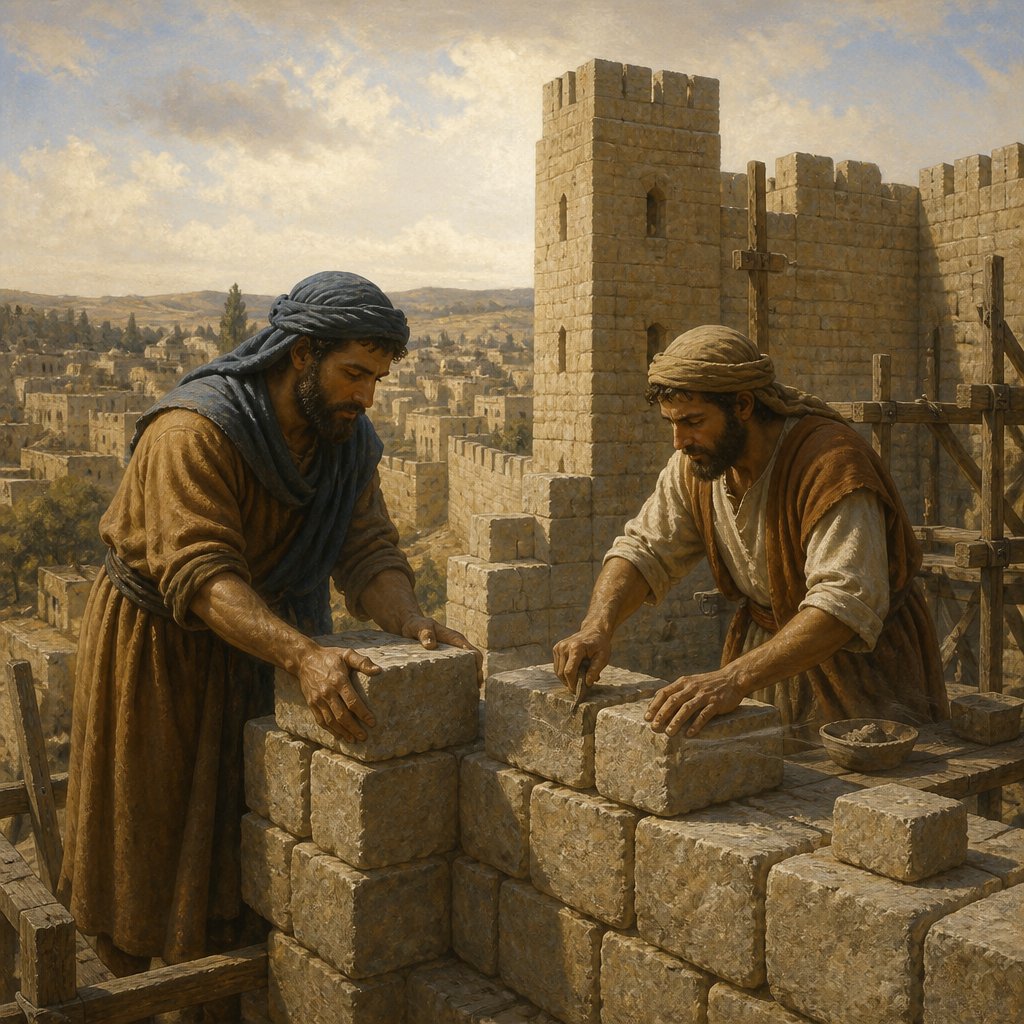
Nehemiah 3:11 in the King James Version of the Bible reads, "Malchijah the son of Harim, and Hashub the son of Pahathmoab, repaired the other piece, and the tower of the furnaces." This verse is part of the book of Nehemiah, which is a historical account of the rebuilding of Jerusalem's walls following the Babylonian exile.
In this particular verse, Malchijah and Hashub are mentioned as two individuals who were responsible for the repair of a section of the wall and the tower of the furnaces. This may seem like a simple and insignificant detail, but when we delve deeper into the context and symbolism of this verse, we can gain a deeper understanding of its significance.
The book of Nehemiah is not just a historical record of the reconstruction of Jerusalem's physical walls, but it also serves as a metaphor for spiritual rebuilding and renewal. The city of Jerusalem represents the spiritual condition of God's people, and the broken walls symbolize the spiritual desolation and vulnerability of the Israelites. The reconstruction of the walls signifies the restoration and renewal of faith and spiritual strength among the people.
Malchijah and Hashub, as mentioned in this verse, represent the individual and collective efforts of the people in the work of rebuilding. Their specific roles in repairing the walls and the tower of the furnaces highlight the importance of unity and collaboration in the restoration process. Each person had a specific task to contribute to the larger goal of rebuilding, and their diligent efforts were crucial in achieving the ultimate objective.
Furthermore, the mention of the tower of the furnaces holds significant symbolism. In ancient times, furnaces were used for heating and refining metals, and they are often associated with purification and cleansing. In a spiritual sense, the tower of the furnaces may symbolize the process of purification and refinement that the Israelites needed to undergo in order to restore their spiritual strength and integrity. This process of purification is essential for the individuals and the community as a whole, as they seek to rebuild their faith and relationship with God.
The dedication and commitment of Malchijah and Hashub in repairing the walls and the tower of the furnaces serve as an example of the faithfulness and perseverance required in the journey of spiritual renewal. Their actions demonstrate the importance of taking personal responsibility and actively participating in the work of rebuilding. This verse encourages believers to be actively involved in the restoration of their spiritual lives and the community, recognizing that each person has a vital role to play in the larger work of God.
Overall, Nehemiah 3:11 conveys a powerful message about the significance of individual and collective efforts in the process of spiritual renewal and rebuilding. It emphasizes the themes of unity, collaboration, dedication, and purification, all of which are essential components in the journey of faith and restoration. This verse reminds us of the importance of actively participating in the work of God and the role that each person plays in the larger plan of spiritual renewal and transformation.
Get our apps


Artwork for Nehemiah 3:11

Nehemiah 3:11 - "Malchijah the son of Harim, and Hashub the son of Pahath-moab, repaired the other piece, and the tower of the furnaces."
"Malchijah the son of Harim, and Hashub the son of Pahath-moab, repaired the other piece, and the tower of the furnaces." - Nehemiah 3:11

Nehemiah 11:11-14

Nehemiah 11:3 - "¶ Now these are the chief of the province that dwelt in Jerusalem: but in the cities of Judah dwelt every one in his possession in their cities, to wit, Israel, the priests, and the Levites, and the Nethinims, and the children of Solomon's servants."

Nehemiah 11:13

Nehemiah 11:34 - "Hadid, Zeboim, Neballat,"

Nehemiah 10:11 - "Micha, Rehob, Hashabiah,"

Nehemiah 11:33 - "Hazor, Ramah, Gittaim,"

Nehemiah 11:32 - "And at Anathoth, Nob, Ananiah,"

Nehemiah 11:1-19

Nehemiah 11:26 - "And at Jeshua, and at Moladah, and at Beth-phelet,"

Nehemiah 11:29 - "And at En-rimmon, and at Zareah, and at Jarmuth,"

Nehemiah 11:35 - "Lod, and Ono, the valley of craftsmen."

Nehemiah 11:28 - "And at Ziklag, and at Mekonah, and in the villages thereof,"

Nehemiah 11:36 - "And of the Levites were divisions in Judah, and in Benjamin."

Nehemiah 11:10 - "Of the priests: Jedaiah the son of Joiarib, Jachin."

Nehemiah 12:3 - "Shechaniah, Rehum, Meremoth,"

Nehemiah 12:11 - "And Joiada begat Jonathan, and Jonathan begat Jaddua."

Nehemiah 10:3 - "Pashur, Amariah, Malchijah,"

Nehemiah 11:27 - "And at Hazar-shual, and at Beer-sheba, and in the villages thereof,"

Nehemiah 2:11 - "So I came to Jerusalem, and was there three days."

Nehemiah 11:11 - "Seraiah the son of Hilkiah, the son of Meshullam, the son of Zadok, the son of Meraioth, the son of Ahitub, was the ruler of the house of God."

"And at Anathoth, Nob, Ananiah," - Nehemiah 11:32

"Hadid, Zeboim, Neballat," - Nehemiah 11:34

"Hazor, Ramah, Gittaim," - Nehemiah 11:33

"Micha, Rehob, Hashabiah," - Nehemiah 10:11

Nehemiah 11:21 - "But the Nethinims dwelt in Ophel: and Ziha and Gispa were over the Nethinims."

Nehemiah 11:8 - "And after him Gabbai, Sallai, nine hundred twenty and eight."

Nehemiah 11:2 - "And the people blessed all the men, that willingly offered themselves to dwell at Jerusalem."

Nehemiah 3:22 - "And after him repaired the priests, the men of the plain."