What does Nehemiah 3:18 mean?
“After him repaired their brethren, Bavai the son of Henadad, the ruler of the half part of Keilah.” — Nehemiah 3:18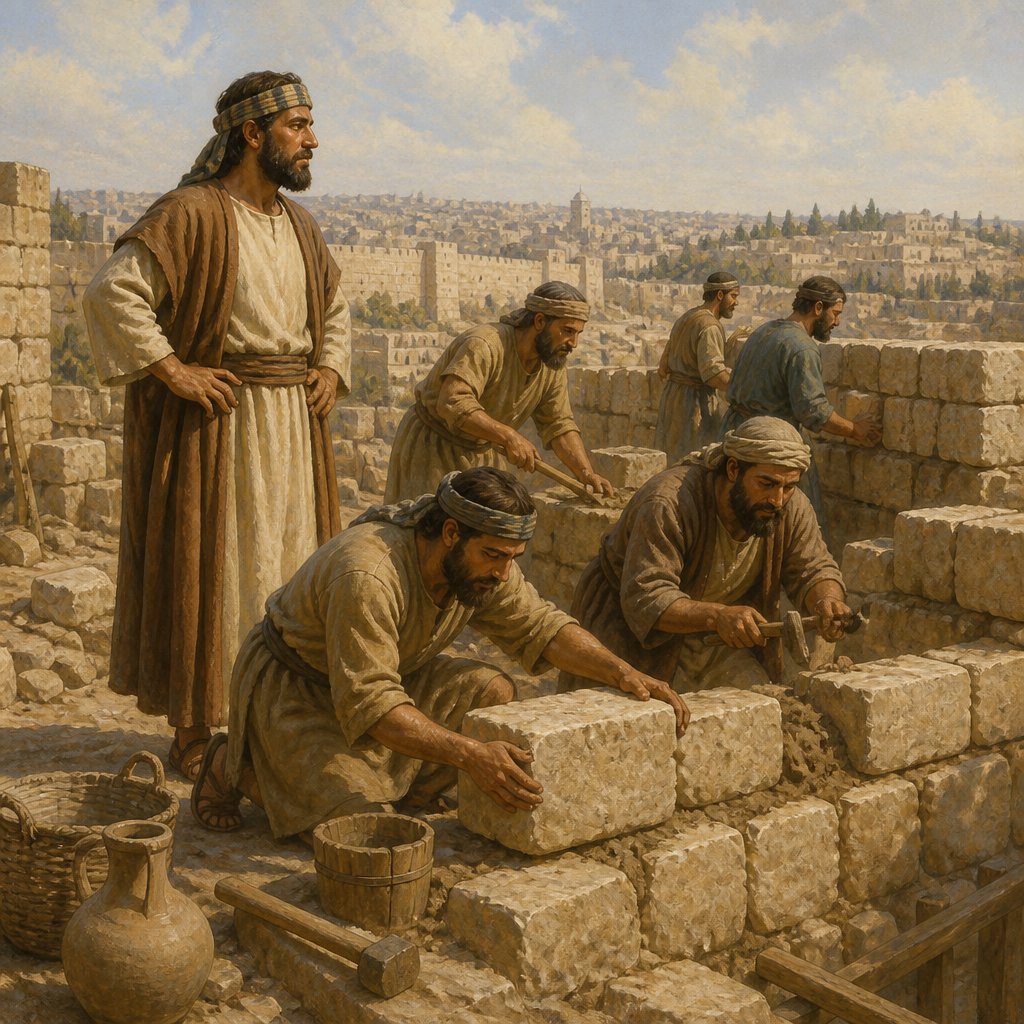
The Bible verse Nehemiah 3:18 from the King James Version (KJV) states, "After him repaired their brethren, Bavai the son of Henadad, the ruler of the half part of Keilah." This verse is part of the book of Nehemiah, which tells the story of the Israelites' return to Jerusalem after the Babylonian exile and their efforts to rebuild the city's walls and gates.
In this particular verse, we see Bavai, the son of Henadad, taking responsibility for the repair of the half part of Keilah. This verse is part of a larger passage that describes the various individuals and groups who labored to rebuild the walls of Jerusalem, each one taking on a specific section of the wall and working alongside their fellow countrymen.
One of the central themes of the book of Nehemiah is the importance of unity and collaboration in achieving a common goal. The Israelites had returned to a city devastated by war and exile, and the task of rebuilding its walls was a daunting one. However, by working together and each taking responsibility for their portion of the wall, they were able to accomplish this monumental task. This verse emphasizes the value of each individual's contribution to the greater good, and the importance of leadership in organizing and coordinating these efforts.
The mention of Bavai as the ruler of the half part of Keilah also carries with it a sense of stewardship and authority. Bavai is not only engaged in the physical labor of rebuilding the wall, but he is also responsible for overseeing the work of others in his section. This highlights the significance of leadership and the need for individuals to take on positions of responsibility in order to accomplish large-scale projects. It also underscores the importance of equitable distribution of labor and resources, as each person is accountable for their own portion of the work.
From a historical context, the rebuilding of the wall in Jerusalem was a significant event for the Israelites. The city's walls were not only a physical barrier of protection, but they also held deep symbolic and spiritual meaning for the people. The restoration of the walls and gates of Jerusalem represented a restoration of national identity and security, as well as a reaffirmation of their covenant with God. Therefore, the work described in Nehemiah 3:18 was not just a construction project, but a deeply meaningful and transformative undertaking for the Israelite community.
Symbolically, the rebuilding of the walls of Jerusalem can also be seen as a metaphor for the restoration and renewal of a person's spiritual life. The Israelites' return to their homeland and the reconstruction of the city's walls can be understood as a journey of repentance, redemption, and revival. In this sense, Nehemiah 3:18 serves as a reminder of the importance of taking individual responsibility for one's spiritual growth and contributing to the collective well-being of the community.
In conclusion, Nehemiah 3:18 is a verse that speaks to the themes of collaboration, leadership, stewardship, and spiritual renewal. It highlights the value of each person's contribution to the greater good, the importance of equitable distribution of labor and resources, and the transformative power of coming together to achieve a common goal. This verse is a testament to the enduring relevance and wisdom of the biblical narrative, and its capacity to inspire and guide individuals and communities in their own journeys of faith and service.
Get our apps


Artwork for Nehemiah 3:18

Nehemiah 3:18 - "After him repaired their brethren, Bavai the son of Henadad, the ruler of the half part of Keilah."
"After him repaired their brethren, Bavai the son of Henadad, the ruler of the half part of Keilah." - Nehemiah 3:18

Nehemiah 10:18 - "Hodijah, Hashum, Bezai,"

Nehemiah 12:18 - "Of Bilgah, Shammua; of Shemaiah, Jehonathan;"

Nehemiah 7:18 - "The children of Adonikam, six hundred threescore and seven."

"Hodijah, Hashum, Bezai," - Nehemiah 10:18

Nehemiah 12:3 - "Shechaniah, Rehum, Meremoth,"

Nehemiah 10:3 - "Pashur, Amariah, Malchijah,"

"Of Bilgah, Shammua; of Shemaiah, Jehonathan;" - Nehemiah 12:18

Nehemiah 3:22 - "And after him repaired the priests, the men of the plain."

Nehemiah 3:16 - "After him repaired Nehemiah the son of Azbuk, the ruler of the half part of Beth-zur, unto the place over against the sepulchres of David, and to the pool that was made, and unto the house of the mighty."

"Pashur, Amariah, Malchijah," - Nehemiah 10:3

"Shechaniah, Rehum, Meremoth," - Nehemiah 12:3

"The children of Adonikam, six hundred threescore and seven." - Nehemiah 7:18

Nehemiah 11:18 - "All the Levites in the holy city were two hundred fourscore and four." respectful, symbolic bible verse art

Nehemiah 4:18 - "For the builders, every one had his sword girded by his side, and so builded. And he that sounded the trumpet was by me."

Nehemiah 3:32 - "And between the going up of the corner unto the sheep gate repaired the goldsmiths and the merchants."

Nehemiah 3:5 - "And next unto them the Tekoites repaired; but their nobles put not their necks to the work of their Lord."

Nehemiah 3:3 - "But the fish gate did the sons of Hassenaah build, who also laid the beams thereof, and set up the doors thereof, the locks thereof, and the bars thereof."

Nehemiah 3:9 - "And next unto them repaired Rephaiah the son of Hur, the ruler of the half part of Jerusalem."

Nehemiah 3:11 - "Malchijah the son of Harim, and Hashub the son of Pahath-moab, repaired the other piece, and the tower of the furnaces."

Nehemiah 3:2 - "And next unto him builded the men of Jericho. And next to them builded Zaccur the son of Imri."

Nehemiah 3:28 - "From above the horse gate repaired the priests, every one over against his house."

Nehemiah 9:18 - "Yea, when they had made them a molten calf, and said, This is thy God that brought thee up out of Egypt, and had wrought great provocations;"

Nehemiah 13:3 - "Now it came to pass, when they had heard the law, that they separated from Israel all the mixed multitude."

"And after him repaired the priests, the men of the plain." - Nehemiah 3:22
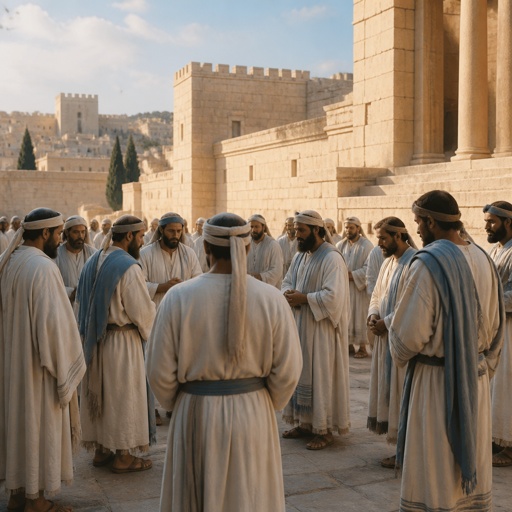
"All the Levites in the holy city were two hundred fourscore and four." - Nehemiah 11:18

Nehemiah 3:12 - "And next unto him repaired Shallum the son of Halohesh, the ruler of the half part of Jerusalem, he and his daughters."

Nehemiah 3:26 - "Moreover the Nethinims dwelt in Ophel, unto the place over against the water gate toward the east, and the tower that lieth out."

Nehemiah 6:18 - "For there were many in Judah sworn unto him, because he was the son in law of Shechaniah the son of Arah; and his son Johanan had taken the daughter of Meshullam the son of Berechiah."