What does Nehemiah 3:20 mean?
“After him Baruch the son of Zabbai earnestly repaired the other piece, from the turning of the wall unto the door of the house of Eliashib the high priest.” — Nehemiah 3:20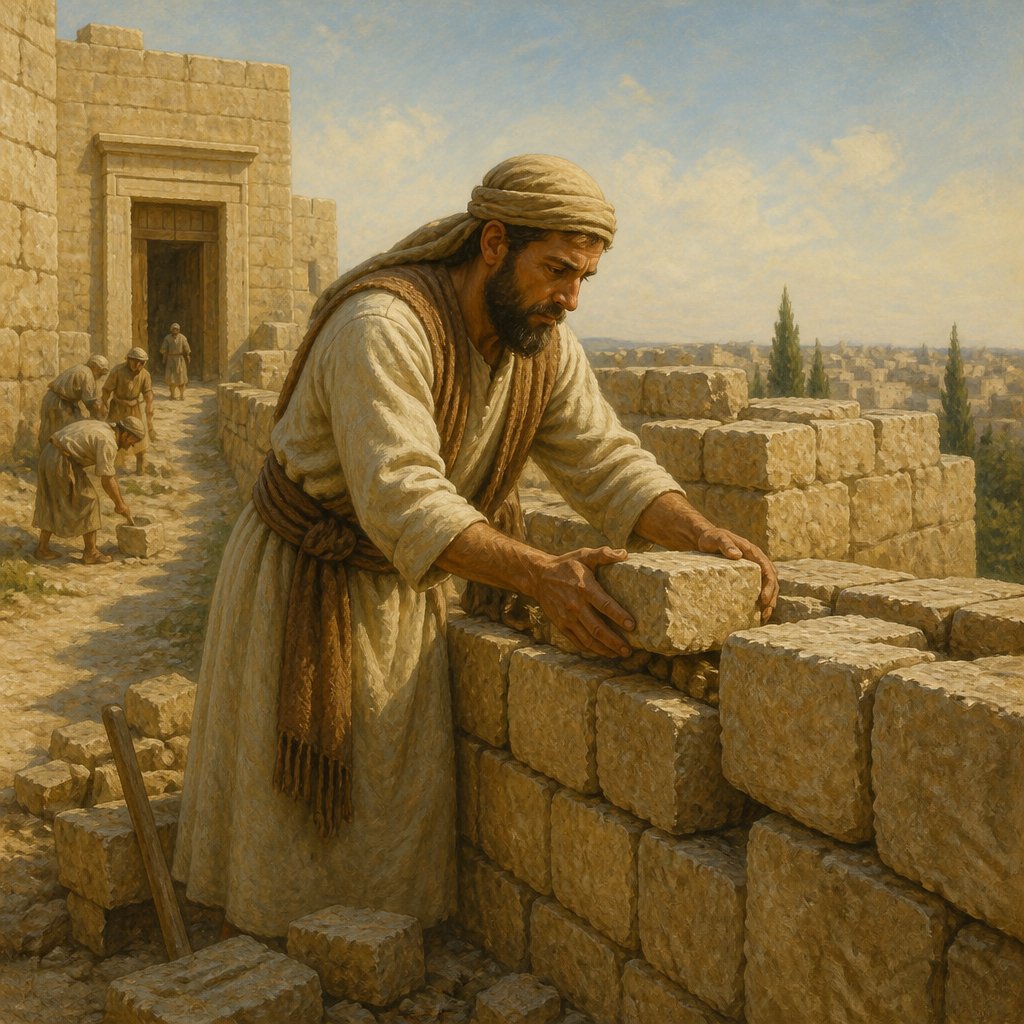
Nehemiah 3:20 (KJV) - "After him Baruch the son of Zabbai earnestly repaired the other piece, from the turning of the wall unto the door of the house of Eliashib the high priest."
The book of Nehemiah is a historical account of the efforts to restore and rebuild the walls of Jerusalem, which had been destroyed by the Babylonians. This particular verse is part of a list of people who were involved in the rebuilding of the walls, and it mentions Baruch the son of Zabbai, who repaired a section of the wall from the turning point to the door of the house of Eliashib the high priest.
Upon first glance, this verse may seem like a simple account of the physical rebuilding of the walls of Jerusalem. However, when examined more closely, it holds deeper meaning and significance. The act of rebuilding the walls of Jerusalem was not just a physical endeavor, but also a spiritual one. The walls represented the protection and security of the city, and their destruction symbolized the vulnerability and desolation of the people of Jerusalem. Therefore, the reconstruction of the walls was not only a practical necessity, but also a symbolic restoration of hope, strength, and identity.
In the context of the verse, Baruch the son of Zabbai's earnest efforts in repairing a specific section of the wall exemplify the dedication and commitment of the people towards the restoration of their city. It reflects the unity and collaboration of the community, as each individual contributed their skills and efforts to the collective goal of rebuilding the walls. This spirit of unity and cooperation is a theme that runs throughout the book of Nehemiah, highlighting the importance of working together towards a common purpose.
Furthermore, the verse also mentions the house of Eliashib the high priest. The involvement of the high priest in the rebuilding process underscores the spiritual significance of the restoration. The high priest was not only a religious leader, but also a symbol of the spiritual well-being of the people. By mentioning the proximity of the repaired wall to the house of the high priest, the verse alludes to the connection between the physical and spiritual aspects of the restoration. It suggests that the rebuilding of the walls was not just a matter of physical security, but also a restoration of the people's faith and spiritual strength.
Symbolically, the act of rebuilding the walls can also be interpreted as a metaphor for personal and collective renewal. Just as the walls of Jerusalem were in ruins and needed to be rebuilt, individuals and communities often face challenges and obstacles that threaten their well-being and security. The process of rebuilding the walls serves as a reminder that, with perseverance, determination, and faith, it is possible to overcome adversity and restore what has been lost.
In conclusion, Nehemiah 3:20 captures the spirit of determination, unity, and faith that characterized the rebuilding of the walls of Jerusalem. It serves as a powerful reminder of the significance of collective effort, spiritual renewal, and the restoration of hope and strength in the face of adversity. The verse encourages us to work together towards common goals, to remain steadfast in our faith, and to strive for the restoration and renewal of our physical, emotional, and spiritual well-being.
Get our apps


Artwork for Nehemiah 3:20

Nehemiah 3:20 - "After him Baruch the son of Zabbai earnestly repaired the other piece, from the turning of the wall unto the door of the house of Eliashib the high priest."
"After him Baruch the son of Zabbai earnestly repaired the other piece, from the turning of the wall unto the door of the house of Eliashib the high priest." - Nehemiah 3:20

Nehemiah 10:20 - "Magpiash, Meshullam, Hezir,"

Nehemiah 12:20 - "Of Sallai, Kallai; of Amok, Eber;"

Nehemiah 7:20 - "The children of Adin, six hundred fifty and five."

"Magpiash, Meshullam, Hezir," - Nehemiah 10:20

Nehemiah 12:3 - "Shechaniah, Rehum, Meremoth,"

Nehemiah 10:3 - "Pashur, Amariah, Malchijah,"
"Of Sallai, Kallai; of Amok, Eber;" - Nehemiah 12:20

Nehemiah 13:20 - "So the merchants and sellers of all kind of ware lodged without Jerusalem once or twice."

Nehemiah 11:20 - "¶ And the residue of Israel, of the priests, and the Levites, were in all the cities of Judah, every one in his inheritance."

Nehemiah 3:22 - "And after him repaired the priests, the men of the plain."

Nehemiah 3:16 - "After him repaired Nehemiah the son of Azbuk, the ruler of the half part of Beth-zur, unto the place over against the sepulchres of David, and to the pool that was made, and unto the house of the mighty."
"The children of Adin, six hundred fifty and five." - Nehemiah 7:20

"Pashur, Amariah, Malchijah," - Nehemiah 10:3

"Shechaniah, Rehum, Meremoth," - Nehemiah 12:3

Nehemiah 3:32 - "And between the going up of the corner unto the sheep gate repaired the goldsmiths and the merchants."

Nehemiah 9:20 - "Thou gavest also thy good spirit to instruct them, and withheldest not thy manna from their mouth, and gavest them water for their thirst."

Nehemiah 3:5 - "And next unto them the Tekoites repaired; but their nobles put not their necks to the work of their Lord."

Nehemiah 4:20 - "In what place therefore ye hear the sound of the trumpet, resort ye thither unto us: our God shall fight for us."

Nehemiah 3:3 - "But the fish gate did the sons of Hassenaah build, who also laid the beams thereof, and set up the doors thereof, the locks thereof, and the bars thereof."

Nehemiah 3:9 - "And next unto them repaired Rephaiah the son of Hur, the ruler of the half part of Jerusalem."

Nehemiah 3:18 - "After him repaired their brethren, Bavai the son of Henadad, the ruler of the half part of Keilah."

Nehemiah 3:11 - "Malchijah the son of Harim, and Hashub the son of Pahath-moab, repaired the other piece, and the tower of the furnaces."

Nehemiah 3:2 - "And next unto him builded the men of Jericho. And next to them builded Zaccur the son of Imri."

Nehemiah 3:28 - "From above the horse gate repaired the priests, every one over against his house."

Nehemiah 13:3 - "Now it came to pass, when they had heard the law, that they separated from Israel all the mixed multitude."

"And after him repaired the priests, the men of the plain." - Nehemiah 3:22

Nehemiah 3:12 - "And next unto him repaired Shallum the son of Halohesh, the ruler of the half part of Jerusalem, he and his daughters."

Nehemiah 3:26 - "Moreover the Nethinims dwelt in Ophel, unto the place over against the water gate toward the east, and the tower that lieth out."