What does Nehemiah 5:11 mean?
“Restore, I pray you, to them, even this day, their lands, their vineyards, their oliveyards, and their houses, also the hundredth part of the money, and of the corn, the wine, and the oil, that ye exact of them.” — Nehemiah 5:11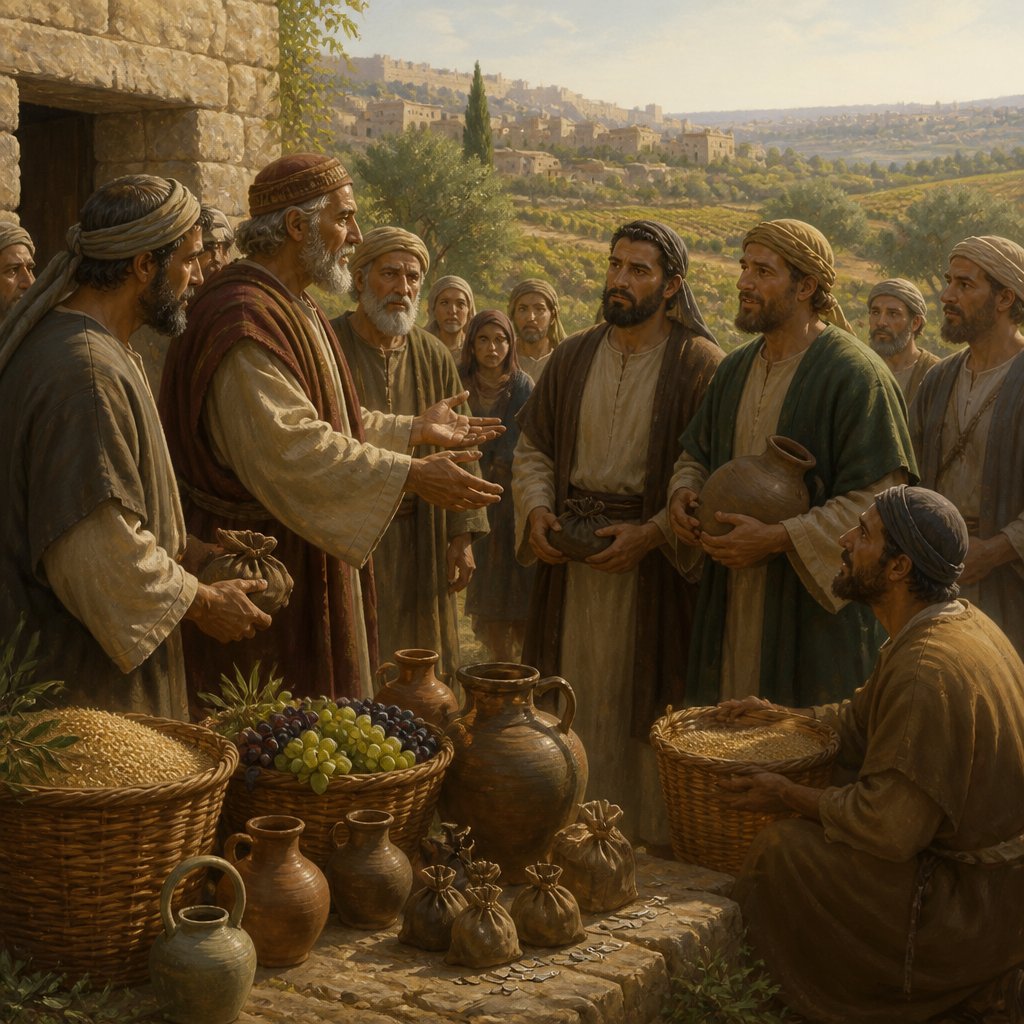
The Bible verse Nehemiah 5:11 from the King James Version (KJV) states, "Restore, I pray you, to them, even this day, their lands, their vineyards, their oliveyards, and their houses, also the hundredth part of the money, and of the corn, the wine, and the oil, that ye exact of them."
This verse is part of the book of Nehemiah, which tells the story of Nehemiah, a cupbearer to the Persian king Artaxerxes, who becomes concerned about the plight of the exiled Jews in Jerusalem. He receives permission from the king to travel to Jerusalem and help rebuild the city's walls and restore its people. Nehemiah faces numerous challenges and obstacles from both outside enemies and internal conflicts, which he navigates with wisdom and determination.
In Nehemiah 5:11, Nehemiah is addressing the leaders and nobles of Jerusalem who have been taking advantage of their fellow Jews. The verse is a plea for justice and restoration for those who have been oppressed. Nehemiah is calling out the wealthy elites who have been exploiting their own people, taking their lands, vineyards, oliveyards, houses, and demanding exorbitant payments from them. He is demanding that these unjust practices stop immediately, and that the oppressed Jews be restored to their rightful possessions.
One of the central themes of this verse is the importance of justice and compassion for the oppressed. Nehemiah is advocating for the fair treatment of the disadvantaged and the restoration of what has been taken from them. This message is consistent with the broader themes of the Bible, which emphasize the importance of acting with justice, mercy, and compassion towards others, especially those who are marginalized or mistreated.
The context of Nehemiah 5:11 is important for understanding its significance. At the time, there was widespread poverty and inequality among the Jewish community in Jerusalem. The wealthy nobles were taking advantage of their fellow Jews, exploiting them for their own gain. Nehemiah, as a leader appointed by God, is intervening to rectify these injustices and ensure that the underprivileged receive fair treatment and restoration.
Furthermore, the symbolism in this verse is significant. The lands, vineyards, and oliveyards mentioned represent the sustenance and livelihood of the oppressed Jews. These were not just material possessions, but essential resources for their survival and well-being. By calling for the restoration of these assets, Nehemiah is not only seeking to right a wrong but also to ensure the welfare and prosperity of the marginalized members of the community.
Additionally, the demand for the return of the "hundredth part of the money, and of the corn, the wine, and the oil" signifies a restitution and repayment for the exploitation and extortion that had taken place. This reflects the biblical principle of restitution for wrongdoing and the idea that those who have been wronged should be compensated for their losses.
In conclusion, Nehemiah 5:11 is a powerful and timeless message about justice, restoration, and compassion for the oppressed. It serves as a reminder of the need to confront injustice and work towards the fair treatment and well-being of all members of society. The verse continues to inspire and challenge believers to act with integrity and righteousness in their interactions with others, especially those who are vulnerable and marginalized.
Get our apps


Artwork for Nehemiah 5:11

Nehemiah 5:11 - "Restore, I pray you, to them, even this day, their lands, their vineyards, their oliveyards, and their houses, also the hundredth part of the money, and of the corn, the wine, and the oil, that ye exact of them."
"Restore, I pray you, to them, even this day, their lands, their vineyards, their oliveyards, and their houses, also the hundredth part of the money, and of the corn, the wine, and the oil, that ye exact of them." - Nehemiah 5:11

Nehemiah 11:5 - "And Maaseiah the son of Baruch, the son of Col-hozeh, the son of Hazaiah, the son of Adaiah, the son of Joiarib, the son of Zechariah, the son of Shiloni."

Nehemiah 11:11-14

A biblical scene from Nehemiah 1:5-11 - Nehemiah, a Caucasian male in middle-eastern garb, is depicted respectfully requesting time from the king, a Middle-Eastern male seated on a throne. He is asking for the opportunity to return to Judah and help his people build a wall. The setting is a grand royal court marked by golden hues, opulent textiles, and architecturally rich columns. Nehemiah is the king's servant.

A biblical scene from Nehemiah 1:5-11 - Nehemiah, a Caucasian male in middle-eastern garb, is depicted respectfully requesting time from the king, a Middle-Eastern male seated at the dinner table while Nehemiah is serving his drink. He is asking for the opportunity to return to Judah and help his people build a wall. The setting is a grand royal court marked by golden hues, opulent textiles, and architecturally rich columns.

A biblical scene from Nehemiah 1:5-11 - Nehemiah, a middle-age Caucasian male in middle-eastern garb, is serving a drink to the Persian king, a Middle-Eastern male seated at the dinner table. The setting is a grand royal court marked by golden hues, opulent textiles, and architecturally rich columns.

Nehemiah 11:13

A biblical scene from Nehemiah 1:5-11 - Nehemiah, a Caucasian male in middle-eastern garb, is depicted respectfully requesting time from the king, a Middle-Eastern male seated at the dinner table while Nehemiah is serving his drink. He is asking for the opportunity to return to Judah and help his people build a wall. The setting is a grand royal court marked by golden hues, opulent textiles, and architecturally rich columns.

A biblical scene from Nehemiah 1:5-11 - Nehemiah, a middle-age Caucasian male in middle-eastern garb and simple headdress, is standing, serving a drink to the Persian king, a Middle-Eastern male seated at the dinner table. The setting is a grand royal court marked by golden hues, opulent textiles, and architecturally rich columns.

A biblical scene from Nehemiah 1:5-11 - Nehemiah, a Caucasian male in middle-eastern garb, is depicted respectfully requesting time from the king, a Middle-Eastern male seated on a throne. He is asking for the opportunity to return to Judah and help his people build a wall. The setting is a grand royal court marked by golden hues, opulent textiles, and architecturally rich columns. Only the king and Nehemiah, the king's cup bearer, are in the room.

A biblical scene from Nehemiah 1:5-11 - Nehemiah, a middle-age Caucasian male in middle-eastern garb, is standing, serving a drink to the Persian king, a Middle-Eastern male seated at the dinner table. The setting is a grand royal court marked by golden hues, opulent textiles, and architecturally rich columns.

A biblical scene from Nehemiah 1:5-11 - Nehemiah, a Caucasian male in middle-eastern garb, is depicted respectfully requesting time from the king, a Middle-Eastern male seated at the dinner table while Nehemiah is serving his drink. He is asking for the opportunity to return to Judah and help his people build a wall. The setting is a grand royal court marked by golden hues, opulent textiles, and architecturally rich columns.

Nehemiah 11:34 - "Hadid, Zeboim, Neballat,"

Nehemiah 10:11 - "Micha, Rehob, Hashabiah,"

Nehemiah 11:33 - "Hazor, Ramah, Gittaim,"

Nehemiah 11:32 - "And at Anathoth, Nob, Ananiah,"

Nehemiah 11:1-19

Nehemiah 11:26 - "And at Jeshua, and at Moladah, and at Beth-phelet,"

Nehemiah 11:29 - "And at En-rimmon, and at Zareah, and at Jarmuth,"

Nehemiah 10:5 - "Harim, Meremoth, Obadiah,"

Nehemiah 12:5 - "Miamin, Maadiah, Bilgah,"

Nehemiah 11:35 - "Lod, and Ono, the valley of craftsmen."

Nehemiah 11:28 - "And at Ziklag, and at Mekonah, and in the villages thereof,"

A biblical scene from Nehemiah 1:5-11 - Nehemiah, a Caucasian male in middle-eastern garb, is depicted respectfully requesting time from the king, a Middle-Eastern male seated on a throne. He is asking for the opportunity to return to Judah and help his people build a wall. The setting is a grand royal court marked by golden hues, opulent textiles, and architecturally rich columns.

Nehemiah 11:36 - "And of the Levites were divisions in Judah, and in Benjamin."

Nehemiah 11:10 - "Of the priests: Jedaiah the son of Joiarib, Jachin."

Song of Solomon 5:11

Nehemiah 12:11 - "And Joiada begat Jonathan, and Jonathan begat Jaddua."

Nehemiah 11:27 - "And at Hazar-shual, and at Beer-sheba, and in the villages thereof,"