What does Nehemiah 5:3 mean?
“Some also there were that said, We have mortgaged our lands, vineyards, and houses, that we might buy corn, because of the dearth.” — Nehemiah 5:3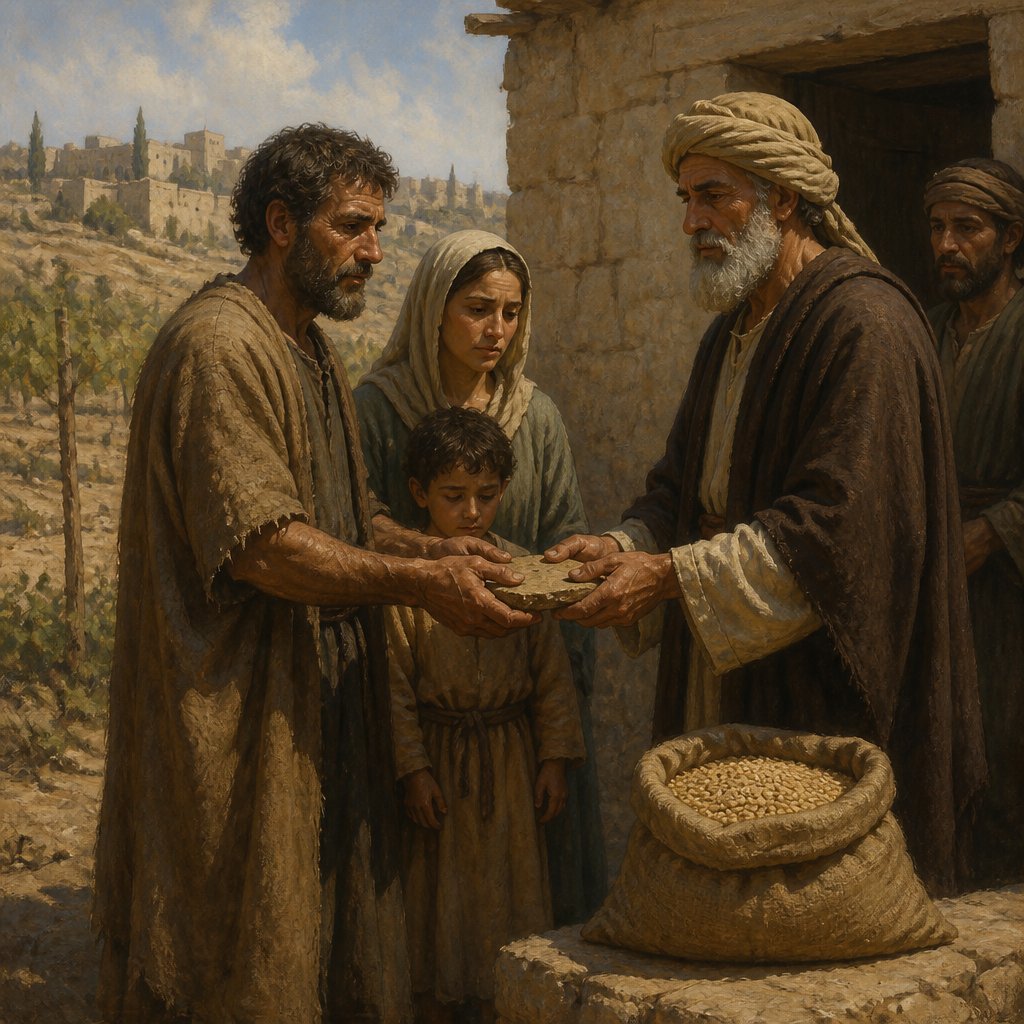
The Bible verse Nehemiah 5:3 from the King James Version (KJV) says, "Some also there were that said, We have mortgaged our lands, vineyards, and houses, that we might buy corn, because of the dearth." This verse is part of the book of Nehemiah in the Old Testament, which chronicles the efforts of Nehemiah to rebuild the walls of Jerusalem and restore the city's social and economic structure.
The context of this verse is important to understanding its meaning. At the time when Nehemiah spoke these words, Jerusalem was facing a severe famine and economic hardship. The people were struggling to feed themselves and their families, resorting to mortgaging their lands, vineyards, and houses in order to buy food. This verse is part of a larger passage in which Nehemiah addresses a specific issue of injustice and inequality among the people of Jerusalem.
One of the key themes of Nehemiah 5:3 is the importance of social justice and compassion towards those in need. The verse highlights the difficult circumstances that many people were facing, as they were forced to mortgage their property in order to feed themselves. This situation reflects the broader theme of social and economic injustice that Nehemiah sought to address throughout the book.
Another important theme in this verse is the concept of stewardship and responsibility. The people of Jerusalem were facing the consequences of their mismanagement and exploitation of resources. Instead of caring for their land and using it sustainably, they were forced to mortgage it in order to address the immediate crisis of the dearth. This verse serves as a reminder of the importance of responsible stewardship of resources and the consequences of failing to do so.
There is also a theme of reliance on God's provision in Nehemiah 5:3. The people were facing an overwhelming challenge, but they turned to God for help. In their desperation, they recognized their dependence on God to provide for their needs. This theme pervades the entire book of Nehemiah, as the people look to God for strength and guidance as they work to rebuild their city and their lives.
Symbolism is also present in this verse. The mortgaging of lands, vineyards, and houses symbolizes the dire circumstances facing the people of Jerusalem. It represents the loss of their livelihoods and the desperate measures they were forced to take in order to survive. The dearth can be seen as a symbol of the broader challenges and struggles that the people were facing as they sought to rebuild their city.
In conclusion, Nehemiah 5:3 from the King James Version carries significant themes of social justice, stewardship, reliance on God, and symbolism of the people's desperate circumstances. It serves as a powerful reminder of the importance of caring for those in need, responsible use of resources, and the significance of turning to God in times of trouble. This verse continues to resonate with readers today, offering valuable lessons and insights into how we can respond to adversity and injustice with compassion and faith.
Get our apps


Artwork for Nehemiah 5:3

Nehemiah 5:3 - "Some also there were that said, We have mortgaged our lands, vineyards, and houses, that we might buy corn, because of the dearth."
"Some also there were that said, We have mortgaged our lands, vineyards, and houses, that we might buy corn, because of the dearth." - Nehemiah 5:3

Nehemiah 3:5 - "And next unto them the Tekoites repaired; but their nobles put not their necks to the work of their Lord."
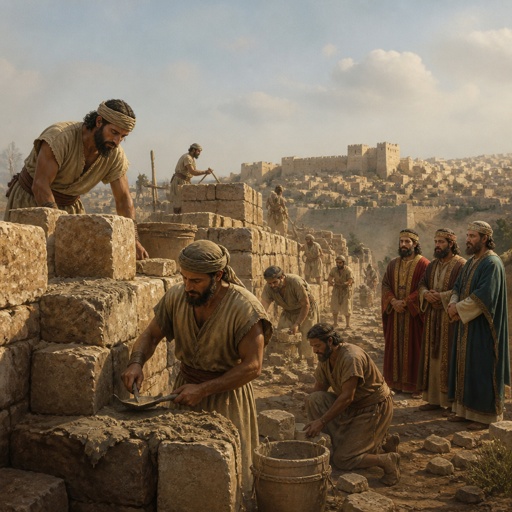
"And next unto them the Tekoites repaired; but their nobles put not their necks to the work of their Lord." - Nehemiah 3:5

Nehemiah 10:5 - "Harim, Meremoth, Obadiah,"

Nehemiah 12:5 - "Miamin, Maadiah, Bilgah,"

Nehemiah 12:3 - "Shechaniah, Rehum, Meremoth,"

Nehemiah 10:3 - "Pashur, Amariah, Malchijah,"

Nehemiah 5:1 - "And there was a great cry of the people and of their wives against their brethren the Jews."

"Harim, Meremoth, Obadiah," - Nehemiah 10:5

"Miamin, Maadiah, Bilgah," - Nehemiah 12:5

Nehemiah 3:22 - "And after him repaired the priests, the men of the plain."

Nehemiah 5:6 - "¶ And I was very angry when I heard their cry and these words."

Nehemiah 3:16 - "After him repaired Nehemiah the son of Azbuk, the ruler of the half part of Beth-zur, unto the place over against the sepulchres of David, and to the pool that was made, and unto the house of the mighty."

"Pashur, Amariah, Malchijah," - Nehemiah 10:3

"Shechaniah, Rehum, Meremoth," - Nehemiah 12:3

Nehemiah 3:32 - "And between the going up of the corner unto the sheep gate repaired the goldsmiths and the merchants."

Nehemiah 5:19 - "Think upon me, my God, for good, according to all that I have done for this people."

Nehemiah 3:3 - "But the fish gate did the sons of Hassenaah build, who also laid the beams thereof, and set up the doors thereof, the locks thereof, and the bars thereof."

Nehemiah 5:4 - "There were also that said, We have borrowed money for the king's tribute, and that upon our lands and vineyards."

Nehemiah 3:9 - "And next unto them repaired Rephaiah the son of Hur, the ruler of the half part of Jerusalem."

Nehemiah 3:18 - "After him repaired their brethren, Bavai the son of Henadad, the ruler of the half part of Keilah."

Nehemiah 6:5 - "Then sent Sanballat his servant unto me in like manner the fifth time with an open letter in his hand;"

Nehemiah 3:11 - "Malchijah the son of Harim, and Hashub the son of Pahath-moab, repaired the other piece, and the tower of the furnaces."

Nehemiah 3:2 - "And next unto him builded the men of Jericho. And next to them builded Zaccur the son of Imri."

Nehemiah 3:28 - "From above the horse gate repaired the priests, every one over against his house."

Nehemiah 4:5 - "And cover not their iniquity, and let not their sin be blotted out from before thee: for they have provoked thee to anger before the builders."

Nehemiah 13:3 - "Now it came to pass, when they had heard the law, that they separated from Israel all the mixed multitude."

"And after him repaired the priests, the men of the plain." - Nehemiah 3:22

Nehemiah 11:5 - "And Maaseiah the son of Baruch, the son of Col-hozeh, the son of Hazaiah, the son of Adaiah, the son of Joiarib, the son of Zechariah, the son of Shiloni."