What does Nehemiah 7:21 mean?
“The children of Ater of Hezekiah, ninety and eight.” — Nehemiah 7:21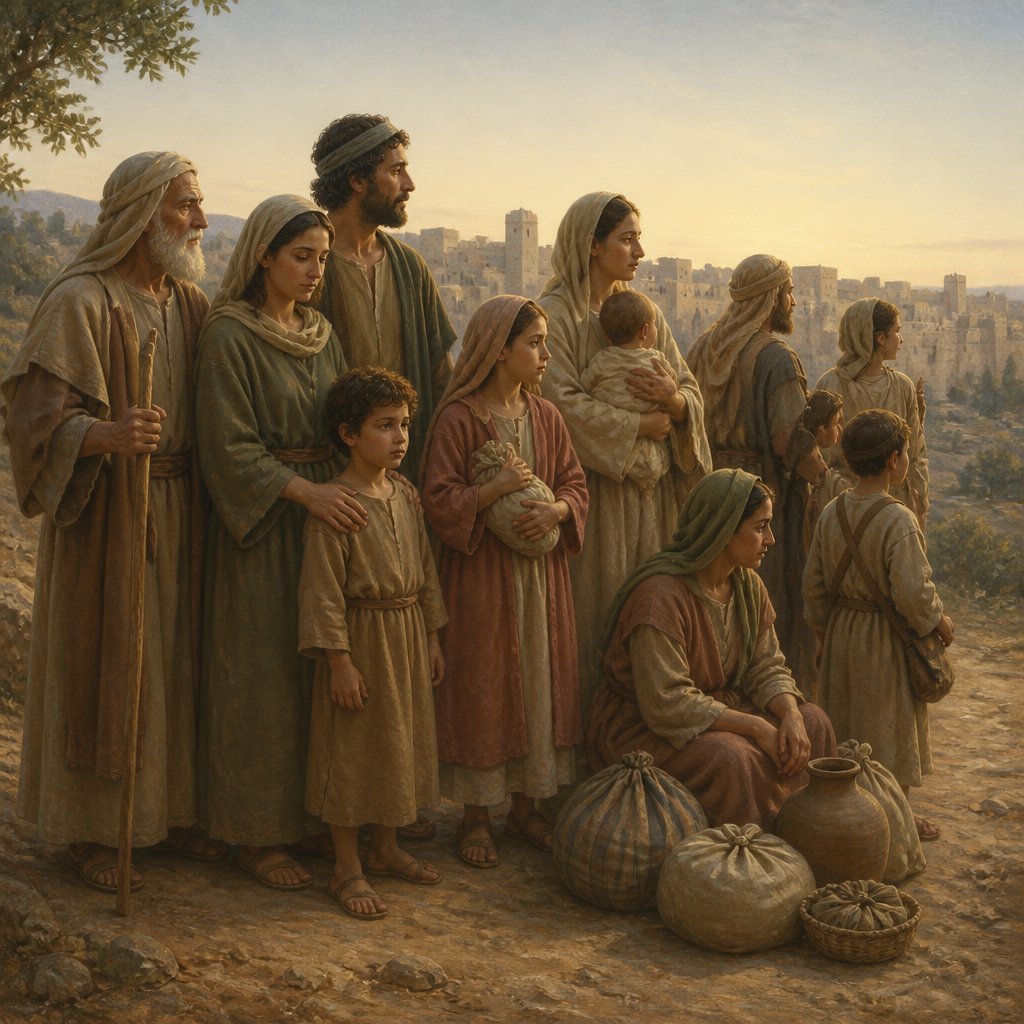
The verse Nehemiah 7:21 in the King James Version of the Bible reads, "The children of Bethlehem, an hundred twenty and three."
To fully understand the meaning and significance of this verse, it is important to first provide some context. The book of Nehemiah is considered a historical book in the Old Testament, and it details the efforts of Nehemiah, a Jewish leader, in rebuilding Jerusalem's walls and restoring the city after the Babylonian exile. In chapter 7, Nehemiah appoints gatekeepers, singers, and Levites to oversee different aspects of the city's administration. The verse in question lists the number of people from the town of Bethlehem who returned to Jerusalem after the exile.
In this verse, the mention of the "children of Bethlehem" refers to the people who hailed from the town of Bethlehem. Specifically, it states that there were 123 individuals from Bethlehem who returned to Jerusalem. While this may seem like a simple demographic detail, it holds significance in the larger theme of restoration and the fulfillment of God's promises.
One of the overarching themes in the book of Nehemiah is the restoration and rebuilding of Jerusalem. The return of the exiles to their homeland represents a physical and spiritual restoration for the Jewish people. This verse, along with the rest of chapter 7, highlights the meticulous record-keeping and attention to detail in documenting the return of the exiles. This demonstrates the importance of each individual in the broader narrative of restoration and renewal. The specific mention of Bethlehem serves as a reminder that God's plan for restoration encompasses not just the city of Jerusalem, but also the smaller towns and villages within the nation of Israel.
Beyond the literal meaning, the number 123 in this verse also holds symbolic significance. In the Bible, numbers often carry spiritual and symbolic meanings. The number 1 symbolizes unity and new beginnings, while the number 3 is associated with the trinity and spiritual fulfillment. The combination of these numbers, therefore, may be interpreted as representing a new and spiritually fulfilling beginning for the people of Bethlehem as they return to Jerusalem. It emphasizes the idea of God's faithfulness in restoring and renewing His people.
Furthermore, Bethlehem itself holds significant symbolic meaning in Christian theology. It is the birthplace of Jesus Christ, the promised Messiah and Savior. By highlighting the individuals from Bethlehem, the verse may be seen as a precursor to the ultimate fulfillment of God's promise through the coming of Christ. This further emphasizes the theme of restoration and redemption woven throughout the biblical narrative.
In conclusion, Nehemiah 7:21 serves as a specific detail within the broader narrative of restoration and renewal in the book of Nehemiah. It underscores the importance of individual participation in God's plan and highlights the meticulous record-keeping of the return of the exiles. Symbolically, it also represents a new beginning and spiritual fulfillment for the people of Bethlehem, foreshadowing the ultimate fulfillment of God's promises through the birth of Jesus Christ. As such, this verse offers a message of hope, restoration, and divine faithfulness that resonates beyond its historical context.
Get our apps


Artwork for Nehemiah 7:21

Nehemiah 7:21 - "The children of Ater of Hezekiah, ninety and eight."
"The children of Ater of Hezekiah, ninety and eight." - Nehemiah 7:21

Nehemiah 10:21 - "Meshezabeel, Zadok, Jaddua,"

Nehemiah 12:21 - "Of Hilkiah, Hashabiah; of Jedaiah, Nethaneel."

Nehemiah 7:7 - "Who came with Zerubbabel, Jeshua, Nehemiah, Azariah, Raamiah, Nahamani, Mordecai, Bilshan, Mispereth, Bigvai, Nehum, Baanah. The number, I say, of the men of the people of Israel was this;"

"Meshezabeel, Zadok, Jaddua," - Nehemiah 10:21

Nehemiah 10:7 - "Meshullam, Abijah, Mijamin,"

Nehemiah 11:21 - "But the Nethinims dwelt in Ophel: and Ziha and Gispa were over the Nethinims."

Nehemiah 7:42 - "The children of Harim, a thousand and seventeen."

Nehemiah 7:24 - "The children of Hariph, an hundred and twelve."

Nehemiah 7:56 - "The children of Neziah, the children of Hatipha."

Nehemiah 7:25 - "The children of Gibeon, ninety and five."
"Of Hilkiah, Hashabiah; of Jedaiah, Nethaneel." - Nehemiah 12:21

Nehemiah 7:40 - "The children of Immer, a thousand fifty and two."

Nehemiah 7:31 - "The men of Michmas, an hundred and twenty and two."

Nehemiah 7:33 - "The men of the other Nebo, fifty and two."

Nehemiah 7:28 - "The men of Beth-azmaveth, forty and two."

Nehemiah 7:14 - "The children of Zaccai, seven hundred and threescore."

Nehemiah 7:27 - "The men of Anathoth, an hundred twenty and eight."

Nehemiah 7:35 - "The children of Harim, three hundred and twenty."

Nehemiah 7:16 - "The children of Bebai, six hundred twenty and eight."

Nehemiah 7:58 - "The children of Jaala, the children of Darkon, the children of Giddel,"

Nehemiah 7:9 - "The children of Shephatiah, three hundred seventy and two."

Nehemiah 7:48 - "The children of Lebana, the children of Hagaba, the children of Shalmai,"

Nehemiah 7:19 - "The children of Bigvai, two thousand threescore and seven."

Nehemiah 7:15 - "The children of Binnui, six hundred forty and eight."

Nehemiah 7:44 - "¶ The singers: the children of Asaph, an hundred forty and eight."

Nehemiah 7:18 - "The children of Adonikam, six hundred threescore and seven."

Nehemiah 7:13 - "The children of Zattu, eight hundred forty and five."

Nehemiah 7:49 - "The children of Hanan, the children of Giddel, the children of Gahar,"