What does Nehemiah 7:41 mean?
“The children of Pashur, a thousand two hundred forty and seven.” — Nehemiah 7:41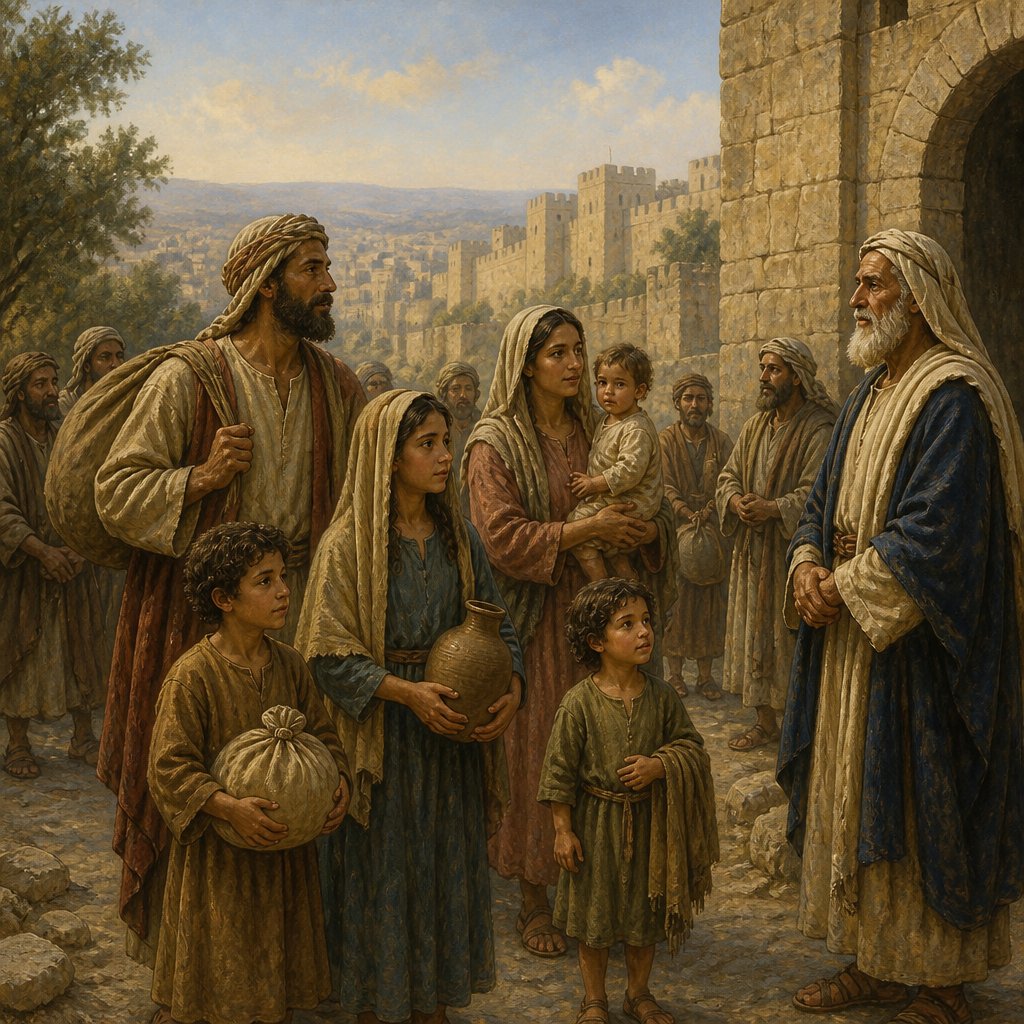
The verse Nehemiah 7:41 in the King James Version (KJV) of the Bible reads, "The children of Pahathmoab, of the children of Jeshua and Joab, two thousand and eight hundred and eighteen."
The book of Nehemiah is set in Jerusalem and focuses on the efforts of Nehemiah to rebuild the city's walls as well as the spiritual and moral renewal of its people. It takes place after the Babylonian captivity, when the Israelites were allowed to return to their homeland.
In order to fully understand the meaning and significance of this particular verse, it is important to look at its context within the larger narrative of the book of Nehemiah. In chapter 7, Nehemiah lists the people who were part of the initial wave of returnees to Jerusalem. The verse in question is a part of this list, which enumerates the heads of the families that returned with Zerubbabel, the leader of the first group of returnees.
The mention of the "children of Pahathmoab" is significant as it refers to a specific family or clan that was among those who returned to Jerusalem after the Babylonian exile. This verse is part of a longer list of names and numbers of those who were a part of this group.
One of the primary themes in the book of Nehemiah is the restoration and rebuilding of Jerusalem. This verse, along with the rest of the list in chapter 7, serves to provide a record of those who were involved in this significant event in Israel's history. It emphasizes the importance of each individual and family's contribution to the overall effort of rebuilding the city and its walls.
On a deeper level, this verse can also be seen as a reflection of the inclusivity and diversity of those who returned to Jerusalem. The mention of the "children of Pahathmoab" highlights the fact that the returnees were not just from one particular tribe or lineage, but were a diverse group of people representing different families and clans. This diversity and inclusivity are reflective of God's redemptive plan for His people, which includes individuals from various backgrounds and origins.
Symbolically, the mention of specific numbers of individuals from each family or clan can also be seen as a reminder of God's faithfulness in preserving and remembering each person within the larger community. The detailed record-keeping of these names and numbers serves to emphasize the individual worth and significance of each person within the community.
In conclusion, the verse Nehemiah 7:41 serves as a reminder of the diversity, inclusivity, and individual significance of those who returned to Jerusalem after the Babylonian exile. It is a part of a larger narrative that emphasizes the importance of each person's contribution to the rebuilding of the city and reflects God's faithfulness in preserving and remembering His people. This verse, along with the rest of the list in chapter 7, underscores the broader themes of restoration, redemption, and the faithfulness of God throughout the biblical narrative.
Get our apps


Artwork for Nehemiah 7:41

Nehemiah 7:41 - "The children of Pashur, a thousand two hundred forty and seven."
"The children of Pashur, a thousand two hundred forty and seven." - Nehemiah 7:41

Nehemiah 12:41 - "And the priests; Eliakim, Maaseiah, Miniamin, Michaiah, Elioenai, Zechariah, and Hananiah, with trumpets;"

Nehemiah 7:7 - "Who came with Zerubbabel, Jeshua, Nehemiah, Azariah, Raamiah, Nahamani, Mordecai, Bilshan, Mispereth, Bigvai, Nehum, Baanah. The number, I say, of the men of the people of Israel was this;"

"And the priests; Eliakim, Maaseiah, Miniamin, Michaiah, Elioenai, Zechariah, and Hananiah, with trumpets;" - Nehemiah 12:41

Nehemiah 10:7 - "Meshullam, Abijah, Mijamin,"

Luke 7:41-47

Nehemiah 7:42 - "The children of Harim, a thousand and seventeen."

Nehemiah 7:24 - "The children of Hariph, an hundred and twelve."

Nehemiah 7:56 - "The children of Neziah, the children of Hatipha."

Nehemiah 7:25 - "The children of Gibeon, ninety and five."

Nehemiah 7:40 - "The children of Immer, a thousand fifty and two."

Nehemiah 7:31 - "The men of Michmas, an hundred and twenty and two."

Nehemiah 7:33 - "The men of the other Nebo, fifty and two."

Nehemiah 7:28 - "The men of Beth-azmaveth, forty and two."

Nehemiah 7:21 - "The children of Ater of Hezekiah, ninety and eight."

Nehemiah 7:14 - "The children of Zaccai, seven hundred and threescore."

Nehemiah 7:27 - "The men of Anathoth, an hundred twenty and eight."

Nehemiah 7:35 - "The children of Harim, three hundred and twenty."

Nehemiah 7:16 - "The children of Bebai, six hundred twenty and eight."

Nehemiah 7:58 - "The children of Jaala, the children of Darkon, the children of Giddel,"

Nehemiah 7:9 - "The children of Shephatiah, three hundred seventy and two."

Nehemiah 7:48 - "The children of Lebana, the children of Hagaba, the children of Shalmai,"

Nehemiah 7:15 - "The children of Binnui, six hundred forty and eight."

Nehemiah 7:19 - "The children of Bigvai, two thousand threescore and seven."

Nehemiah 7:44 - "¶ The singers: the children of Asaph, an hundred forty and eight."

Nehemiah 7:13 - "The children of Zattu, eight hundred forty and five."

Nehemiah 7:18 - "The children of Adonikam, six hundred threescore and seven."

Nehemiah 7:49 - "The children of Hanan, the children of Giddel, the children of Gahar,"

Nehemiah 7:55 - "The children of Barkos, the children of Sisera, the children of Tamah,"