What does Nehemiah 9:5 mean?
“Then the Levites, Jeshua, and Kadmiel, Bani, Hashabniah, Sherebiah, Hodijah, Shebaniah, and Pethahiah, said, Stand up and bless the LORD your God for ever and ever: and blessed be thy glorious name, which is exalted above all blessing and praise.” — Nehemiah 9:5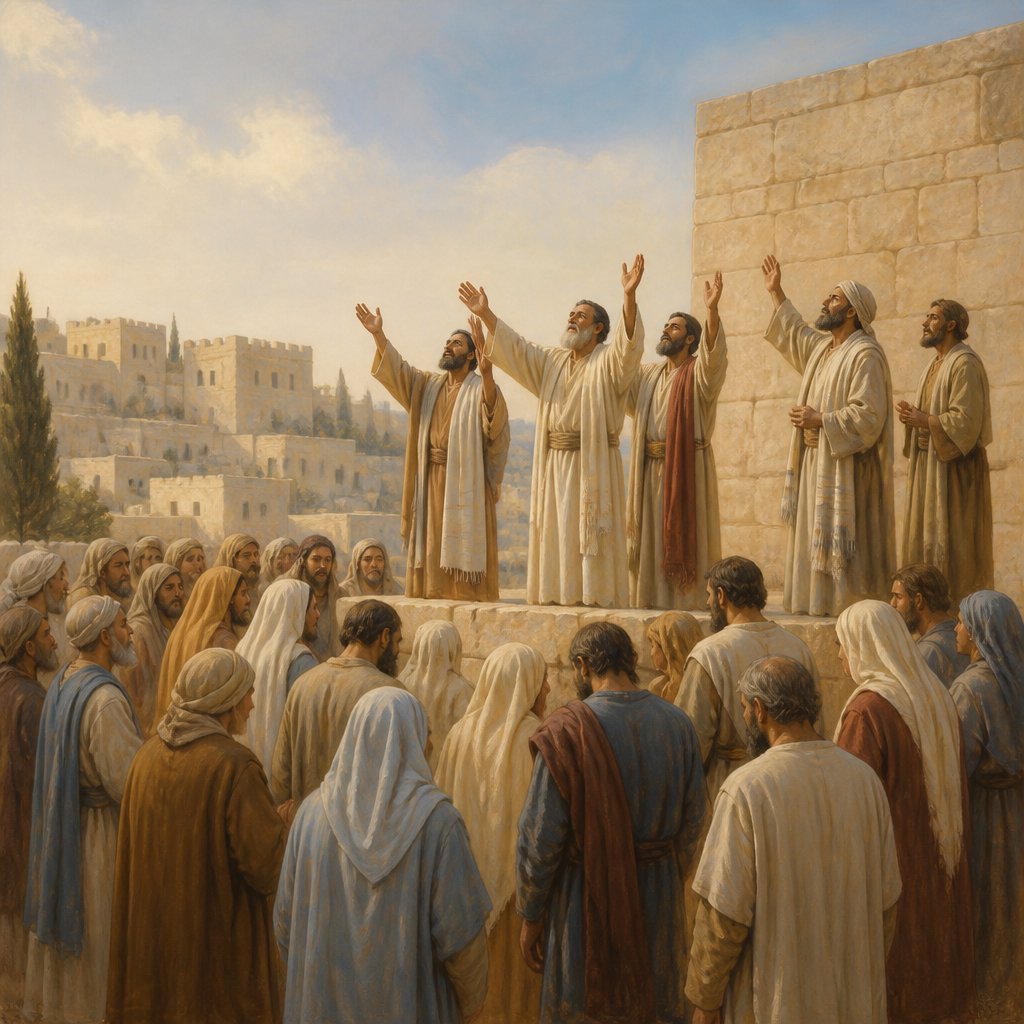
Nehemiah 9:5 (KJV) - "Then the Levites, Jeshua, and Kadmiel, Bani, Hashabniah, Sherebiah, Hodijah, Shebaniah, and Pethahiah, said, Stand up and bless the Lord your God for ever and ever: and blessed be thy glorious name, which is exalted above all blessing and praise."
The book of Nehemiah is one of the historical books of the Old Testament, telling the story of Nehemiah, a Jewish leader who played a key role in the rebuilding of Jerusalem and the restoration of the Jewish community after their exile in Babylon. Nehemiah 9:5 is part of the prayer of confession and praise that the Levites offer to God after the people have completed the reading of the Law. This verse is a beautiful expression of worship and adoration towards God, and it holds several key themes, a rich historical context, and deep symbolism.
One of the major themes present in this verse is the act of worship. The Levites in Nehemiah 9:5 are calling the people to "stand up and bless the Lord your God for ever and ever." This call to worship emphasizes the eternal nature of God's greatness and the enduring praise that is due to Him. The mention of "blessed be thy glorious name" further emphasizes the act of worship, acknowledging God's supreme majesty and honor. This theme of worship is an important aspect of the Jewish faith and is also a universal call for all believers to honor and glorify God for His greatness and faithfulness.
Another theme that can be drawn from Nehemiah 9:5 is the exaltation of God's name. The verse declares "blessed be thy glorious name, which is exalted above all blessing and praise." This exaltation of God's name speaks to the sovereignty and supremacy of God. It acknowledges that God's name is above all other names and is worthy of the highest praise and honor. This theme is also echoed in the New Testament when Philippians 2:9-11 states that Jesus Christ has been exalted to the highest place and every knee should bow before Him. This verse emphasizes the lofty position of God in the universe and the cosmic significance of His name.
In addition to these themes, the verse also carries rich historical context. The book of Nehemiah was written after the Jews had returned from exile in Babylon and were in the process of rebuilding Jerusalem and re-establishing their religious practices. The Levites in Nehemiah 9:5 are fulfilling their role as religious leaders, guiding the people in the worship of God and the confession of their sins. This historical context adds depth to the verse, as it reflects the spiritual renewal and restoration of the Jewish community after a period of exile and hardship. It also highlights the importance of worship and praise in times of national and personal restoration.
Symbolism can also be found in Nehemiah 9:5. The names of the Levites mentioned in this verse hold symbolic meanings. For example, "Jeshua" means "God saves," "Kadmiel" means "God is ancient," and "Hashabniah" means "God has considered." These names carry significance and add depth to the verse, signifying the attributes and actions of God. They serve as a reminder of the faithfulness and saving power of God throughout history. This symbolism further reinforces the themes of worship and exaltation of God's name present in the verse.
In conclusion, Nehemiah 9:5 is a powerful and richly layered verse that encapsulates themes of worship, exaltation of God's name, historical context, and symbolism. It is a profound expression of praise and adoration towards God, reflecting the sentiments of the Levites and the Jewish community as they seek spiritual renewal and restoration. This verse serves as a timeless reminder of the eternal greatness of God and the necessity of worship and praise in the life of believers. It is a call to honor and exalt the name of God, acknowledging His sovereignty and faithfulness throughout history.
Get our apps


Artwork for Nehemiah 9:5

Nehemiah 9:5 - "Then the Levites, Jeshua, and Kadmiel, Bani, Hashabniah, Sherebiah, Hodijah, Shebaniah, and Pethahiah, said, Stand up and bless the LORD your God for ever and ever: and blessed be thy glorious name, which is exalted above all blessing and praise."
"Then the Levites, Jeshua, and Kadmiel, Bani, Hashabniah, Sherebiah, Hodijah, Shebaniah, and Pethahiah, said, Stand up and bless the LORD your God for ever and ever: and blessed be thy glorious name, which is exalted above all blessing and praise." - Nehemiah 9:5

Nehemiah 5:9 - "Also I said, It is not good that ye do: ought ye not to walk in the fear of our God because of the reproach of the heathen our enemies?"

Nehemiah 6:9

Nehemiah 9:9 - "And didst see the affliction of our fathers in Egypt, and heardest their cry by the Red sea;"

Nehemiah 10:5 - "Harim, Meremoth, Obadiah,"

Nehemiah 12:5 - "Miamin, Maadiah, Bilgah,"

Nehemiah 7:9 - "The children of Shephatiah, three hundred seventy and two."

Nehemiah 5:1 - "And there was a great cry of the people and of their wives against their brethren the Jews."

"Harim, Meremoth, Obadiah," - Nehemiah 10:5

"Miamin, Maadiah, Bilgah," - Nehemiah 12:5

Nehemiah 9:16 - "But they and our fathers dealt proudly, and hardened their necks, and hearkened not to thy commandments,"

Nehemiah 5:6 - "¶ And I was very angry when I heard their cry and these words."

Nehemiah 12:9 - "Also Bakbukiah and Unni, their brethren, were over against them in the watches."

Nehemiah 10:9 - "And the Levites: both Jeshua the son of Azaniah, Binnui of the sons of Henadad, Kadmiel;"
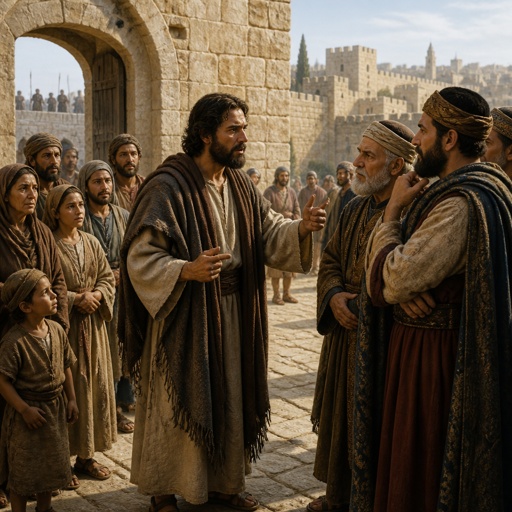
"Also I said, It is not good that ye do: ought ye not to walk in the fear of our God because of the reproach of the heathen our enemies?" - Nehemiah 5:9

Nehemiah 11:9 - "And Joel the son of Zichri was their overseer: and Judah the son of Senuah was second over the city."

Nehemiah 3:5 - "And next unto them the Tekoites repaired; but their nobles put not their necks to the work of their Lord."

Nehemiah 3:9 - "And next unto them repaired Rephaiah the son of Hur, the ruler of the half part of Jerusalem."

Nehemiah 9:2 - "And the seed of Israel separated themselves from all strangers, and stood and confessed their sins, and the iniquities of their fathers."

Nehemiah 8:9 - "¶ And Nehemiah, which is the Tirshatha, and Ezra the priest the scribe, and the Levites that taught the people, said unto all the people, This day is holy unto the LORD your God; mourn not, nor weep. For all the people wept, when they heard the words of the law."

Nehemiah 5:19 - "Think upon me, my God, for good, according to all that I have done for this people."

Nehemiah 9:38 - "And because of all this we make a sure covenant, and write it; and our princes, Levites, and priests, seal unto it."

"And didst see the affliction of our fathers in Egypt, and heardest their cry by the Red sea;" - Nehemiah 9:9

Nehemiah 13:9 - "Then I commanded, and they cleansed the chambers: and thither brought I again the vessels of the house of God, with the meat offering and the frankincense."

"The children of Shephatiah, three hundred seventy and two." - Nehemiah 7:9

Nehemiah 5:4 - "There were also that said, We have borrowed money for the king's tribute, and that upon our lands and vineyards."

Nehemiah 9:1 - "Now in the twenty and fourth day of this month the children of Israel were assembled with fasting, and with sackclothes, and earth upon them."

Nehemiah 6:5 - "Then sent Sanballat his servant unto me in like manner the fifth time with an open letter in his hand;"

Nehemiah 9:33 - "Howbeit thou art just in all that is brought upon us; for thou hast done right, but we have done wickedly:"