What does Numbers 22:14 mean?
“And the princes of Moab rose up, and they went unto Balak, and said, Balaam refuseth to come with us.” — Numbers 22:14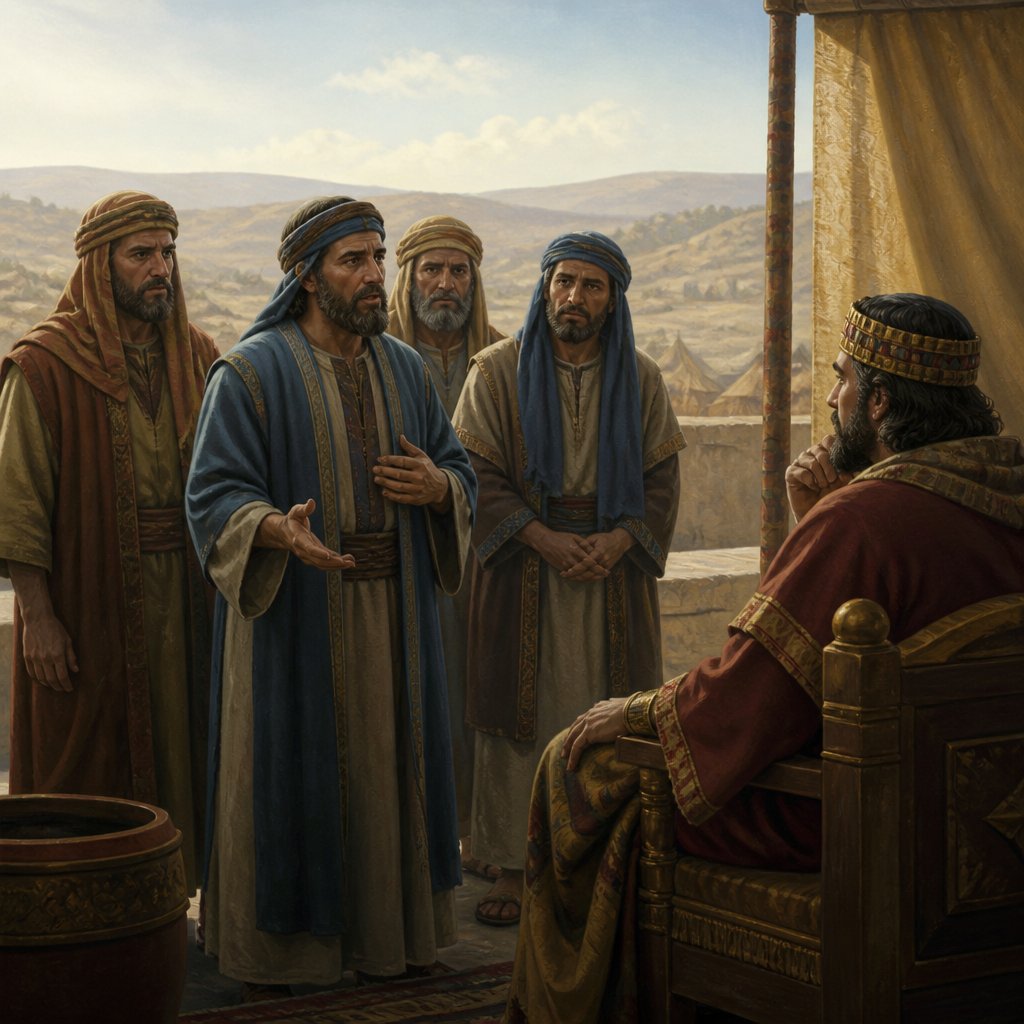
Numbers 22:14 from the King James Version (KJV) reads, "And the princes of Moab rose up, and they went unto Balak, and said, Balaam refuseth to come with us." This verse comes from the book of Numbers, which is the fourth book of the Bible and is part of the Pentateuch, or the first five books of the Old Testament.
The context of this verse is important for understanding its meaning. The Israelites, under the leadership of Moses, had been wandering in the wilderness after leaving Egypt. They had defeated the Amorites and were now encamped in the plains of Moab, across the Jordan River from the city of Jericho. Balak, the king of Moab, was afraid of the Israelites because of the military victories they had won, and he sought to curse them in order to weaken them. Balak sent messengers to Balaam, a pagan prophet, offering him a large sum of money to come and curse the Israelites.
In this verse, we see that the princes of Moab, acting on behalf of Balak, went to Balaam to persuade him to come and curse the Israelites. Balaam, however, refused to come with them. This refusal sets the stage for the following events in the book of Numbers, where Balaam ultimately ends up blessing the Israelites instead of cursing them.
One of the key themes in this verse is the sovereignty of God. Despite Balak's attempts to curse the Israelites, God ultimately foils his plans and turns the curses into blessings. Even in the midst of the Israelites' wandering and uncertainty, God is in control and working out his purposes for his people. This theme of God's sovereignty is a recurring one throughout the Bible, and it serves as a comfort and encouragement to believers, reminding them that God is ultimately in control of all things.
Another theme that can be gleaned from this verse is the idea of obedience and faithfulness. Balaam, though a pagan prophet, ultimately remains faithful to God by refusing to go against God's will and curse the Israelites. His obedience in this instance stands in contrast to the disobedience and rebellion of the Israelites, who often grumble and complain against God and his appointed leaders. Balaam's example serves as a reminder of the importance of remaining faithful and obedient to God, even when faced with tempting offers of wealth or power.
The symbolism in this verse is also significant. Balaam's refusal to come with the princes of Moab can be seen as a symbolic representation of the spiritual warfare that is constantly at play in the world. The forces of evil, represented by Balak and the princes of Moab, seek to undermine and destroy God's people. However, those who remain faithful and obedient to God, like Balaam, are ultimately protected and blessed by God.
Overall, Numbers 22:14 from the King James Version offers a rich and multi-layered message about God's sovereignty, the importance of obedience and faithfulness, and the reality of spiritual warfare. This verse serves as a reminder to believers that God is ultimately in control, and that those who remain faithful to him will ultimately be protected and blessed. It also challenges readers to examine their own lives and consider whether they are truly obedient and faithful to God in the face of temptation and opposition.
Get our apps


Artwork for Numbers 22:14

Numbers 22:14 - "And the princes of Moab rose up, and they went unto Balak, and said, Balaam refuseth to come with us."
"And the princes of Moab rose up, and they went unto Balak, and said, Balaam refuseth to come with us." - Numbers 22:14

Numbers 14:22 - "Because all those men which have seen my glory, and my miracles, which I did in Egypt and in the wilderness, and have tempted me now these ten times, and have not hearkened to my voice;"

Numbers 14:8

Numbers 14:8

Numbers 14:8

Numbers 6:22 - "¶ And the LORD spake unto Moses, saying,"

Numbers 7:22 - "One kid of the goats for a sin offering:"

Numbers 33:22 - "And they journeyed from Rissah, and pitched in Kehelathah."

Ending scene of numbers 14

numbers 31:14-15

Numbers 34:22 - "And the prince of the tribe of the children of Dan, Bukki the son of Jogli."

Numbers 22:39 - "And Balaam went with Balak, and they came unto Kirjath-huzoth."

Numbers 31:22 - "Only the gold, and the silver, the brass, the iron, the tin, and the lead,"

Numbers 28:22 - "And one goat for a sin offering, to make an atonement for you."

Genesis 22 14

Genesis 22-14

Numbers 1:14 - "Of Gad; Eliasaph the son of Deuel."

Numbers 22:9 - "And God came unto Balaam, and said, What men are these with thee?"

Numbers 13:14 - "Of the tribe of Naphtali, Nahbi the son of Vophsi."

Numbers 2:22 - "Then the tribe of Benjamin: and the captain of the sons of Benjamin shall be Abidan the son of Gideoni."

Numbers 26:22 - "These are the families of Judah according to those that were numbered of them, threescore and sixteen thousand and five hundred."

Numbers 14:32 - "But as for you, your carcases, they shall fall in this wilderness."

Scene from numbers 14:45

Numbers 4:22 - "Take also the sum of the sons of Gershon, throughout the houses of their fathers, by their families;"

Numbers 22:2 - "¶ And Balak the son of Zippor saw all that Israel had done to the Amorites."

Numbers 22:15 - "¶ And Balak sent yet again princes, more, and more honourable than they."

Numbers 22:40 - "And Balak offered oxen and sheep, and sent to Balaam, and to the princes that were with him."

Matthew 14:22-33

Genesis 22:1-14