What does Numbers 22:24 mean?
“But the angel of the LORD stood in a path of the vineyards, a wall being on this side, and a wall on that side.” — Numbers 22:24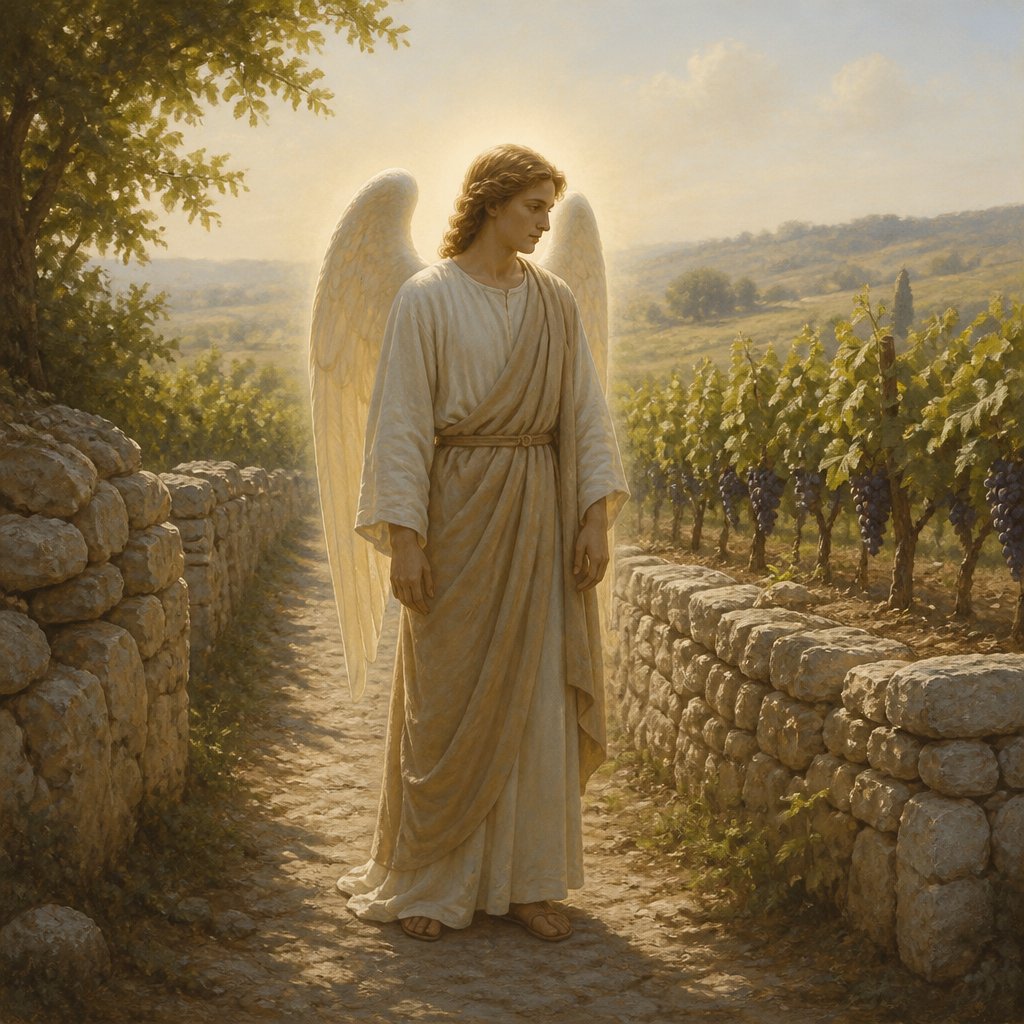
Numbers 22:24 in the King James Version of the Bible reads: "But the angel of the LORD stood in a path of the vineyards, a wall being on this side, and a wall on that side." This verse is part of the story of Balaam and his donkey, which is found in the book of Numbers, chapter 22, verses 21-34.
The story of Balaam and his donkey takes place during the time when the Israelites were wandering in the wilderness after their exodus from Egypt. The king of Moab, Balak, was afraid of the Israelites and their power, so he sought out Balaam, a diviner, to curse the Israelites. Balaam initially refused, but he eventually agreed to go with the messengers sent by Balak.
As Balaam is traveling with the men, his donkey sees the Angel of the LORD standing in the path with a drawn sword. The donkey veers off the path, crushing Balaam's foot against a wall. Balaam, unable to see the angel, becomes angry and strikes the donkey. This happens two more times, and each time the donkey goes off the path, resulting in further anger and abuse from Balaam.
In verse 24, we see that the angel of the LORD is standing in a path of the vineyards, with a wall on each side. This specific detail is significant in the context of the story and provides several important themes and symbols.
One of the primary themes in this passage is the concept of divine intervention and protection. The angel of the LORD is described as standing in the path, with walls on either side. This visual image conveys the idea of God's presence and sovereignty. Despite Balaam's intentions, God intervenes to prevent him from carrying out his plan to curse the Israelites. The walls may also symbolize the boundaries and limitations that God sets for our lives. In this case, the angel's presence serves as a barrier, protecting Balaam and ultimately guiding him back onto the correct path.
Another theme in this passage is the idea of spiritual blindness. Balaam is initially unable to see the angel of the LORD, while his donkey is able to perceive the spiritual realm. This contrast highlights the concept of spiritual discernment and the danger of being blinded by one's own desires and intentions. Balaam's inability to see the angel reflects his spiritual state and his refusal to align his will with God's.
The walls on either side of the angel also serve as a symbol of guidance and protection. In the biblical context, walls often represent safety and security. In this passage, the walls can be seen as a form of protection for Balaam, preventing him from straying further from God's will. This imagery reinforces the idea that God's presence offers a safe path for those who are willing to follow him.
Ultimately, the story of Balaam and his donkey serves as a cautionary tale about the dangers of pride, disobedience, and spiritual blindness. The angel's presence in the vineyard path, with walls on either side, serves as a powerful symbol of God's protective guidance. It also emphasizes the importance of spiritual discernment and the need to align our will with God's in order to stay on the right path.
In conclusion, Numbers 22:24 in the King James Version offers a rich and multifaceted depiction of divine intervention, spiritual blindness, and the protective guidance of God. This passage has enduring relevance and continues to provide spiritual insight and instruction for believers today.
Get our apps


Artwork for Numbers 22:24

Numbers 22:24 - "But the angel of the LORD stood in a path of the vineyards, a wall being on this side, and a wall on that side."
"But the angel of the LORD stood in a path of the vineyards, a wall being on this side, and a wall on that side." - Numbers 22:24

Numbers 24:22 - "Nevertheless the Kenite shall be wasted, until Asshur shall carry thee away captive."

James 2:2-4
"Nevertheless the Kenite shall be wasted, until Asshur shall carry thee away captive." - Numbers 24:22

Genesis 24-22

Genesis 22-24

Numbers 4:24 - "This is the service of the families of the Gershonites, to serve, and for burdens:"

Numbers 6:24 - "The LORD bless thee, and keep thee:"

Numbers 33:24 - "And they removed from mount Shapher, and encamped in Haradah."

Numbers 26:24 - "Of Jashub, the family of the Jashubites: of Shimron, the family of the Shimronites."

Jude 9:22-24

2 Samuel 24:22

2 Samuel 24:22

2 Samuel 24:22

Genesis 3:22-24

Numbers 24:24 - "And ships shall come from the coast of Chittim, and shall afflict Asshur, and shall afflict Eber, and he also shall perish for ever."

Numbers 6:22 - "¶ And the LORD spake unto Moses, saying,"

Numbers 7:22 - "One kid of the goats for a sin offering:"

Numbers 33:22 - "And they journeyed from Rissah, and pitched in Kehelathah."

Numbers 34:24 - "And the prince of the tribe of the children of Ephraim, Kemuel the son of Shiphtan."

Numbers 3:24 - "And the chief of the house of the father of the Gershonites shall be Eliasaph the son of Lael."

Numbers 10:24 - "And over the host of the tribe of the children of Benjamin was Abidan the son of Gideoni."

Numbers 34:22 - "And the prince of the tribe of the children of Dan, Bukki the son of Jogli."

Numbers 22:39 - "And Balaam went with Balak, and they came unto Kirjath-huzoth."

Numbers 31:22 - "Only the gold, and the silver, the brass, the iron, the tin, and the lead,"

Numbers 28:22 - "And one goat for a sin offering, to make an atonement for you."

1 Chronicles 24:22 - "Of the Izharites; Shelomoth: of the sons of Shelomoth; Jahath."

Numbers 29:24 - "Their meat offering and their drink offerings for the bullocks, for the rams, and for the lambs, shall be according to their number, after the manner:"

Numbers 35:24 - "Then the congregation shall judge between the slayer and the revenger of blood according to these judgments:"