What does Numbers 29:39 mean?
“These things ye shall do unto the LORD in your set feasts, beside your vows, and your freewill offerings, for your burnt offerings, and for your meat offerings, and for your drink offerings, and for your peace offerings.” — Numbers 29:39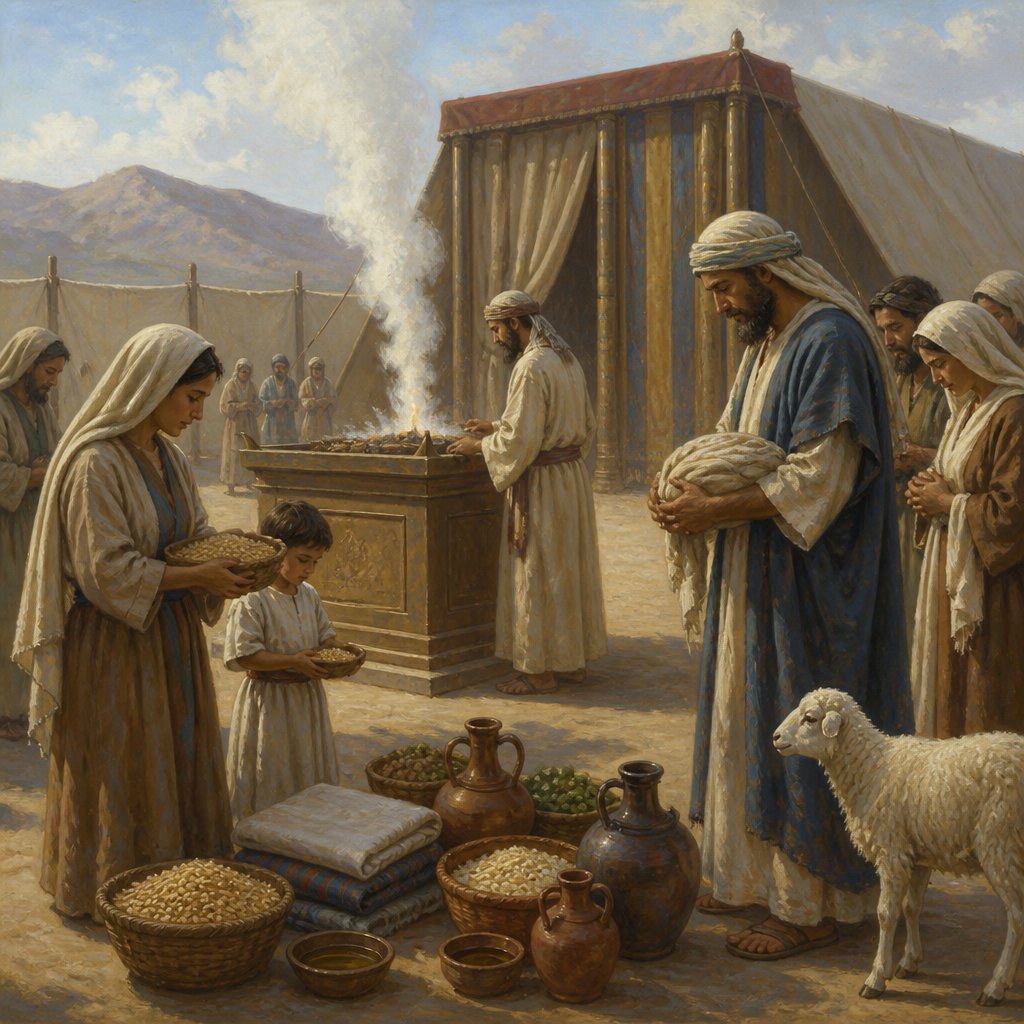
Numbers 29:39 (KJV) says, "These things ye shall do unto the Lord in your set feasts, beside your vows, and your freewill offerings, for your burnt offerings, and for your meat offerings, and for your drink offerings, and for your peace offerings."
This verse comes at the end of a chapter in the book of Numbers that details the various offerings, sacrifices, and feast days that the Israelites were to observe. In this verse, the focus is on the specific offerings that were to be brought to the Lord during the appointed feasts, as well as the additional offerings that could be made voluntarily.
The context of this verse is important to understand its significance. In the Old Testament, the Israelites were commanded to observe several annual feasts as part of their worship and religious practice. These feasts included the Passover, the Feast of Unleavened Bread, the Feast of Weeks (Pentecost), the Feast of Trumpets, the Day of Atonement, and the Feast of Tabernacles. During these feasts, the Israelites were required to bring specific offerings to the Lord, as a way of demonstrating their devotion and gratitude to Him.
In Numbers 29, the chapter leading up to verse 39, the details of the offerings to be made on each day of the Feast of Trumpets and the Feast of Tabernacles are outlined. Each day had its specific requirements for burnt offerings, grain offerings, and drink offerings, all of which were to be presented to the Lord as acts of worship. Additionally, the chapter details the offerings to be made on the monthly New Moon festivals and the daily offerings that were to be made in the Tabernacle.
The verse emphasizes the importance of these offerings in the worship of the Lord during the set feasts. It specifies that the offerings to be made during the feasts were in addition to any vows or freewill offerings that the people may have chosen to bring. The burnt offerings, meat offerings, drink offerings, and peace offerings were all integral parts of the religious observance and were meant to express the Israelites' dedication to the Lord.
Symbolically, these offerings represented the Israelites' desire to honor and glorify God through their worship. The burnt offerings, for example, were offerings of atonement and dedication, symbolizing the Israelites' desire to be purified and consecrated to the Lord. The grain offerings symbolized the fruits of the land, which the Israelites acknowledged as gifts from God. The drink offerings were a way of pouring out a portion of their sustenance in recognition of God's provision. The peace offerings were shared meals, symbolizing communion and fellowship with the Lord.
These offerings were not only acts of religious duty but were also intended to foster a deeper spiritual connection between the Israelites and their God. By participating in these rituals, the Israelites were reminded of their dependence on God and their commitment to live in harmony with His will. They served as a means of expressing gratitude, seeking forgiveness, and renewing their covenant with God.
The passage also serves to remind modern-day Christians of the importance of dedicated and intentional worship. While the specific offerings detailed in Numbers 29 may no longer be required, the principle of offering our best to God in worship and thanksgiving remains relevant. It challenges believers to consider how they can present themselves as living sacrifices, holy and pleasing to God (Romans 12:1), and how they can offer the sacrifice of praise continually (Hebrews 13:15).
In conclusion, Numbers 29:39 underscores the significance of offerings and sacrifices as part of the Israelites' religious observance. The verse emphasizes the specific offerings to be made during the set feasts and underscores their importance in the worship of the Lord. Symbolically, these offerings represented the Israelites' desire to honor and glorify God through their worship and to maintain a deep spiritual connection with Him. This principle of intentional and dedicated worship remains relevant for believers today, challenging them to offer their best to God and to express gratitude, seek forgiveness, and renew their covenant with Him.
Get our apps


Artwork for Numbers 29:39

Numbers 29:39 - "These things ye shall do unto the LORD in your set feasts, beside your vows, and your freewill offerings, for your burnt offerings, and for your meat offerings, and for your drink offerings, and for your peace offerings."
"These things ye shall do unto the LORD in your set feasts, beside your vows, and your freewill offerings, for your burnt offerings, and for your meat offerings, and for your drink offerings, and for your peace offerings." - Numbers 29:39

Numbers 26:39 - "Of Shupham, the family of the Shuphamites: of Hupham, the family of the Huphamites."

Numbers 22:39 - "And Balaam went with Balak, and they came unto Kirjath-huzoth."

Job 39:29 - "From thence she seeketh the prey, and her eyes behold afar off."

Exodus 39:29 - "And a girdle of fine twined linen, and blue, and purple, and scarlet, of needlework; as the LORD commanded Moses."

Exodus 29:39 - "The one lamb thou shalt offer in the morning; and the other lamb thou shalt offer at even:"

Scene from book of numbers 14:39-45

Numbers 29:7

Numbers 32:39 - "And the children of Machir the son of Manasseh went to Gilead, and took it, and dispossessed the Amorite which was in it."

Numbers 14:39 - "And Moses told these sayings unto all the children of Israel: and the people mourned greatly."

Numbers 1:39 - "Those that were numbered of them, even of the tribe of Dan, were threescore and two thousand and seven hundred."

Numbers 31:39 - "And the asses were thirty thousand and five hundred; of which the LORD'S tribute was threescore and one."

Numbers 33:39 - "And Aaron was an hundred and twenty and three years old when he died in mount Hor."

Numbers 7:39 - "One young bullock, one ram, one lamb of the first year, for a burnt offering:"

Numbers 29:29 - "¶ And on the sixth day eight bullocks, two rams, and fourteen lambs of the first year without blemish:"

"Of Shupham, the family of the Shuphamites: of Hupham, the family of the Huphamites." - Numbers 26:39

Numbers 33:29 - "And they went from Mithcah, and pitched in Hashmonah."

Numbers 16:39 - "And Eleazar the priest took the brasen censers, wherewith they that were burnt had offered; and they were made broad plates for a covering of the altar:"

"And Balaam went with Balak, and they came unto Kirjath-huzoth." - Numbers 22:39

Numbers 4:29 - "¶ As for the sons of Merari, thou shalt number them after their families, by the house of their fathers;"

Numbers 29:15 - "And a several tenth deal to each lamb of the fourteen lambs:"

Numbers 28:29 - "A several tenth deal unto one lamb, throughout the seven lambs;"

Numbers 4:39 - "From thirty years old and upward even unto fifty years old, every one that entereth into the service, for the work in the tabernacle of the congregation,"

Numbers 29:10 - "A several tenth deal for one lamb, throughout the seven lambs:"

Numbers 29:5 - "And one kid of the goats for a sin offering, to make an atonement for you:"

Numbers 29:4 - "And one tenth deal for one lamb, throughout the seven lambs:"

Ezekiel 39:29 - "Neither will I hide my face any more from them: for I have poured out my spirit upon the house of Israel, saith the Lord GOD."

Numbers 3:29 - "The families of the sons of Kohath shall pitch on the side of the tabernacle southward."

Numbers 3:39 - "All that were numbered of the Levites, which Moses and Aaron numbered at the commandment of the LORD, throughout their families, all the males from a month old and upward, were twenty and two thousand."