What does Numbers 33:5 mean?
“And the children of Israel removed from Rameses, and pitched in Succoth.” — Numbers 33:5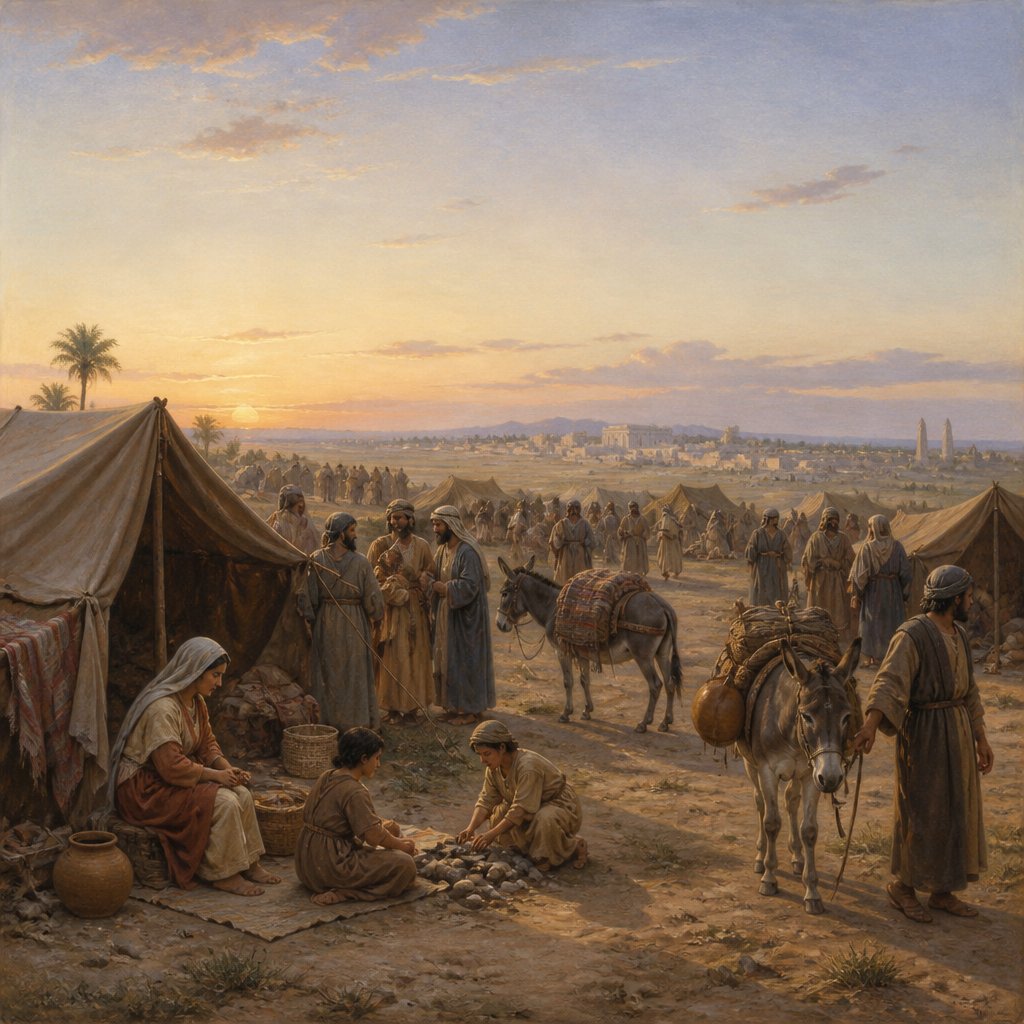
Numbers 33:5 in the King James Version of the Bible reads: "And the children of Israel removed from Rameses, and pitched in Succoth."
In a broader context, the book of Numbers is the fourth book of the Hebrew Bible and the fourth of five books of the Jewish Torah. It continues the narrative of the Israelites after their exodus from Egypt, detailing their journey through the wilderness and the establishment of a code of laws and rituals. The book is named "Numbers" because it begins with a census of the Israelites, organizing them into twelve tribes.
In Numbers 33, the chapter serves as a historical record of the Israelites' journey from Egypt to the plains of Moab, just before they enter the land of Canaan. The chapter lists the various locations where the Israelites camped and the chronological order of their travels. Each location holds symbolic importance as a marker of the Israelites' passage from bondage to the promised land. The mention of Rameses and Succoth in verse 5 is just one of the many stops recorded in this chapter.
Rameses was one of the cities in which the Israelites were oppressed by the Egyptians. According to Exodus 1:11, the Israelites built the treasure cities of Pithom and Rameses for Pharaoh. Therefore, the mention of Rameses in Numbers 33:5 serves as a reminder of the Israelites' slavery and their deliverance from it through the exodus.
Succoth, on the other hand, was the first encampment of the Israelites after they left Rameses. It is situated on the eastern border of Egypt, near the desert. The name "Succoth" means "booths" or "tents," and it likely refers to the temporary shelters the Israelites constructed as they began their journey. Succoth thus represents the beginning of the Israelites' liberation and their transition from bondage to freedom.
From a thematic standpoint, Numbers 33:5 encapsulates the themes of journey, deliverance, and faith. The Israelites' journey through the wilderness is a physical representation of their spiritual journey from slavery to freedom. Their departure from Rameses signifies their liberation from oppression, while their arrival in Succoth marks the beginning of a new chapter in their history. The entire book of Numbers is a testament to the faithfulness of God and the importance of obedience as the Israelites navigate through trials and challenges in the wilderness.
Symbolically, Rameses represents the bondage of sin and the world, while Succoth represents the freedom and new life found in faith. The transition from Rameses to Succoth mirrors the Christian journey of salvation, from the bondage of sin to the freedom found in Christ. This verse serves as a reminder of God's faithfulness in leading His people out of oppression into a new beginning.
In conclusion, Numbers 33:5 captures the pivotal moment in the Israelites' journey, as they leave behind the land of their oppression and embark on a path to liberation. The verse holds deep historical and symbolic significance, illustrating themes of journey, deliverance, and faith. It reminds believers of God's faithfulness in leading them through their own wilderness experiences towards the promised land.
Get our apps


Artwork for Numbers 33:5

Numbers 33:5 - "And the children of Israel removed from Rameses, and pitched in Succoth."
"And the children of Israel removed from Rameses, and pitched in Succoth." - Numbers 33:5

Numbers 33:33 - "And they went from Hor-hagidgad, and pitched in Jotbathah."

Numbers 32:33

"And they went from Hor-hagidgad, and pitched in Jotbathah." - Numbers 33:33

Numbers 31:33 - "And threescore and twelve thousand beeves,"

Numbers 33:18 - "And they departed from Hazeroth, and pitched in Rithmah."

Numbers 33:43 - "And they departed from Punon, and pitched in Oboth."

Numbers 33:42 - "And they departed from Zalmonah, and pitched in Punon."

Numbers 33:34 - "And they removed from Jotbathah, and encamped at Ebronah."

Numbers 33:21 - "And they removed from Libnah, and pitched at Rissah."

Numbers 33:13 - "And they departed from Dophkah, and encamped in Alush."

Numbers 33:27 - "And they departed from Tahath, and pitched at Tarah."

Numbers 33:22 - "And they journeyed from Rissah, and pitched in Kehelathah."

Numbers 33:28 - "And they removed from Tarah, and pitched in Mithcah."

Numbers 33:26 - "And they removed from Makheloth, and encamped at Tahath."

Numbers 33:29 - "And they went from Mithcah, and pitched in Hashmonah."

Numbers 33:25 - "And they removed from Haradah, and pitched in Makheloth."

Numbers 33:30 - "And they departed from Hashmonah, and encamped at Moseroth."

Numbers 33:24 - "And they removed from mount Shapher, and encamped in Haradah."

Numbers 33:41 - "And they departed from mount Hor, and pitched in Zalmonah."

Numbers 33:17 - "And they departed from Kibroth-hattaavah, and encamped at Hazeroth."

Numbers 33:31 - "And they departed from Moseroth, and pitched in Bene-jaakan."

Numbers 33:19 - "And they departed from Rithmah, and pitched at Rimmon-parez."

Numbers 33:35 - "And they departed from Ebronah, and encamped at Ezion-gaber."
Numbers 33:23 - "And they went from Kehelathah, and pitched in mount Shapher."

Numbers 33:15 - "And they departed from Rephidim, and pitched in the wilderness of Sinai."

Numbers 33:20 - "And they departed from Rimmon-parez, and pitched in Libnah."

Numbers 33:45 - "And they departed from Iim, and pitched in Dibon-gad."

Numbers 33:10 - "And they removed from Elim, and encamped by the Red sea."