What does Numbers 36:4 mean?
“And when the jubile of the children of Israel shall be, then shall their inheritance be put unto the inheritance of the tribe whereunto they are received: so shall their inheritance be taken away from the inheritance of the tribe of our fathers.” — Numbers 36:4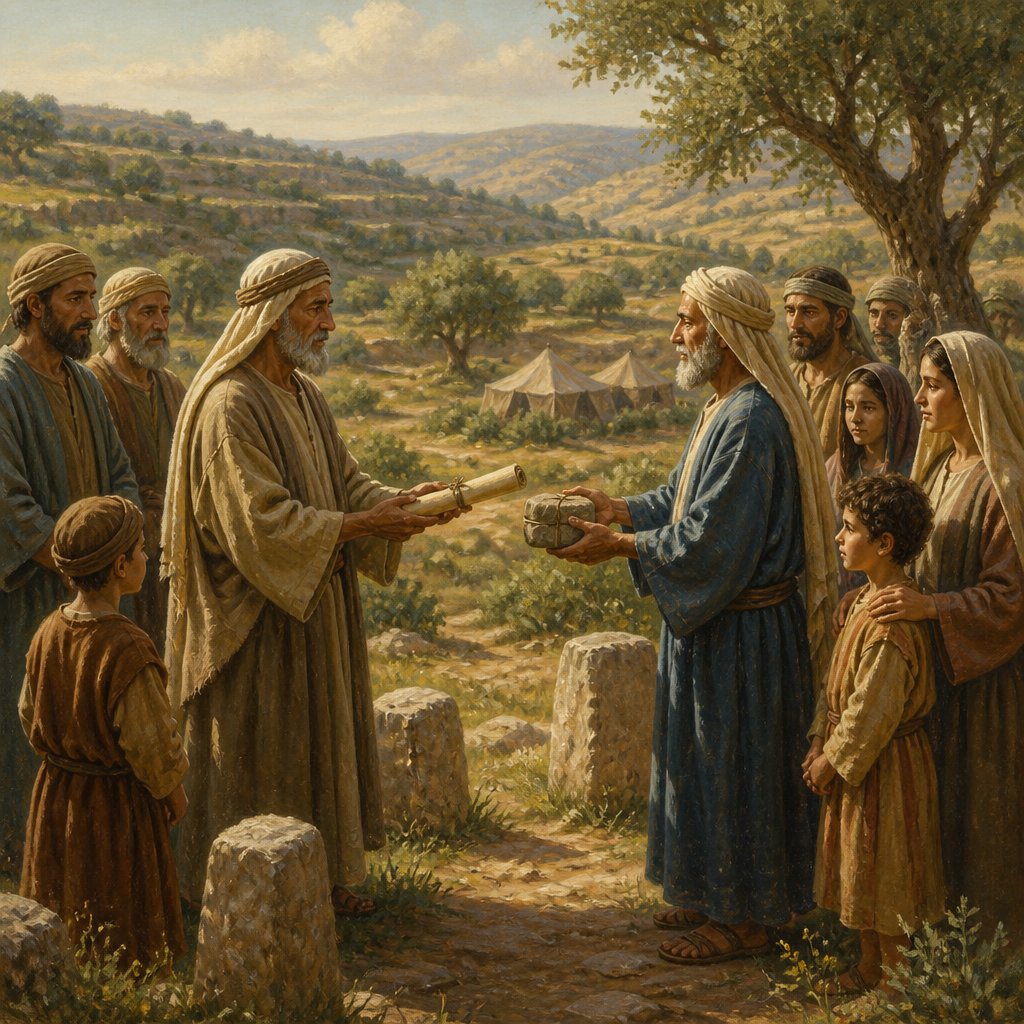
Numbers 36:4 in the King James Version (KJV) of the Bible reads, "And when the jubilee of the children of Israel shall be, then shall their inheritance be put unto the inheritance of the tribe whereunto they are received: so shall their inheritance be taken away from the inheritance of the tribe of our fathers."
This verse comes from the book of Numbers, which is the fourth book of the Hebrew Bible. It is the fourth of the five books of the Pentateuch, also known as the Torah. The book of Numbers details the journey of the Israelites from Mount Sinai to the plains of Moab on the border of Canaan, the Promised Land. It also records the censuses of the Israelites and presents laws regarding the organization and conduct of the Israelites as a community.
In Numbers 36, the daughters of Zelophehad, a man who passed away without leaving a son, bring a concern to Moses and the leaders of the Israelite community. They express their worry that if they marry men from a different tribe, their inheritances of land will be transferred to their husbands' tribes and thus lost to their own tribe. This concern is addressed in verse 4, which outlines the rule that when the jubilee of the children of Israel occurs, the inheritance of land shall be put unto the inheritance of the tribe where the women are received. This ensures that the inheritance remains within the tribe.
The concept of inheritance is important in this verse and in the broader context of the book of Numbers. Inheritance was a significant aspect of the Israelite community, as it determined the allocation of land, resources, and privilege. In the ancient Near East, the passing down of inheritance and land rights was of utmost importance for the continuity and prosperity of a family or tribal group.
The concept of the jubilee is also significant in this verse. The jubilee was a sacred time of release and restoration in the Israelite calendar. It occurred every 50 years and was a time for the remission of debts, the release of slaves, and the restoration of ancestral lands to their original owners. The jubilee was a symbol of God's justice and mercy, emphasizing the idea of equitable distribution of resources and the upholding of family and tribal heritage.
Furthermore, the verse reflects the importance of maintaining the integrity and cohesion of the tribes of Israel. The inheritance of land was not just a matter of individual ownership, but was deeply tied to the identity and continuity of the tribes as a whole. By ensuring that the daughters of Zelophehad do not lose their inheritances, the verse highlights the value of preserving the tribal boundaries and heritages.
Symbolically, this verse can be seen as a reflection of God's concern for justice, fairness, and the preservation of family and tribal identity. It underscores the idea of stewardship and responsible management of resources, as well as the importance of respecting and honoring the legacies of our ancestors.
In conclusion, Numbers 36:4 from the King James Version of the Bible addresses the issue of inheritance and tribal boundaries within the Israelite community. It highlights the significance of land allocation, the jubilee year, and the preservation of tribal heritage. The verse emphasizes the value of justice, equity, and the preservation of family and tribal identities, reflecting important themes in the broader context of the book of Numbers and the Old Testament as a whole.
Get our apps


Artwork for Numbers 36:4

Numbers 36:4 - "And when the jubile of the children of Israel shall be, then shall their inheritance be put unto the inheritance of the tribe whereunto they are received: so shall their inheritance be taken away from the inheritance of the tribe of our fathers."
"And when the jubile of the children of Israel shall be, then shall their inheritance be put unto the inheritance of the tribe whereunto they are received: so shall their inheritance be taken away from the inheritance of the tribe of our fathers." - Numbers 36:4

Numbers 4:36 - "And those that were numbered of them by their families were two thousand seven hundred and fifty."
"And those that were numbered of them by their families were two thousand seven hundred and fifty." - Numbers 4:36

Numbers 36 theme

Numbers 16:36 - "¶ And the LORD spake unto Moses, saying,"

Numbers 26:36 - "And these are the sons of Shuthelah: of Eran, the family of the Eranites."

Numbers 36:10 - "Even as the LORD commanded Moses, so did the daughters of Zelophehad:"

Numbers 32:36 - "And Beth-nimrah, and Beth-haran, fenced cities: and folds for sheep."

Numbers 33:36 - "And they removed from Ezion-gaber, and pitched in the wilderness of Zin, which is Kadesh."

Numbers 7:36 - "¶ On the fifth day Shelumiel the son of Zurishaddai, prince of the children of Simeon, did offer:"

Numbers 10:36 - "And when it rested, he said, Return, O LORD, unto the many thousands of Israel."

"¶ And the LORD spake unto Moses, saying," - Numbers 16:36

"And these are the sons of Shuthelah: of Eran, the family of the Eranites." - Numbers 26:36

Numbers 36:12 - "And they were married into the families of the sons of Manasseh the son of Joseph, and their inheritance remained in the tribe of the family of their father."

Mark 4:36-37

Mark 4:36-37

Numbers 36:11 - "For Mahlah, Tirzah, and Hoglah, and Milcah, and Noah, the daughters of Zelophehad, were married unto their father's brothers' sons:"

Numbers 36:5 - "And Moses commanded the children of Israel according to the word of the LORD, saying, The tribe of the sons of Joseph hath said well."

Numbers 31:36 - "And the half, which was the portion of them that went out to war, was in number three hundred thousand and seven and thirty thousand and five hundred sheep:"

Numbers 15:36 - "And all the congregation brought him without the camp, and stoned him with stones, and he died; as the LORD commanded Moses."

Numbers 36:13 - "These are the commandments and the judgments, which the LORD commanded by the hand of Moses unto the children of Israel in the plains of Moab by Jordan near Jericho."

Genesis 36:4 - "And Adah bare to Esau Eliphaz; and Bashemath bare Reuel;"

Numbers 1:36 - "¶ Of the children of Benjamin, by their generations, after their families, by the house of their fathers, according to the number of the names, from twenty years old and upward, all that were able to go forth to war;"

1 Chronicles 4:36 - "And Elioenai, and Jaakobah, and Jeshohaiah, and Asaiah, and Adiel, and Jesimiel, and Benaiah,"

"Even as the LORD commanded Moses, so did the daughters of Zelophehad:" - Numbers 36:10

"And Beth-nimrah, and Beth-haran, fenced cities: and folds for sheep." - Numbers 32:36

Numbers 14:36 - "And the men, which Moses sent to search the land, who returned, and made all the congregation to murmur against him, by bringing up a slander upon the land,"

Job 36:4 - "For truly my words shall not be false: he that is perfect in knowledge is with thee."

Numbers 22:36 - "¶ And when Balak heard that Balaam was come, he went out to meet him unto a city of Moab, which is in the border of Arnon, which is in the utmost coast."