What does Numbers 36:9 mean?
“Neither shall the inheritance remove from one tribe to another tribe; but every one of the tribes of the children of Israel shall keep himself to his own inheritance.” — Numbers 36:9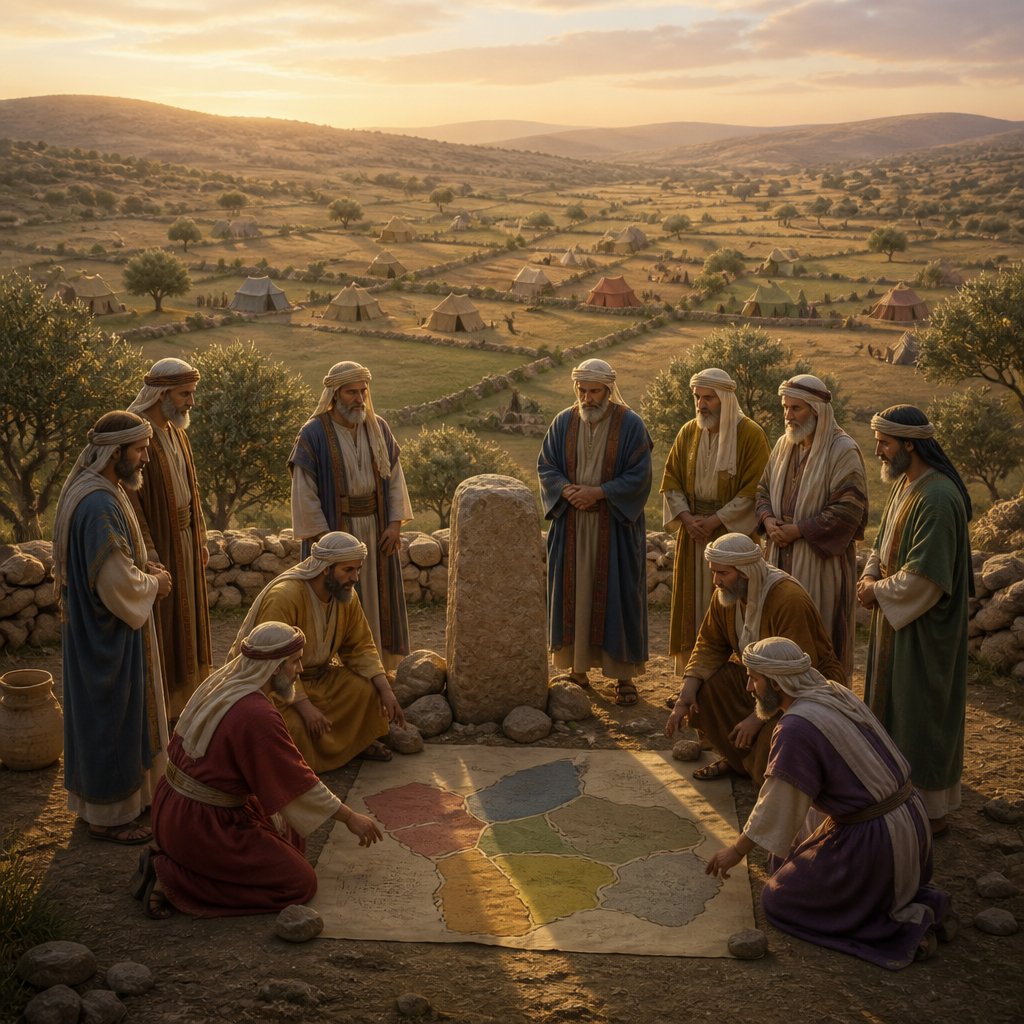
The Bible verse Numbers 36:9 in the King James Version reads, "Neither shall the inheritance remove from one tribe to another tribe; but every one of the tribes of the children of Israel shall keep himself to his own inheritance."
This verse is part of the Book of Numbers, which is the fourth book of the Hebrew Bible and the Christian Old Testament. It is commonly attributed to Moses and records the events of the Israelites as they journeyed from Mount Sinai to the border of the Promised Land. Numbers is a book of laws, censuses, and various other regulations given by God to the Israelites.
In Numbers 36, the verse is a conclusion to the story of the daughters of Zelophehad. These five women, Mahlah, Noah, Hoglah, Milcah, and Tirzah, approached Moses and the leaders of the Israelite community with a problem regarding inheritance. Their father had died with no sons, and under normal circumstances, the inheritance would be passed down through male heirs. However, these women argued that they should be able to inherit their father's property in the absence of sons.
God confirmed their request and instructed Moses to give the daughters of Zelophehad the right to inherit their father's property. In verse 9, God establishes the rule that the inheritance should not pass from one tribe to another, but should remain within each tribe of the children of Israel.
The theme of inheritance and the preservation of tribal land is central to this verse. Land was a crucial aspect of the Israelite identity, and understanding these laws is important in comprehending the ancient Israelite society. In the time of the Israelites, land was a symbol of stability, security, and social identity. The idea that each tribe should maintain its own inheritance reinforced the importance of land as a lasting possession.
The verse also emphasizes the principle of maintaining boundaries and stability within the Israelite community. By ensuring that inheritances stayed within their respective tribes, there was a sense of continuity and tradition. Each tribe had its own unique identity and heritage, which was closely tied to their land.
Symbolically, this verse can be seen as a metaphor for the importance of maintaining cultural, familial, and spiritual boundaries. It speaks to the value of preserving tradition and heritage, as well as the idea of respecting the legacy of one's ancestors. It also reflects the importance of honoring the rights and needs of women, as demonstrated by the daughters of Zelophehad.
In a broader religious context, this verse also points to the principle of order and fairness within the community. It serves as a reminder of the divine laws and the responsibility of upholding them. By respecting the boundaries of inheritance, the Israelites were honoring the will of God and ensuring justice for all members of society.
Overall, Numbers 36:9 is a significant verse that highlights the themes of land inheritance, tribal identity, and the importance of maintaining cultural and spiritual boundaries within the Israelite community. It provides valuable insight into the social and religious values of the ancient Israelites, while also offering timeless principles that are still relevant to this day.
Get our apps


Artwork for Numbers 36:9

Numbers 36:9 - "Neither shall the inheritance remove from one tribe to another tribe; but every one of the tribes of the children of Israel shall keep himself to his own inheritance."
"Neither shall the inheritance remove from one tribe to another tribe; but every one of the tribes of the children of Israel shall keep himself to his own inheritance." - Numbers 36:9

Numbers 36 theme

Numbers 16:36 - "¶ And the LORD spake unto Moses, saying,"

Numbers 26:36 - "And these are the sons of Shuthelah: of Eran, the family of the Eranites."

Numbers 36:10 - "Even as the LORD commanded Moses, so did the daughters of Zelophehad:"

Numbers 4:36 - "And those that were numbered of them by their families were two thousand seven hundred and fifty."

Numbers 32:36 - "And Beth-nimrah, and Beth-haran, fenced cities: and folds for sheep."

Numbers 33:36 - "And they removed from Ezion-gaber, and pitched in the wilderness of Zin, which is Kadesh."

Mark 9:36-37

Numbers 7:36 - "¶ On the fifth day Shelumiel the son of Zurishaddai, prince of the children of Simeon, did offer:"

Numbers 10:36 - "And when it rested, he said, Return, O LORD, unto the many thousands of Israel."

"¶ And the LORD spake unto Moses, saying," - Numbers 16:36

"And these are the sons of Shuthelah: of Eran, the family of the Eranites." - Numbers 26:36

Numbers 36:12 - "And they were married into the families of the sons of Manasseh the son of Joseph, and their inheritance remained in the tribe of the family of their father."

2 kings 9:34-36

Genesis 36:9 - "¶ And these are the generations of Esau the father of the Edomites in mount Seir:"

Numbers 36:11 - "For Mahlah, Tirzah, and Hoglah, and Milcah, and Noah, the daughters of Zelophehad, were married unto their father's brothers' sons:"

Job 36:9 - "Then he sheweth them their work, and their transgressions that they have exceeded."

Numbers 36:5 - "And Moses commanded the children of Israel according to the word of the LORD, saying, The tribe of the sons of Joseph hath said well."

Numbers 31:36 - "And the half, which was the portion of them that went out to war, was in number three hundred thousand and seven and thirty thousand and five hundred sheep:"

Numbers 15:36 - "And all the congregation brought him without the camp, and stoned him with stones, and he died; as the LORD commanded Moses."

Numbers 36:13 - "These are the commandments and the judgments, which the LORD commanded by the hand of Moses unto the children of Israel in the plains of Moab by Jordan near Jericho."

Numbers 9:9 - "¶ And the LORD spake unto Moses, saying,"

Psalms 36:9 - "For with thee is the fountain of life: in thy light shall we see light."

1 Chronicles 9:36 - "And his firstborn son Abdon, then Zur, and Kish, and Baal, and Ner, and Nadab,"

John 9:36 - "He answered and said, Who is he, Lord, that I might believe on him?"

Numbers 1:36 - "¶ Of the children of Benjamin, by their generations, after their families, by the house of their fathers, according to the number of the names, from twenty years old and upward, all that were able to go forth to war;"

"Even as the LORD commanded Moses, so did the daughters of Zelophehad:" - Numbers 36:10

"And Beth-nimrah, and Beth-haran, fenced cities: and folds for sheep." - Numbers 32:36