What does Numbers 7:30 mean?
“On the fourth day Elizur the son of Shedeur, prince of the children of Reuben, did offer:” — Numbers 7:30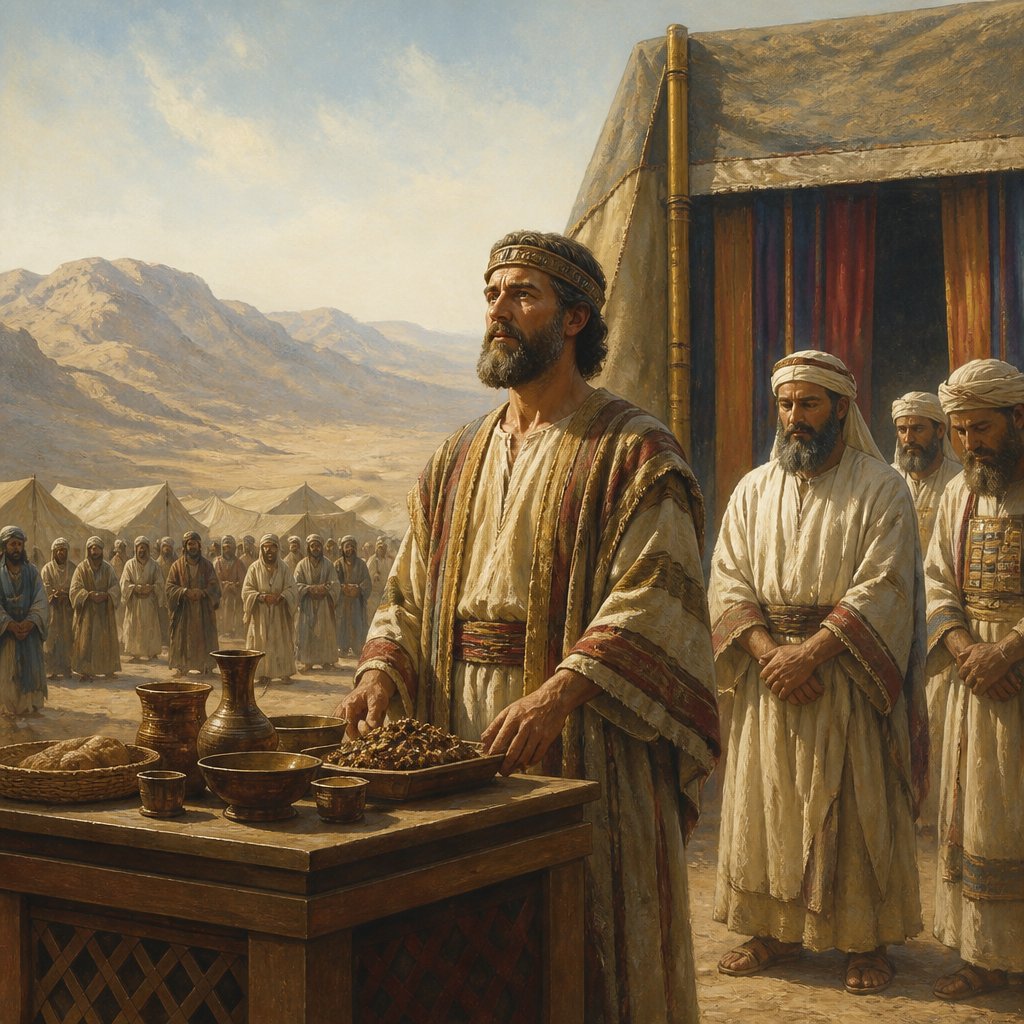
Numbers 7:30 (KJV) states, "On the fourth day Elizur the son of Shedeur, prince of the children of Reuben, did offer."
This verse is part of a larger passage that describes the offerings brought by the leaders of the twelve tribes of Israel during the consecration of the altar. The passage is a detailed account of the offerings brought by each leader over a twelve-day period, and it serves as a reminder of the significance of both individual and collective contributions to the service of the Lord.
One of the key themes in this verse is the importance of leadership and responsibility. Throughout the Bible, leaders are called upon to set an example for their followers and to make sacrifices on their behalf. In this passage, the leaders of the tribes of Israel demonstrate their commitment to the Lord by bringing offerings on behalf of their people. This serves as a reminder that leadership is not just about authority, but also about servanthood and responsibility.
Another important theme in this verse is the idea of order and organization. The fact that each tribe's leader brings their offering on a specific day highlights the sense of order and discipline within the community of Israel. This emphasis on order reflects the broader theme of the importance of structure and obedience in the service of the Lord.
The context of this verse is also significant. The consecration of the altar was a crucial event in the life of the Israelite community, as it symbolized their dedication to the Lord and their commitment to following his commandments. The detailed account of the offerings brought by each tribe's leader serves as a reminder of the importance of every individual's contribution to the collective worship of the community.
Furthermore, this verse symbolizes the unity and diversity of the twelve tribes of Israel. Each leader brought a distinct offering on behalf of their tribe, reflecting the unique identity and character of each tribe. At the same time, their collective participation in the consecration ceremony demonstrated their shared commitment to the service of the Lord and the unity of the nation of Israel.
Overall, Numbers 7:30 (KJV) is a verse that conveys important themes related to leadership, responsibility, order, unity, and diversity. It serves as a reminder of the significance of individual and collective contributions to the worship of the Lord and the importance of leadership in setting an example for others. Additionally, it underscores the unity and diversity of the Israelite community, as reflected in the offerings brought by the leaders of the twelve tribes. This verse thus provides valuable insights into the values and principles that guided the Israelites in their relationship with the Lord.
Get our apps


Artwork for Numbers 7:30

Numbers 7:30 - "¶ On the fourth day Elizur the son of Shedeur, prince of the children of Reuben, did offer:"
"¶ On the fourth day Elizur the son of Shedeur, prince of the children of Reuben, did offer:" - Numbers 7:30

Numbers 30:7 - "And her husband heard it, and held his peace at her in the day that he heard it: then her vows shall stand, and her bonds wherewith she bound her soul shall stand."

Numbers 23:30
"The men of Ramah and Geba, six hundred twenty and one." - Nehemiah 7:30

Numbers 33:30 - "And they departed from Hashmonah, and encamped at Moseroth."

Making a vow to the Lord. Numbers 30

Numbers 28:30 - "And one kid of the goats, to make an atonement for you."

Numbers 11:30 - "And Moses gat him into the camp, he and the elders of Israel."

Numbers 26:30 - "These are the sons of Gilead: of Jeezer, the family of the Jeezerites: of Helek, the family of the Helekites:"

Numbers 3:30 - "And the chief of the house of the father of the families of the Kohathites shall be Elizaphan the son of Uzziel."

Numbers 29:30 - "And their meat offering and their drink offerings for the bullocks, for the rams, and for the lambs, shall be according to their number, after the manner:"

Numbers 2:30 - "And his host, and those that were numbered of them, were fifty and three thousand and four hundred."

Numbers 23:30 - "And Balak did as Balaam had said, and offered a bullock and a ram on every altar."

Numbers 30:10 - "And if she vowed in her husband's house, or bound her soul by a bond with an oath;"

Numbers 32:30 - "But if they will not pass over with you armed, they shall have possessions among you in the land of Canaan."

"And they departed from Hashmonah, and encamped at Moseroth." - Numbers 33:30

Numbers 10:30 - "And he said unto him, I will not go; but I will depart to mine own land, and to my kindred."

Numbers 30:9 - "But every vow of a widow, and of her that is divorced, wherewith they have bound their souls, shall stand against her."

Numbers 29:7

Numbers 4:7

Numbers 30:1 - "And Moses spake unto the heads of the tribes concerning the children of Israel, saying, This is the thing which the LORD hath commanded."

"And one kid of the goats, to make an atonement for you." - Numbers 28:30
Numbers 30:3 - "If a woman also vow a vow unto the LORD, and bind herself by a bond, being in her father's house in her youth;"

Numbers 14:30 (KJVA) 30 Doubtless ye shall not come into the land, concerning which I sware to make you dwell therein, save Caleb the son of Jephunneh, and Joshua the son of Nun.

Nehemiah 7:30 - "The men of Ramah and Geba, six hundred twenty and one."

Numbers 14:30 (KJVA) 30 Doubtless ye shall not come into the land, concerning which I sware to make you dwell therein, save Caleb the son of Jephunneh, and Joshua the son of Nun.

Numbers 30:13 - "Every vow, and every binding oath to afflict the soul, her husband may establish it, or her husband may make it void."

Numbers 7:1-9

Numbers 13:30 - "And Caleb stilled the people before Moses, and said, Let us go up at once, and possess it; for we are well able to overcome it."